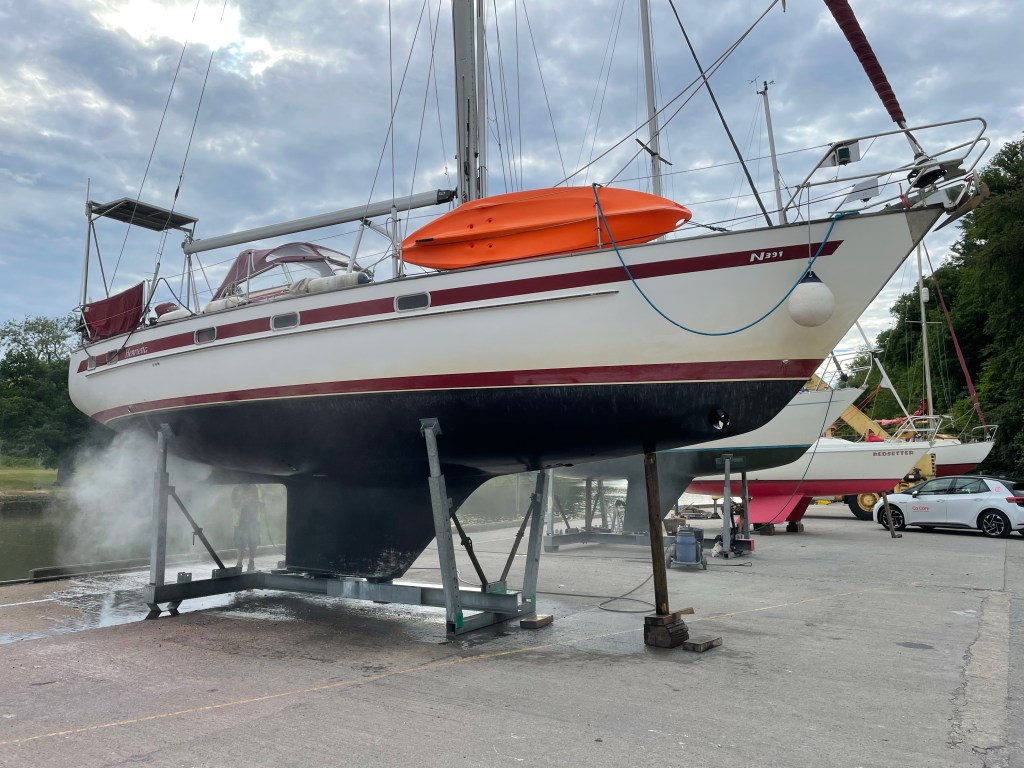
24th December 2023 to 8th January 2024
I don’t want to tell an over-dramatic tale of blood, sweat, tears and pain when there’s so much real suffering in the world. After all, unlike those who suffer because of forces far outside their control, we go sailing because we want to, we like it (lots of other reasons too). It’s normally a safe, adventurous and interesting pastime, with lots of pretty uneventful boredom and occasional bouts of excitement, even a bit of suffering, along the way. For most long distance sailors there’s always choices of where to go, when to stop and how to live. We don’t have to do it.
We shouldn’t make too much fuss when plans go awry. Accidents happen. The unexpected is always around the corner.
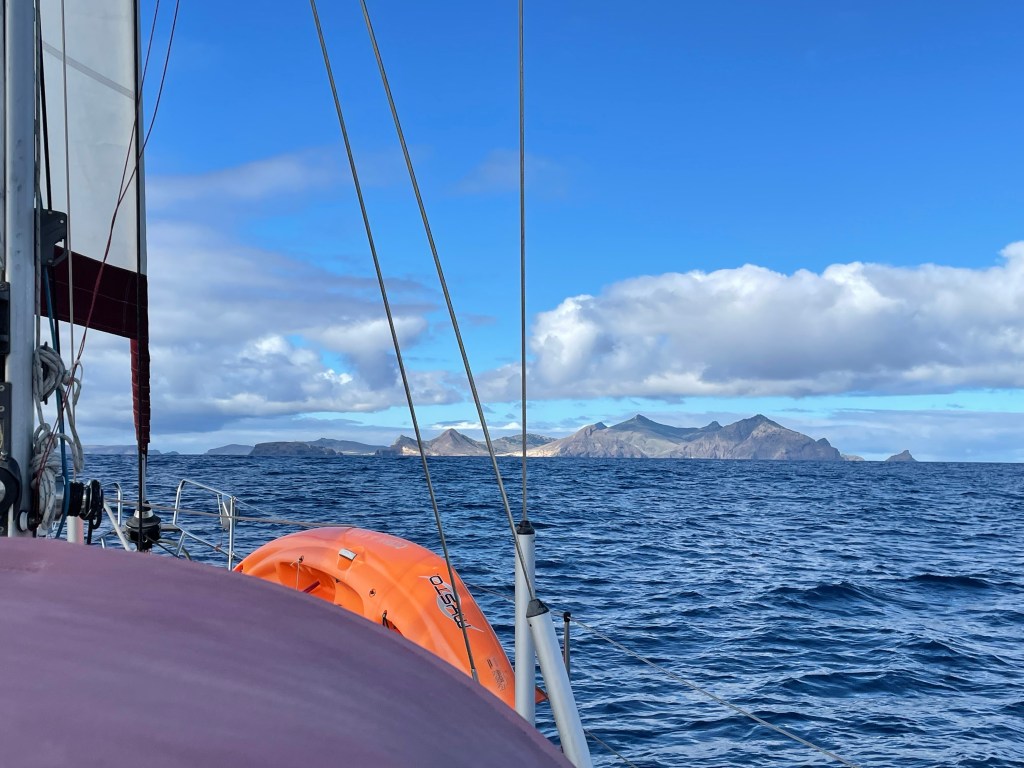
In this little tale of the ‘unexpected-around-the-corner’, mid-afternoon on Christmas Eve, mid-Atlantic, sailing south under full main and genoa, and about a hundred miles north of the equator, I heard a sudden very loud resounding bang. Henrietta shook. Immediately I suspected the rigging had failed. I was up and adrenaline-charged in an instant.
Sure enough the rigging had failed.
The port main shroud (V1), the most important of all, was flailing around and upper mast flexing in a horrifying and truly alarming way. Such wild movements could not go on for long. I anticipated the mast would snap in a few seconds; quickly thinking where the bolt cutters were, should I have to cut away rigging to escape serious damage. Were there time to pause and think about it, I’d have felt very frightened.

Quickly, very quickly, I lowered the sails and altered course to try and reduce the wild rolling motion. But as all ocean sailors know, there’s always a swell and you cannot escape rolling. The upper mast was bending back and forth, and side to side in a dreadful way with every passing swell. How much longer before all came crashing down?
Next step I go forward to inspect the cause more closely and try to secure the flaying shroud with cord, all the while expecting the mast would snap, and just hoping the debris might miss my head.
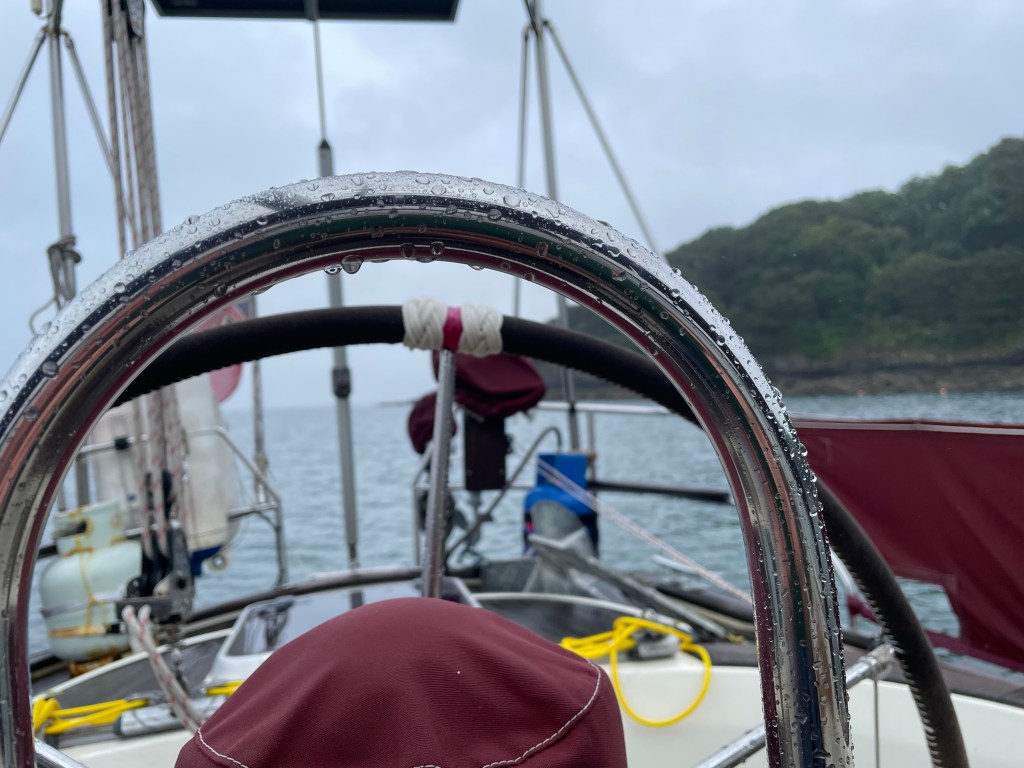
The shroud wire wasn’t damaged. The deck plate was fine. The screw between the two was intact. Trouble was the stainless steel toggle between screw and deck had snapped. A chunk of solid stainless steel had broken away. Damn it, I’d had the entire rig replaced at huge cost less than 18 months ago. I’d checked it before leaving La Gomera. Rigging was the last thing I expected to fail.
(I know all this will make little sense and be rather dull to non-sailors. Suffice to say, rigging on any sailing boat is the most important feature – by far. Without it, mid ocean you are in deep trouble. Without rigging, a boat is like man without skeleton, a useless lifeless blob.)

At this stage, I don’t much like to recall the hours of work, the anxiety, the pain and the rest. It’s a source of hurt and future nightmares. But after five hours difficult work, damaged hand, lots of blood and advanced sunburn and as darkness fell on Christmas Eve, I was adjusting to new reality: Wallowing with damaged rig, mid-Atlantic, about 1,000 miles from nearest land.

Using a fitting from less important shroud (starboard aft lower, should you ask) and with botch job to secure that with shackles and dyneema, I thought I’d done enough to hang on to the mast a bit longer. I would drift and wallow through the night, rest and try to sleep. In the morning, Christmas morning, I would decide what to do.
Of course, I didn’t sleep much. Like a child awaiting the visit from Father Christmas, I was restless. But instead of wondering what Christmas gifts might be there at dawn, as Henrietta rolled through the night I was simply trusting the mast would still be there at dawn. Weighing options for the future too.
I couldn’t beat back north over 900 miles into Northeast Trade Winds to Cape Verde. Nearest place was Northern Brazil. Recife was less than a thousand miles, Salvador a bit further. But I thought neither was likely to have riggers and, if spares were needed, it would take ages and Brazilian import duty is heavy. More importantly it would involve more upwind sailing for several days, putting more stress on the rig – a very bad idea.
In the end I decided on Surinam. It’s further than Brazil, about 1,600 miles from where I was, but mainly downwind westwards sailing, and, once out of the doldrums, shouldn’t have extremes of wind or sea – just inevitable rolling and an occasional squall. Hopefully I’d find a rigger or fellow sailor to help, or, if fixing things myself, would be able to get spares.
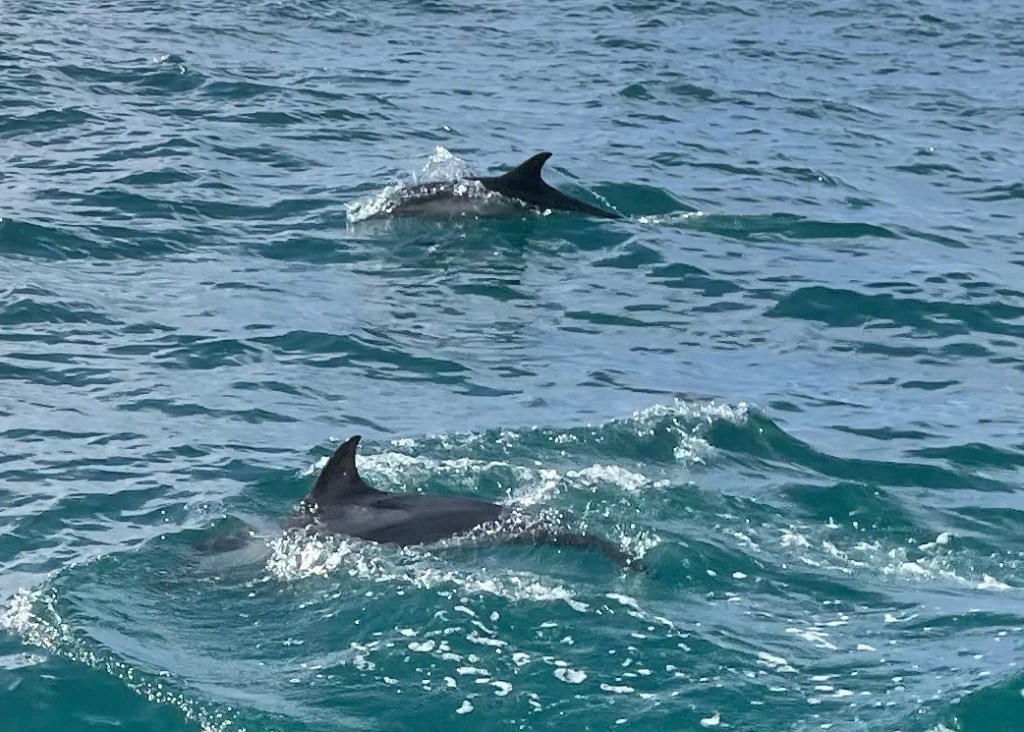
On Christmas morning I spent a few more hours trying to improve my temporary repairs. And then, oh joy! A large pod of dolphins came to visit and say Happy Christmas. They lifted my spirits, as they always do, but this time it was a doubly welcome visit – as if they knew what anxieties filled my mind. They wanted to help. It was a really wonderful and welcome Christmas gift. The most thrilling silver lining to a very dark cloud. Thank goodness for dolphins.
And that’s the end of that little tale of drama.

By way of postscript I can say that though I’m disappointed not to have sailed to the far south of South America (after all, most serious sailors want to go there, and I’d been reading so much about Patagonia; and had new life raft, new EPIRB, satellite communications, flares etc. that I knew Argentine authorities require), and I was getting along – slowly – with learning Brazilian Portuguese, in case I stopped there.
The journey west to Surinam took a further 14 days. Thanks to the wonderful pilot charts assembled by James Clarke it’s easy enough to find a route north of the Doldrums but south of an adverse equatorial current. But it didn’t take away the ever-present anxiety of faulty rig constantly challenged with relentless Atlantic swell, nor the presence of poorly lit little fishing boats scattered along the last few hundred miles.


Now the mast is still up there. Henrietta is afloat. I’ve experienced the most troublesome sailing episode of my life. And I never knew it was possible to feel so exhausted.
Sailors’ plans are forever being rewritten.

For now I’m secure and content on a mooring upriver in Surinam. Noisy howler monkeys bellow from mangrove-lined shore at dawn and dusk, and lots of birds dash back and forth catching insects. There’s a new country to explore, people to meet, creatures great and small. Plus rigging to fix – somehow.

For now, any sailing confidence I may once have had has nose-dived.