Category Archives: Older Posts

Canary Islands – Again

4th June to 30th November 2025

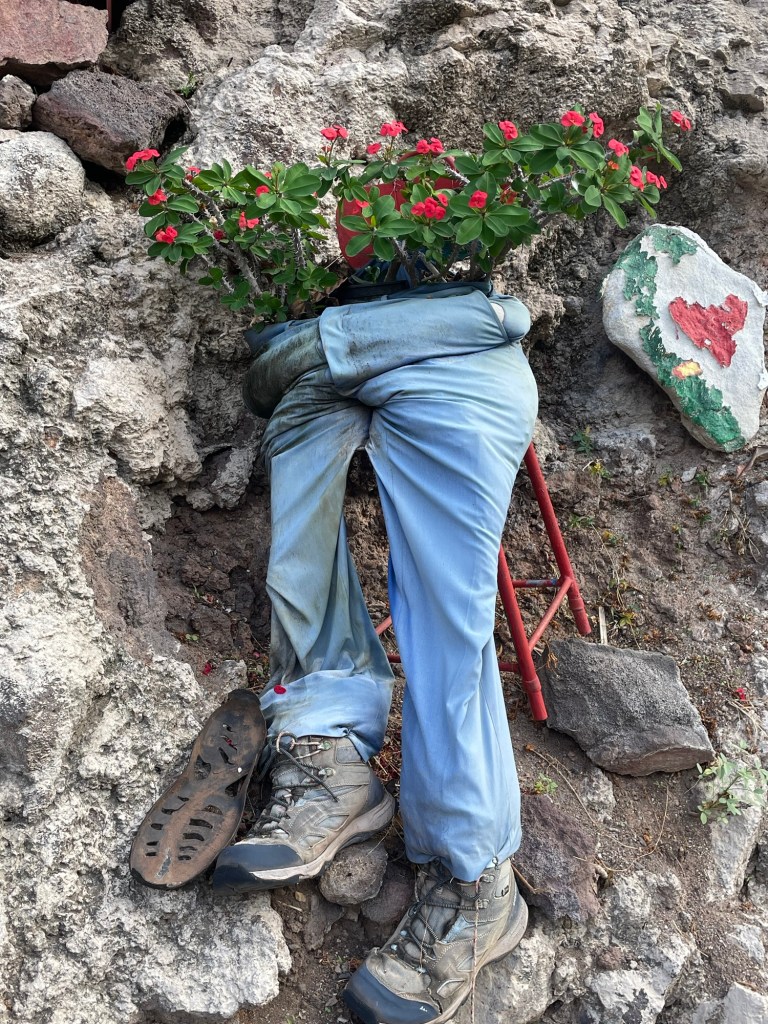
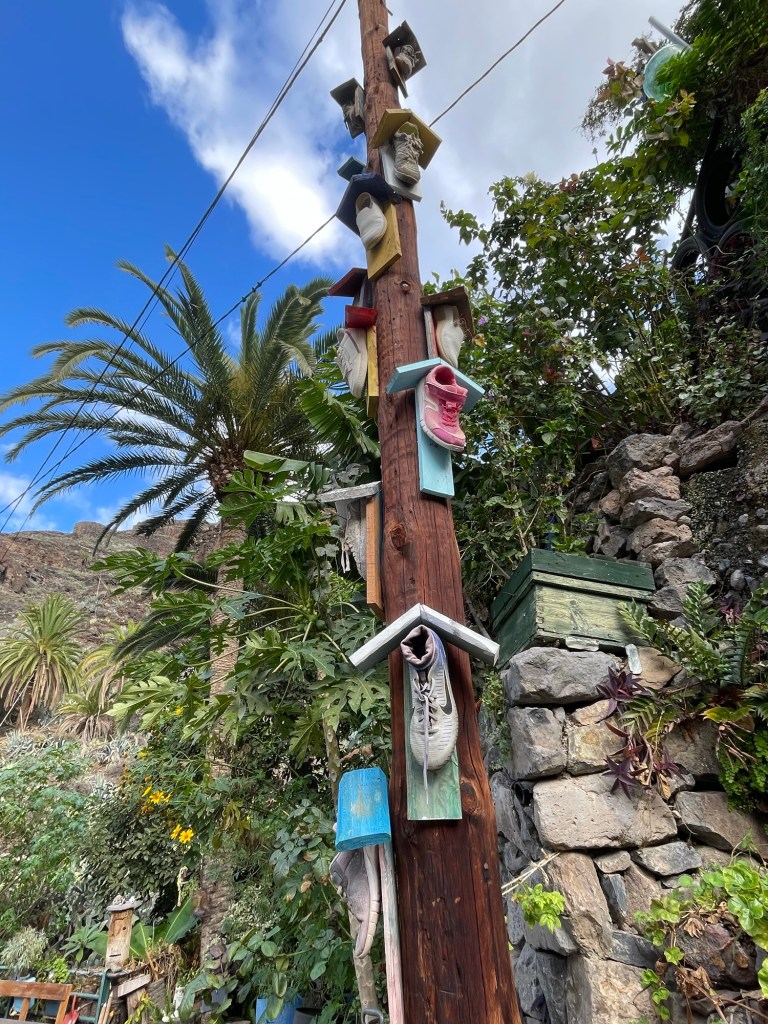
Here are a few ideas for reusing those old shoes and clothes — and even the odd kitchen appliance. My favourite is the wooden telegraph pole hung with shoes arranged as makeshift bird nests. I’m not sure the birds agree though; when I passed last week only one shoe seemed to be occupied.

I’m back once again on the heavenly little island of La Gomera. Regular readers already know it’s my favourite of all the Canary Islands, so I won’t repeat its many charms and delights.

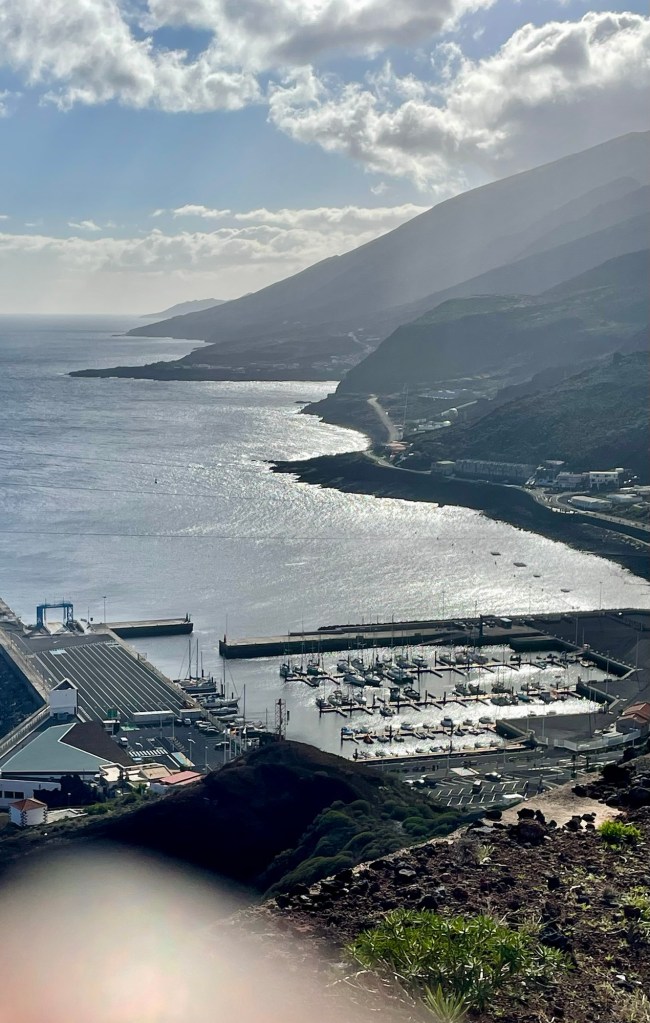
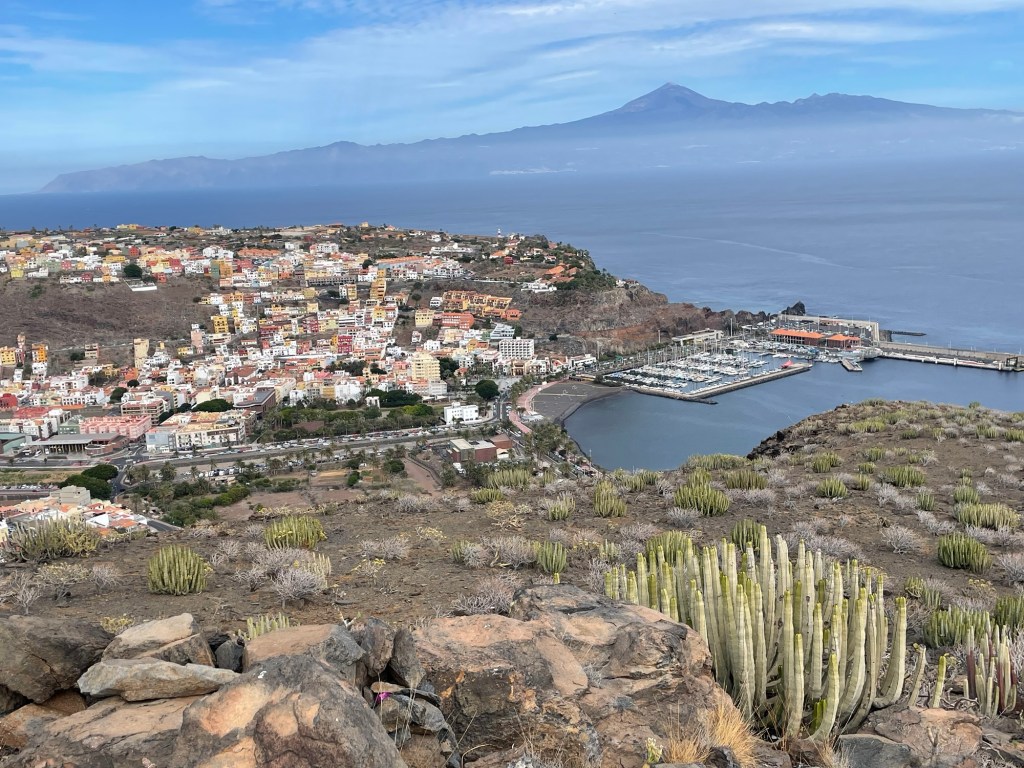
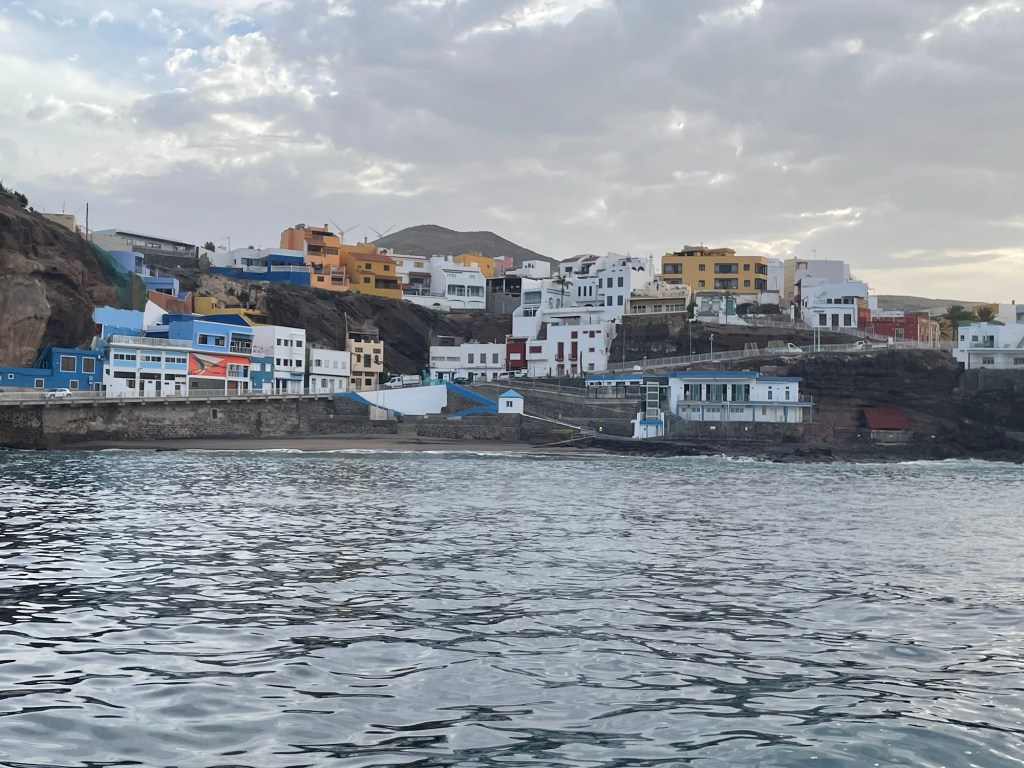
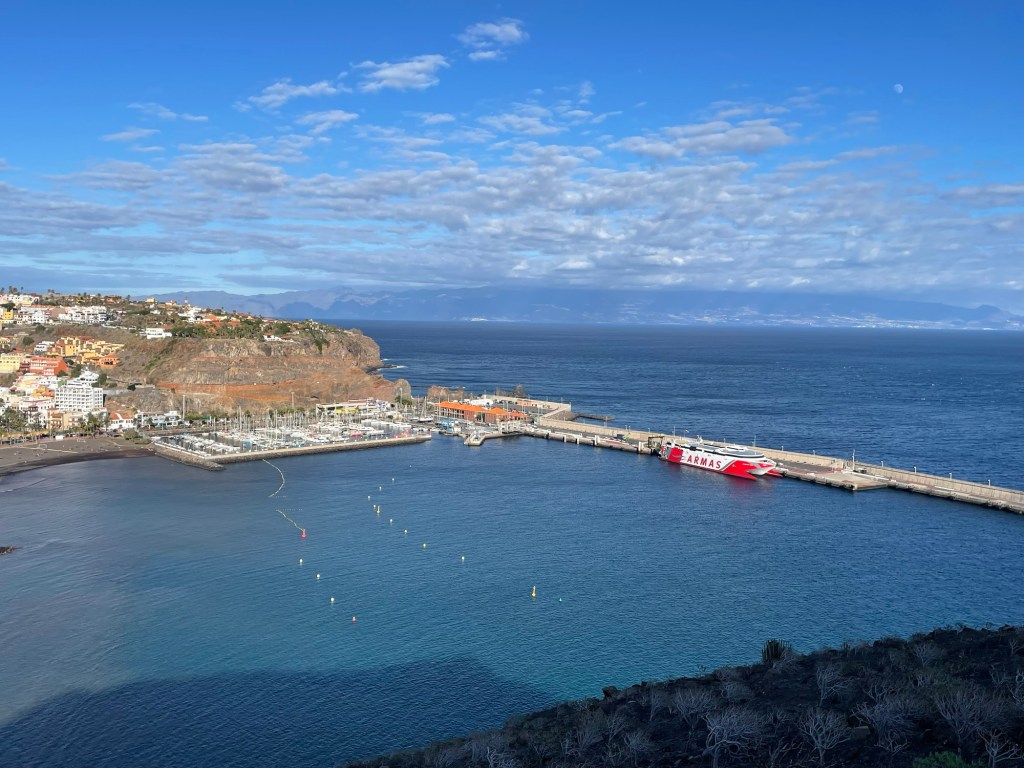
San Sebastián and Marina with Mt. Teide (on Tenerife) in background

As usual, I seem to be extending my stay — either unwilling or just too lazy to abandon the easiness of life in this very comfortable comfort zone: the bars and shops I know, the bakeries and market stall holders who recognise me, the familiar streets and houses, even the buses and their drivers.

It’s been several months since I last wrote, so here’s a quick update.

Summer at home in England, mainly Exeter, was wonderful — so wonderful that I can almost imagine settling back in England one day, even if the winters are long, dark, and damp, and motor cars clutter every available space on streets and roads. It was especially good to spend more time with family and friends. Picking blackberries is a joy, too. Plus country walks and seaside picnics.

And whatever others may say, English cheeses remain the best in the world. Likewise the BBC.

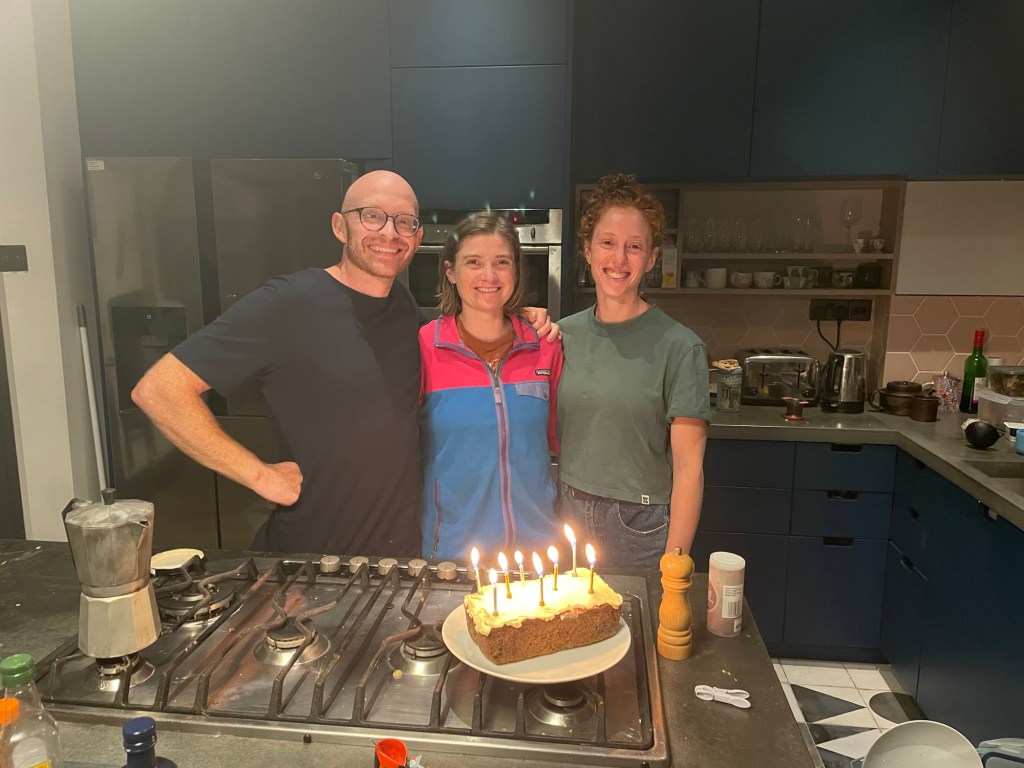
Another birthday, Sheffield
A sunny day, three sons in Exeter

But by late September England had grown too chilly, and I returned to the Canaries, the warm sunshine — and Henrietta.

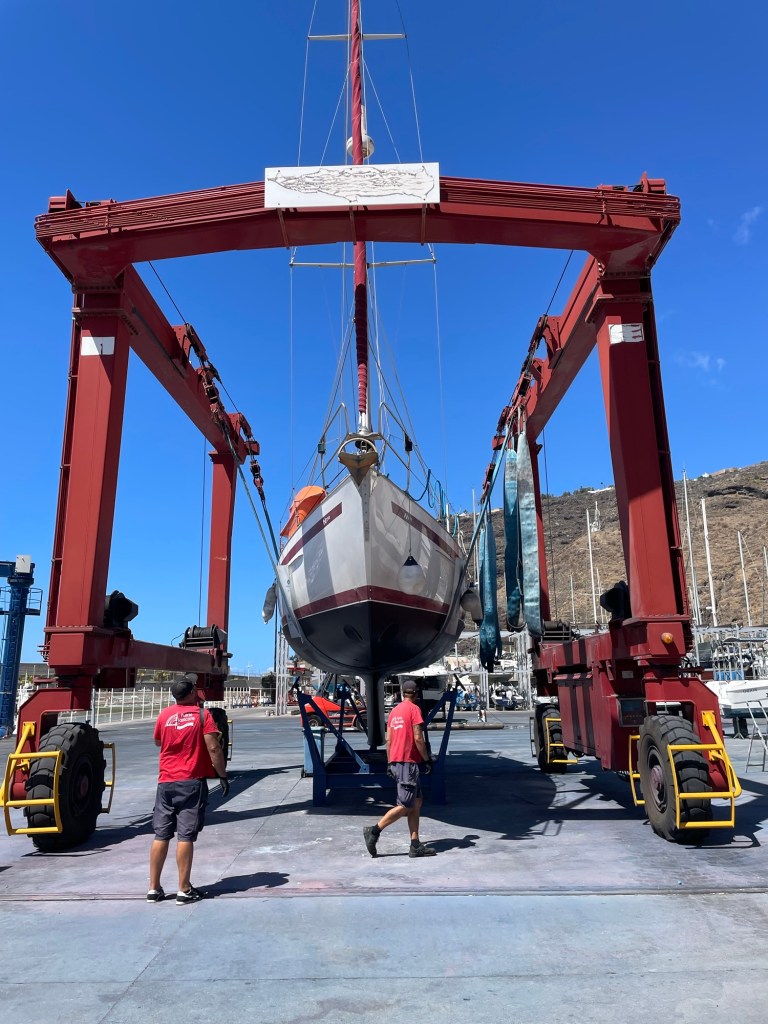
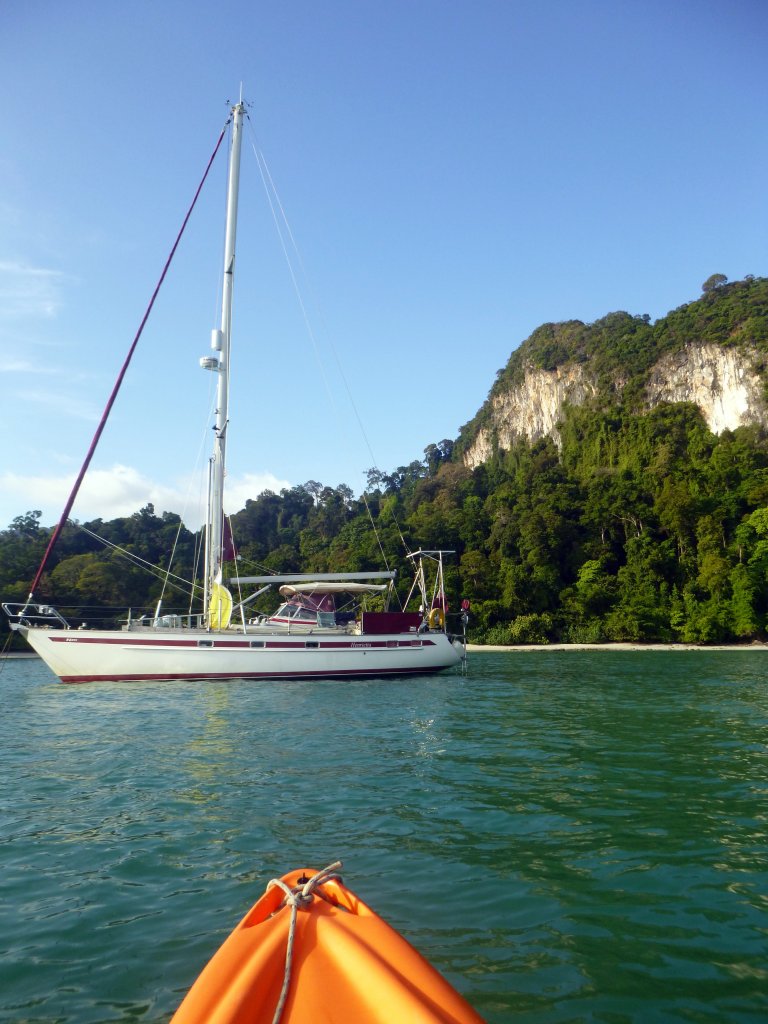
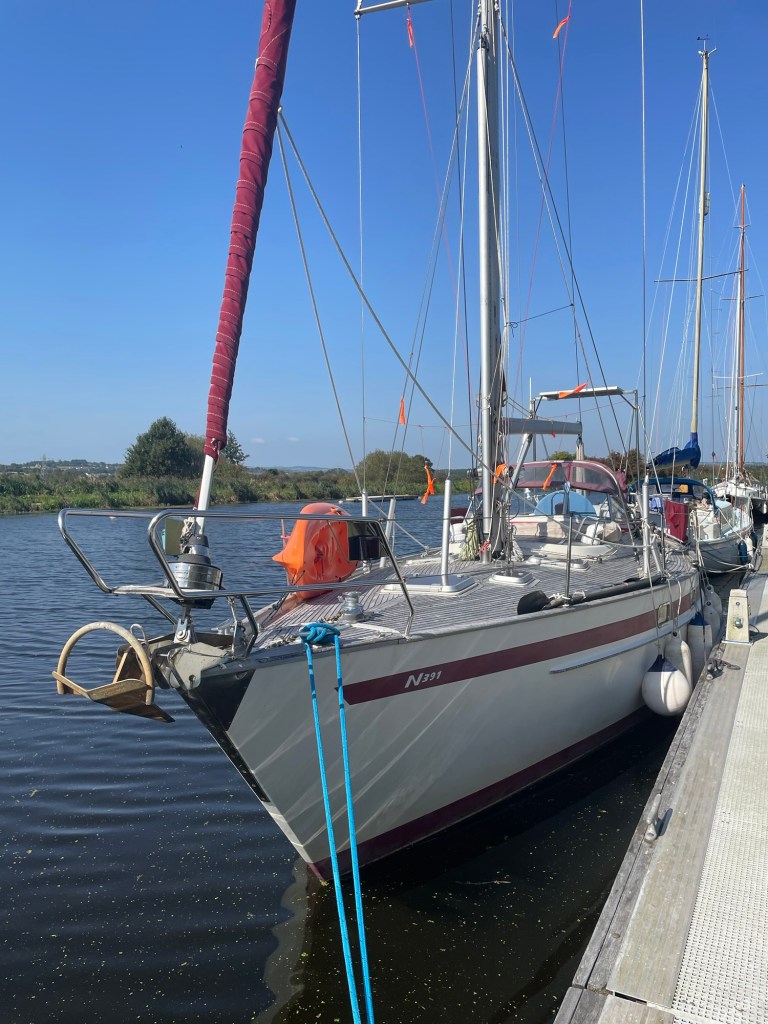
Here she is after her summer holiday in the boatyard, freshly antifouled and polished, waiting to be relaunched in Tazacorte, La Palma.

Fresh and shiny

From La Palma, it was a brisk, bouncy 50-mile sail southeast to La Gomera — enough to make muscles ache and stomach go queasy. Since then, Henrietta has been dozing in the marina here in San Sebastián.

Sail to La Gomera

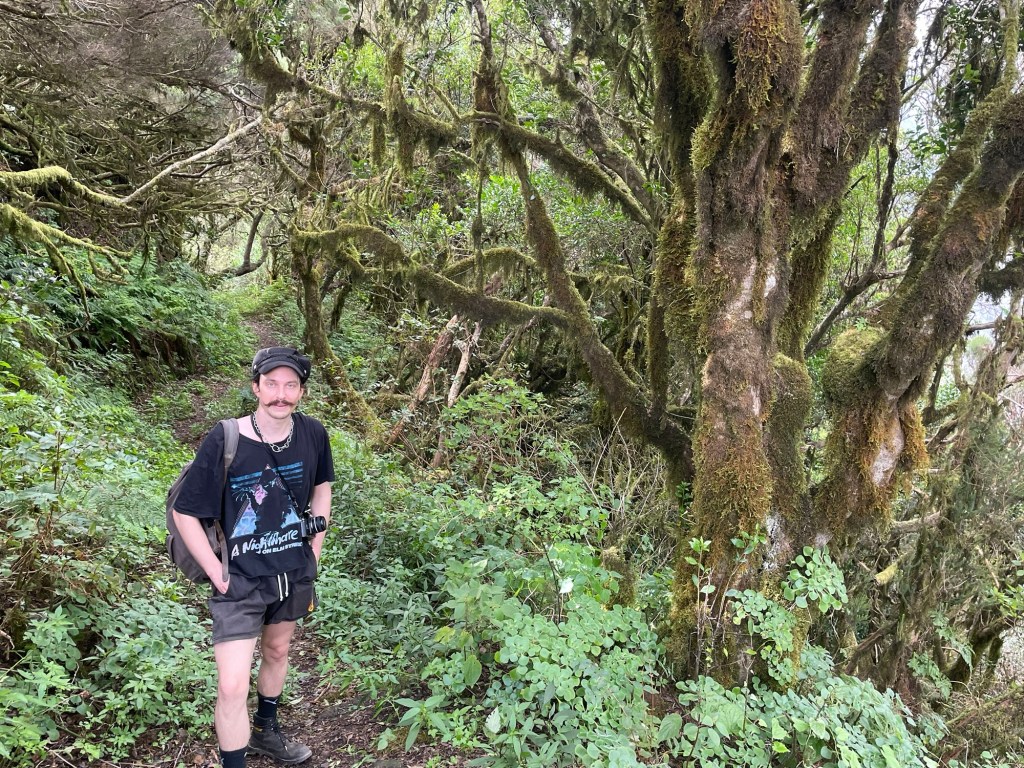
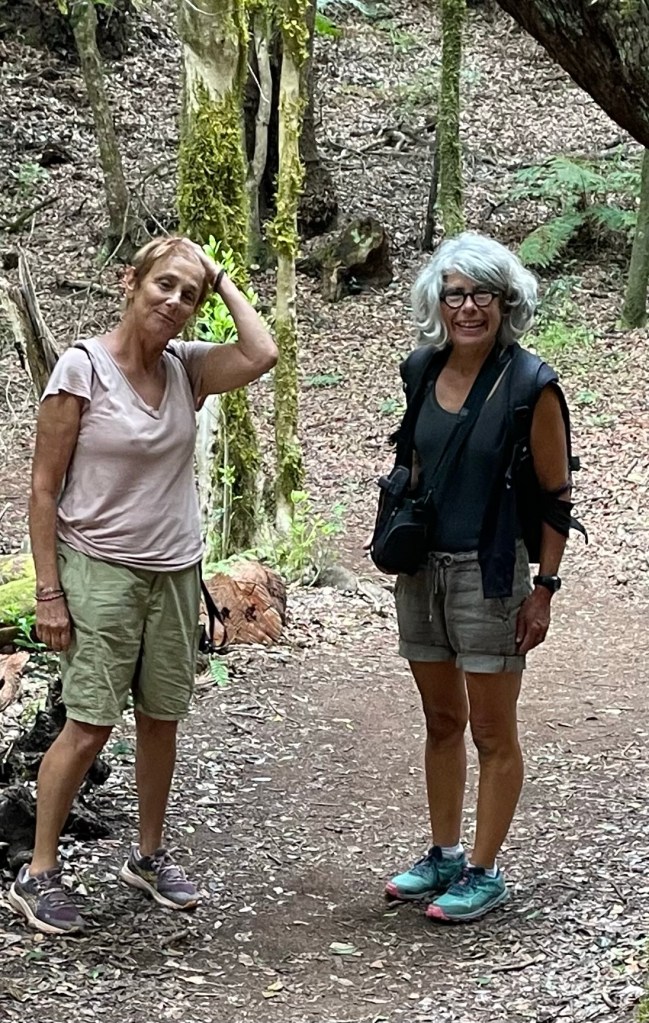
There have been visits from Armelle (La Parisienne) and my middle son, Tom. Here we are trundling along the island’s hiking trails. I know most of the paths but, true to form, still manage to get lost too often.

Through the laurel and juniper forest

Still, I’ve decided that too long in a comfort zone eventually stops being comfortable. Diehard nomads can never settle for long.

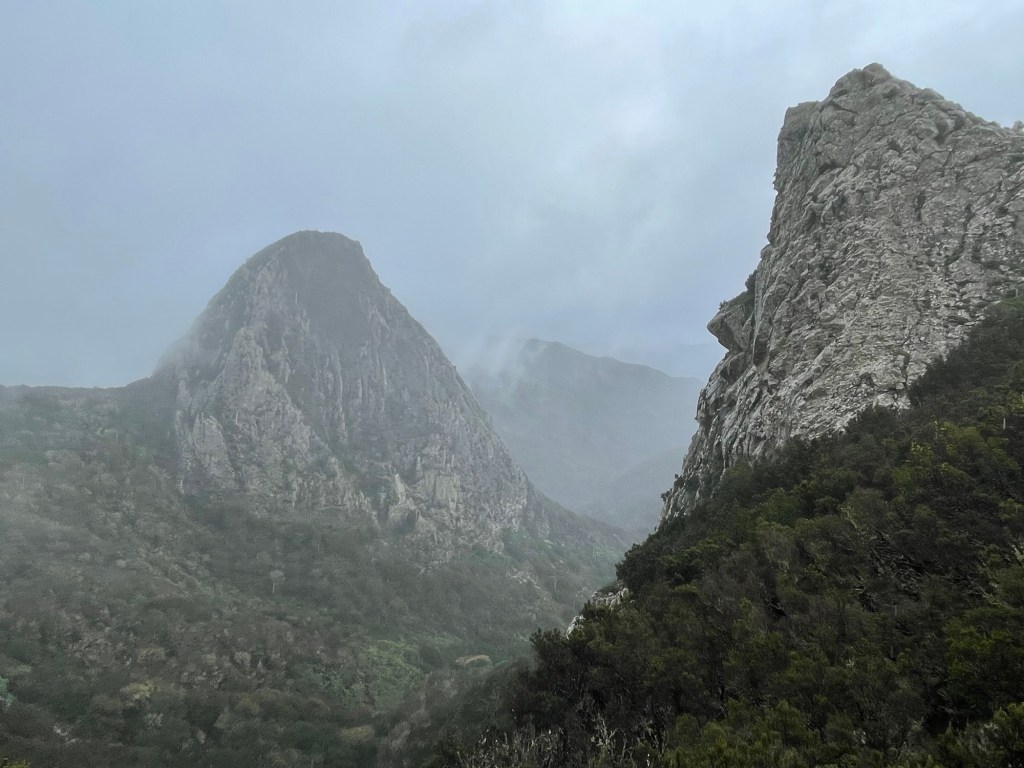
A misty day in the mountains

It’ll soon be time to move on — probably.

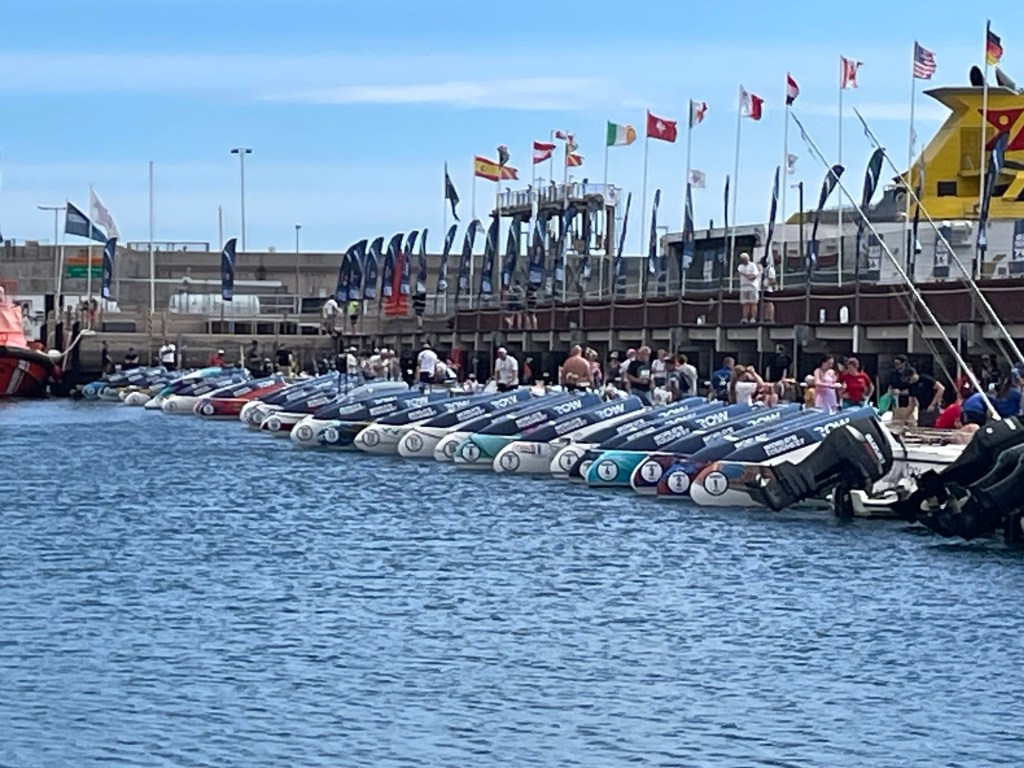
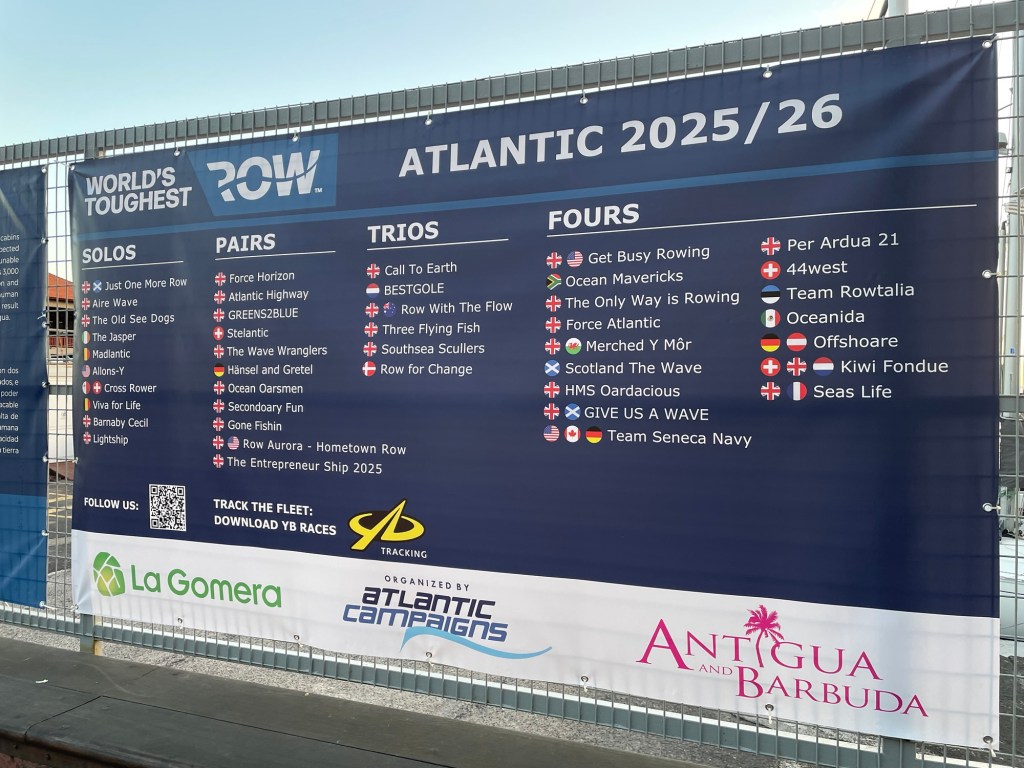
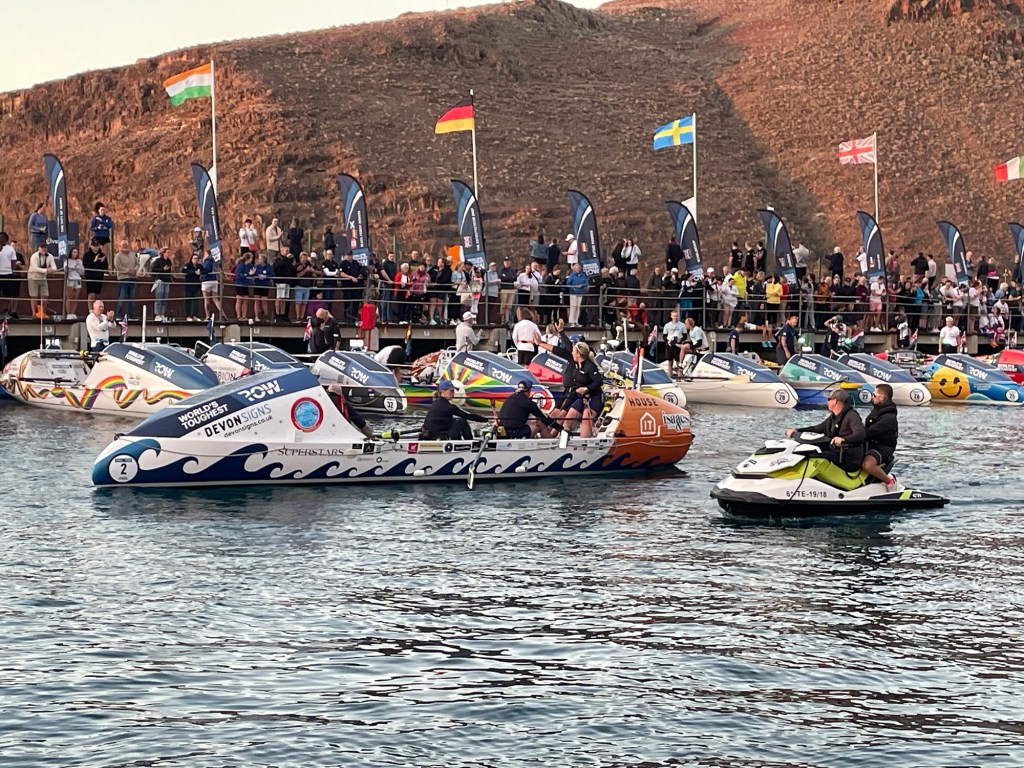
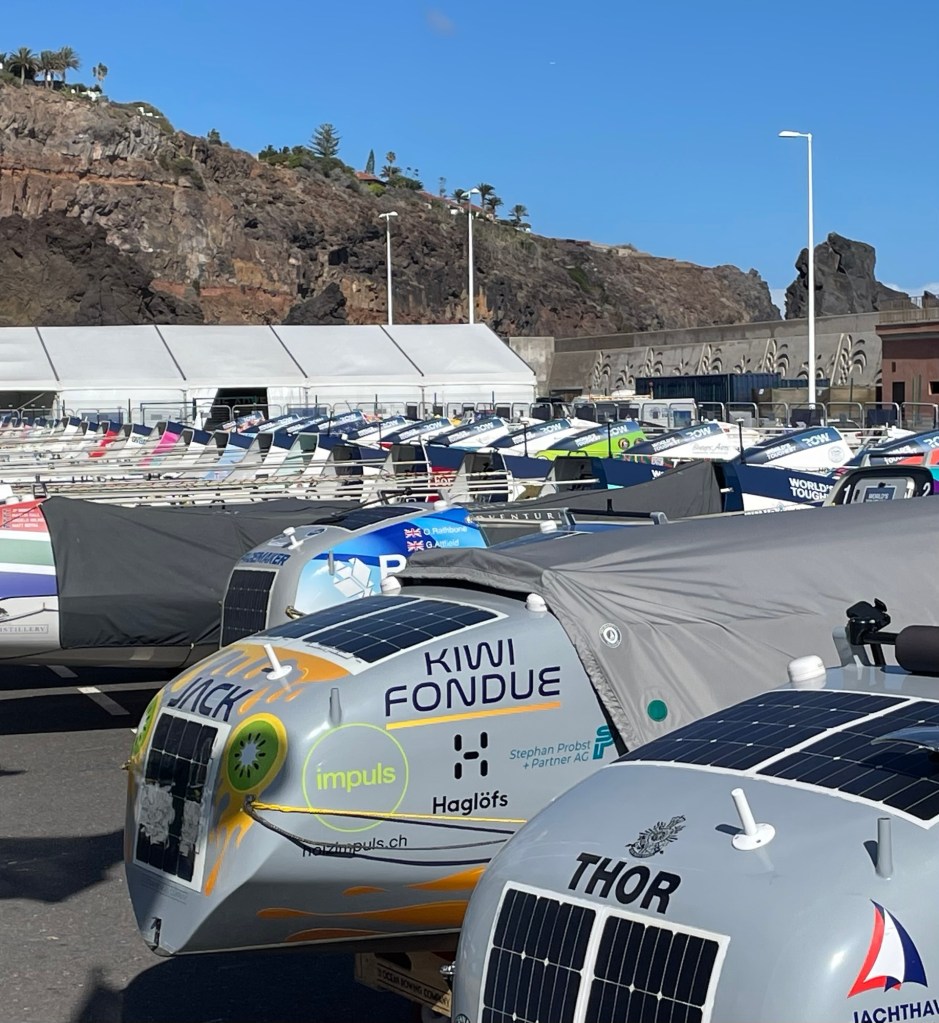
But first I’d like to watch the start of the Transatlantic Rowing Race, which this year has its biggest ever entry. Here are the 43 rowing boats waiting to be launched. Crews then have nearly 3,000 miles to row to reach Antigua in the Caribbean.

The fleet of Transatlantic Rowing Boats
If you need a lot of ‘adventure’.
Safety and equipment being checked

A Decade with Henrietta (2015 – 2025)

Henrietta, in Plymouth, June 2015 (just purchased). Sails not yet ready.

It’s been ten years since Henrietta came into my life. Apart from brief spells on land, she’s been my floating home all that time. Together we’ve visited countless wonderful places, met amazing people, and sailed some 85,000 miles, including two Atlantic Circuits, one circumnavigation and other bits and pieces.
Still fine after 35,000 miles, in Malaysia, 2018

She may be ten years older, 25 not 15, and I may be too, 75 not 65. But whereas she has lots of new bits to keep her youthful and strong (everything from sails and rigging to ropes and batteries and much more), I’m still the original model, no new bits, just slightly worn out old bits. Recent sailing in the boisterous conditions that occur around the Canary Islands has been testing!

Cape Town, 2021

This is to say, I don’t plan to stop sailing just yet but I am going to try a summer in England living in a house. Henrietta can rest in Tazacorte boatyard on the island of La Palma. She’s not spent three months out of the water before.

Britain is not nearly as dreadful as the media like to tell us; though I’ve felt compelled to write letters to my M.P. about its tacit support for the orange headed monster across the sea, and lack of condemnation for the cruel, ruthless and dishonest leaders in Israel, Sudan, Russia and elsewhere.

But, away from global horrors and just so you know what has been going on….from a few weeks in England with the delights of children and friends to see, plus Devon, Sheffield, spring flowers and country walks, I returned to Tenerife for more sailing and mountain walking. Then on to La Gomera, for more spring flowers and ever-wonderful mountain walks. 

My sunny front garden, spring in Devon, England
Sheffield, Johnny and Roz
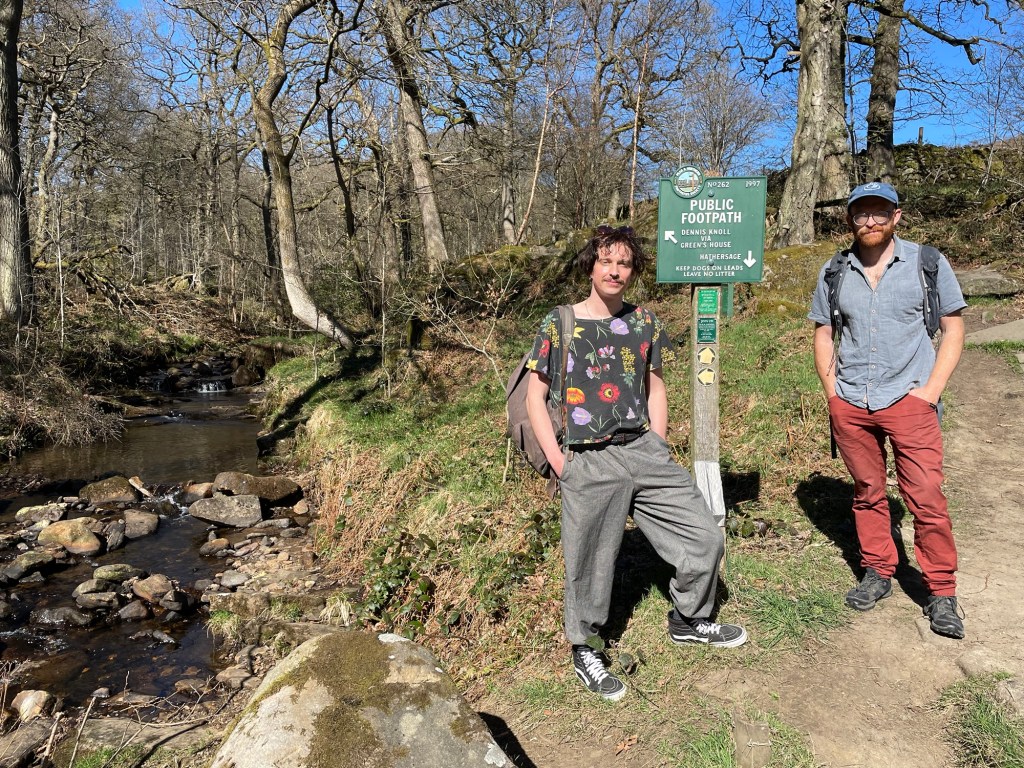
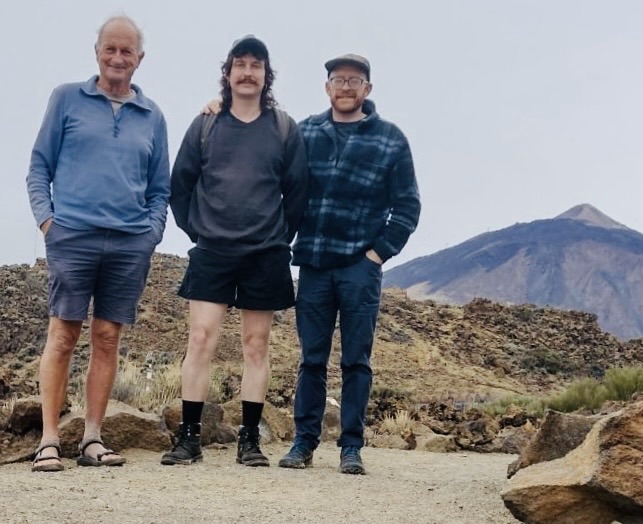
Peak District, Johnny and Tom
Bluebells on Dartmoor
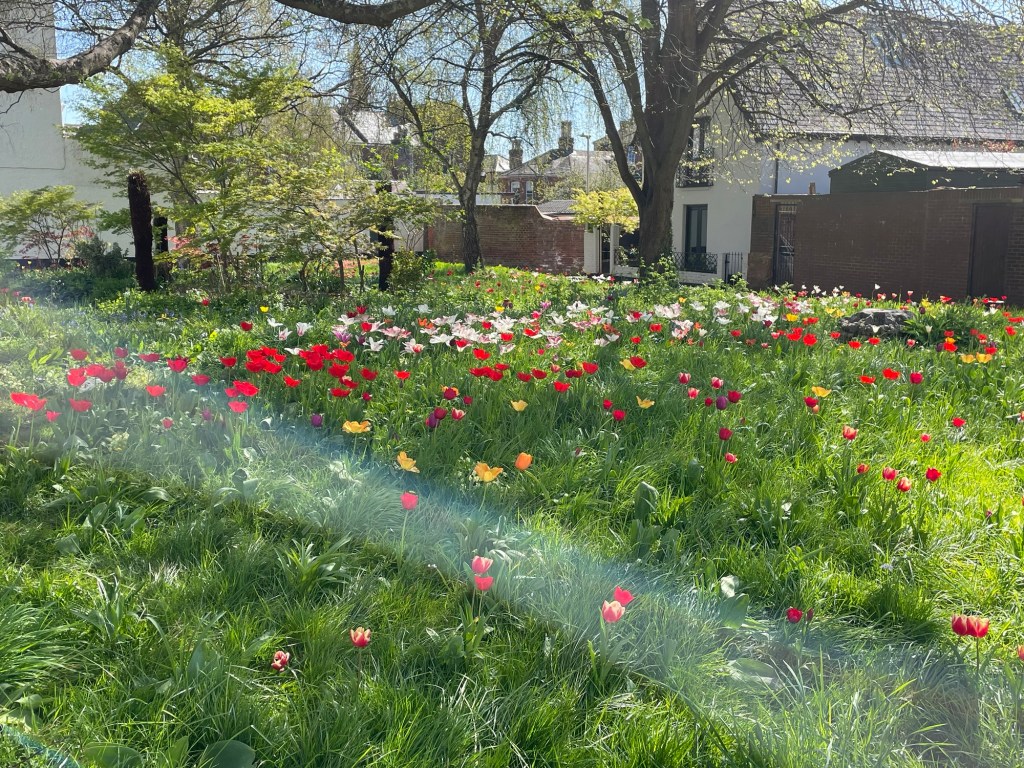
Tulips in Exeter

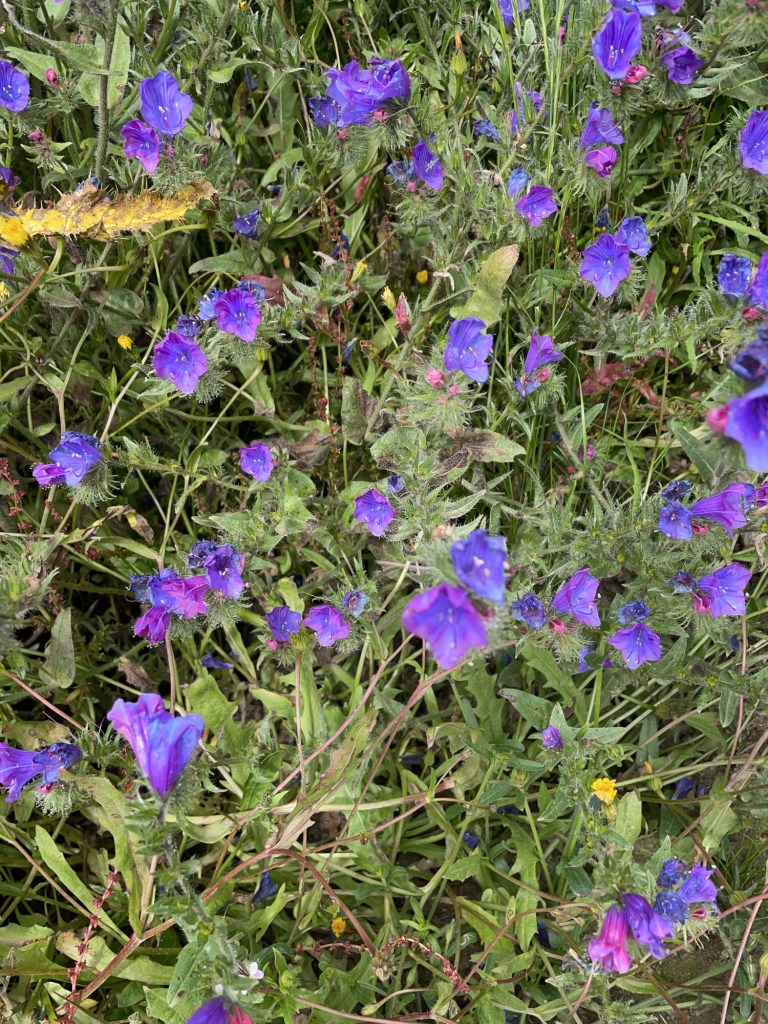
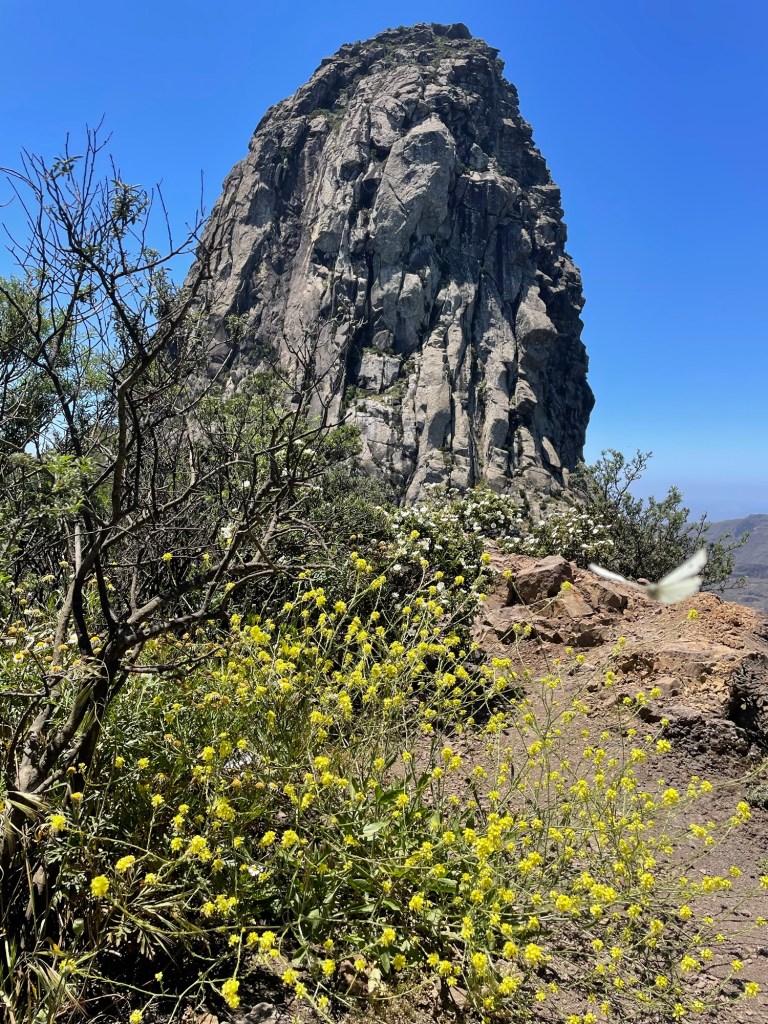
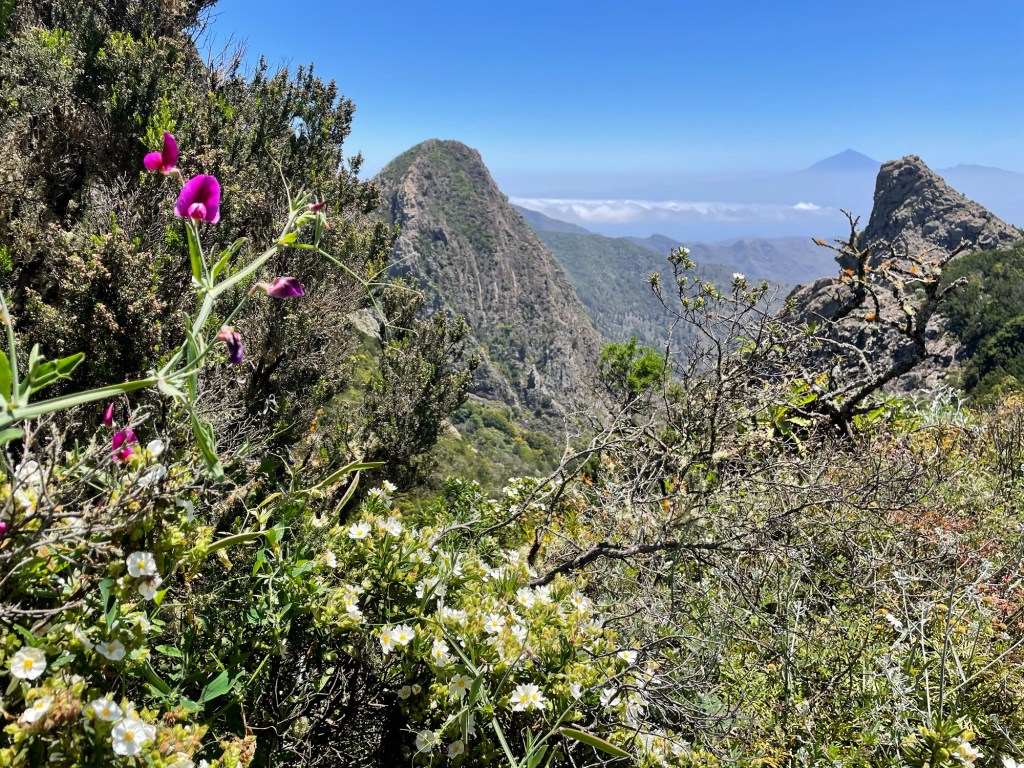
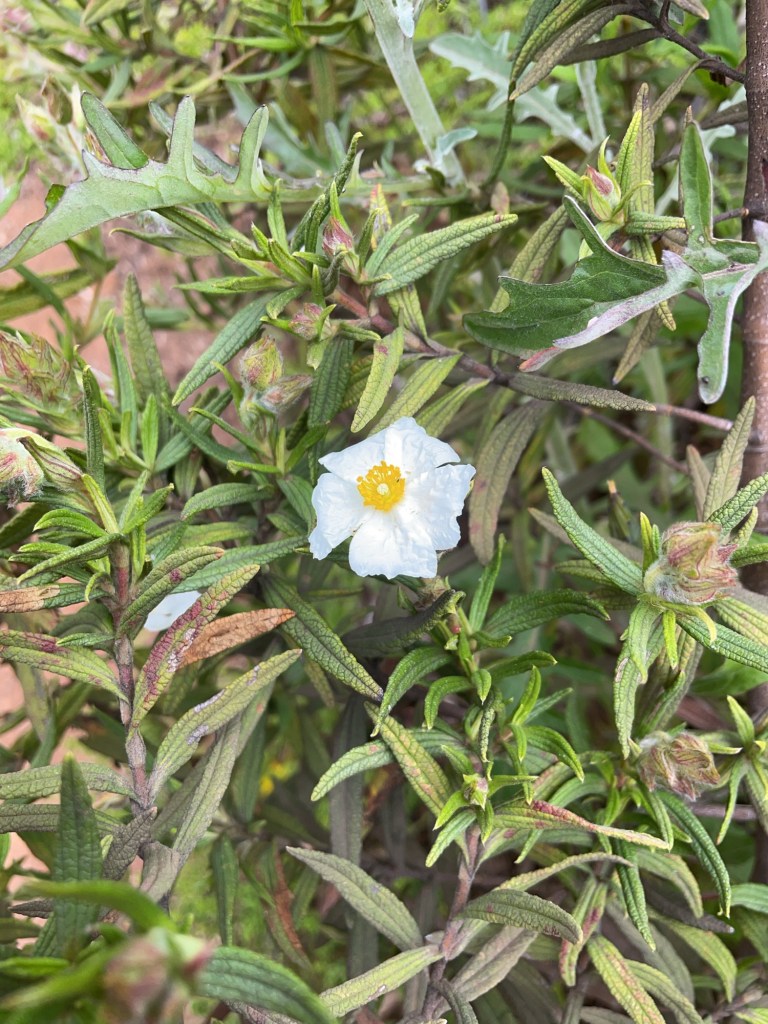
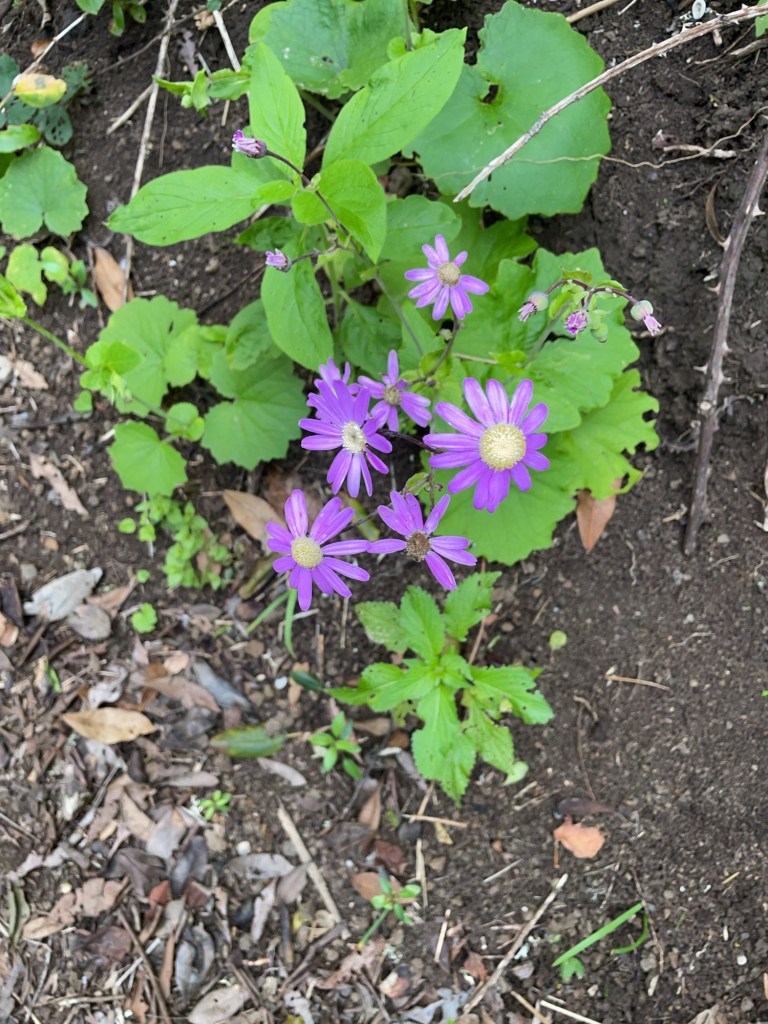
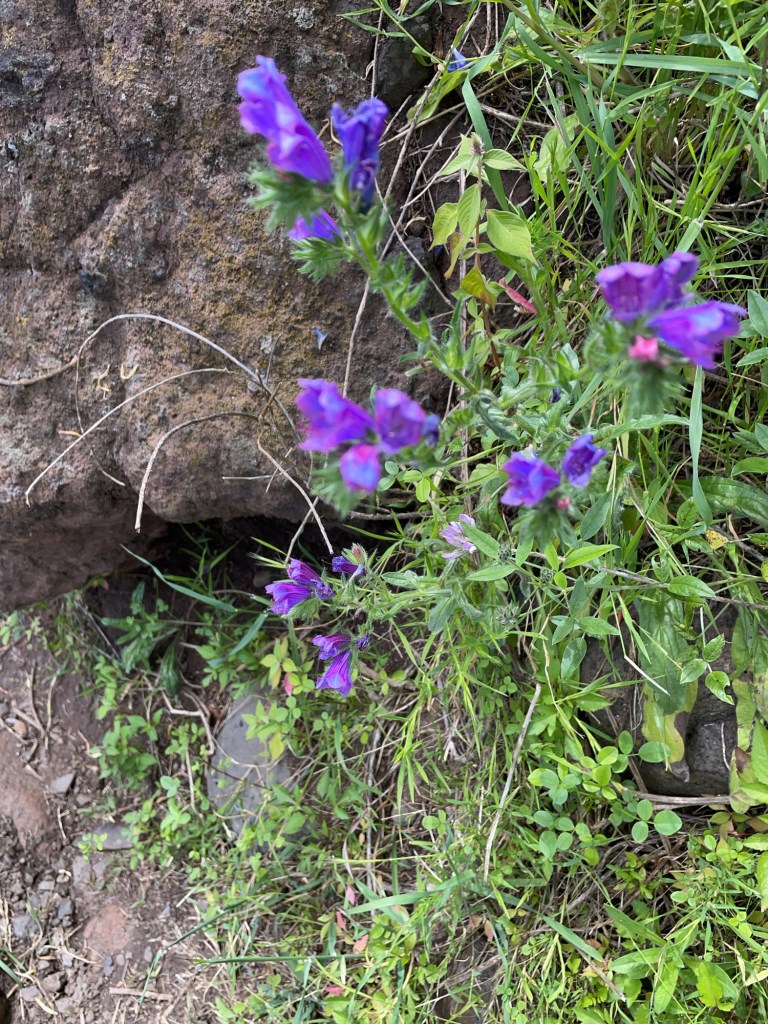
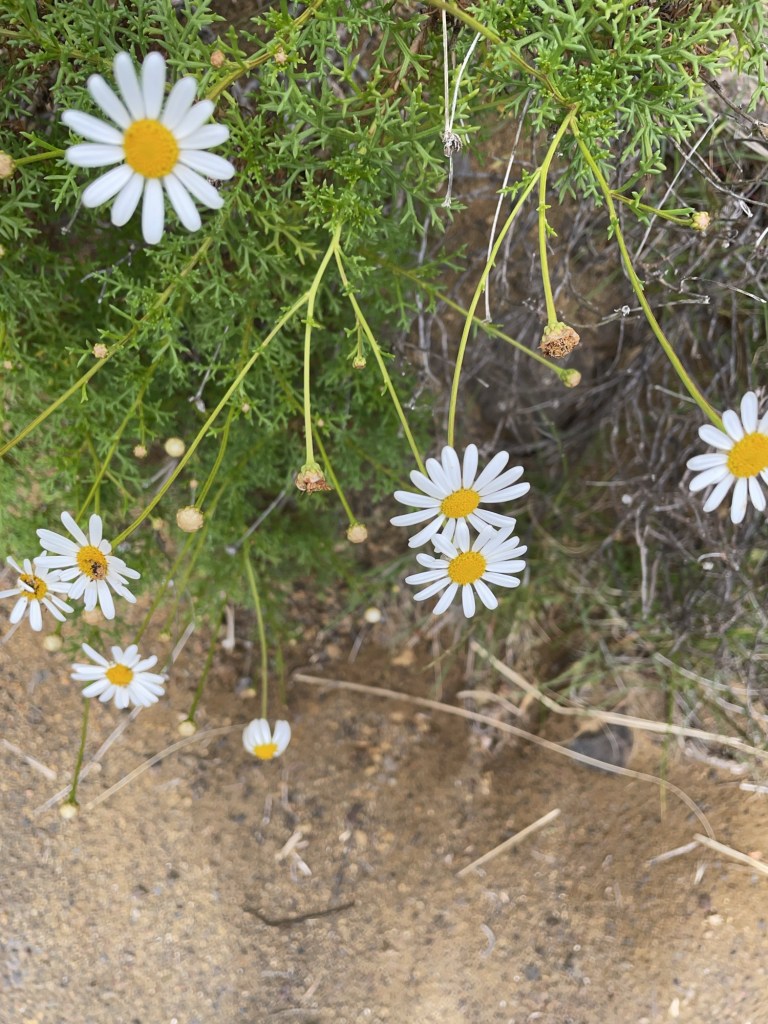
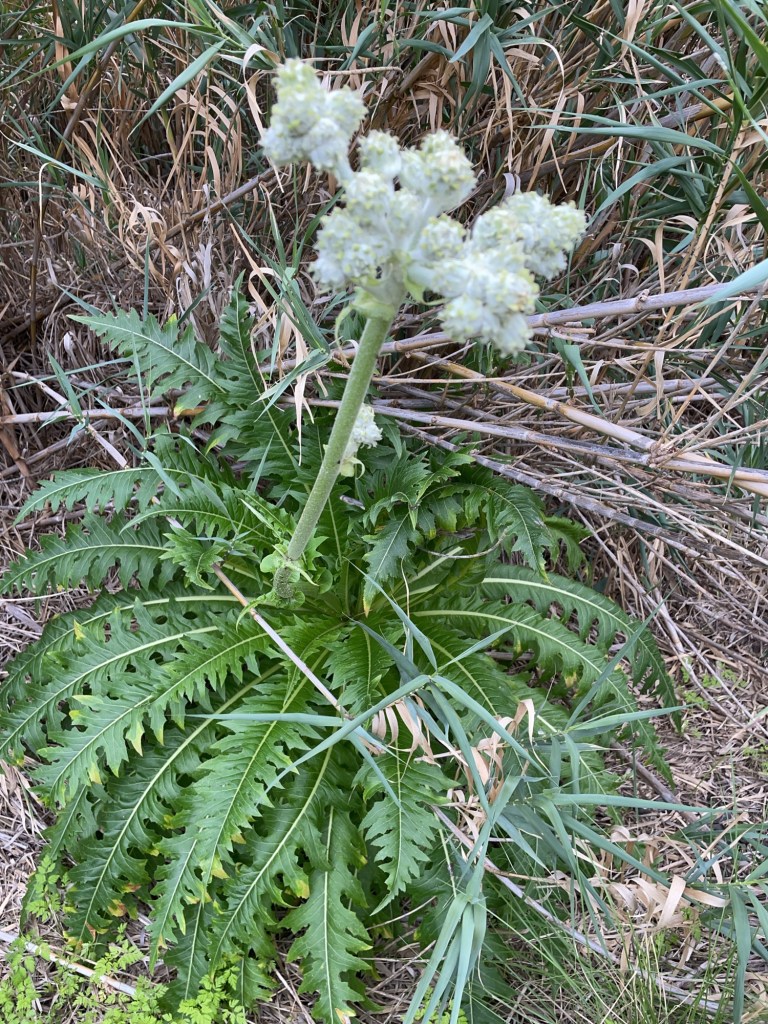
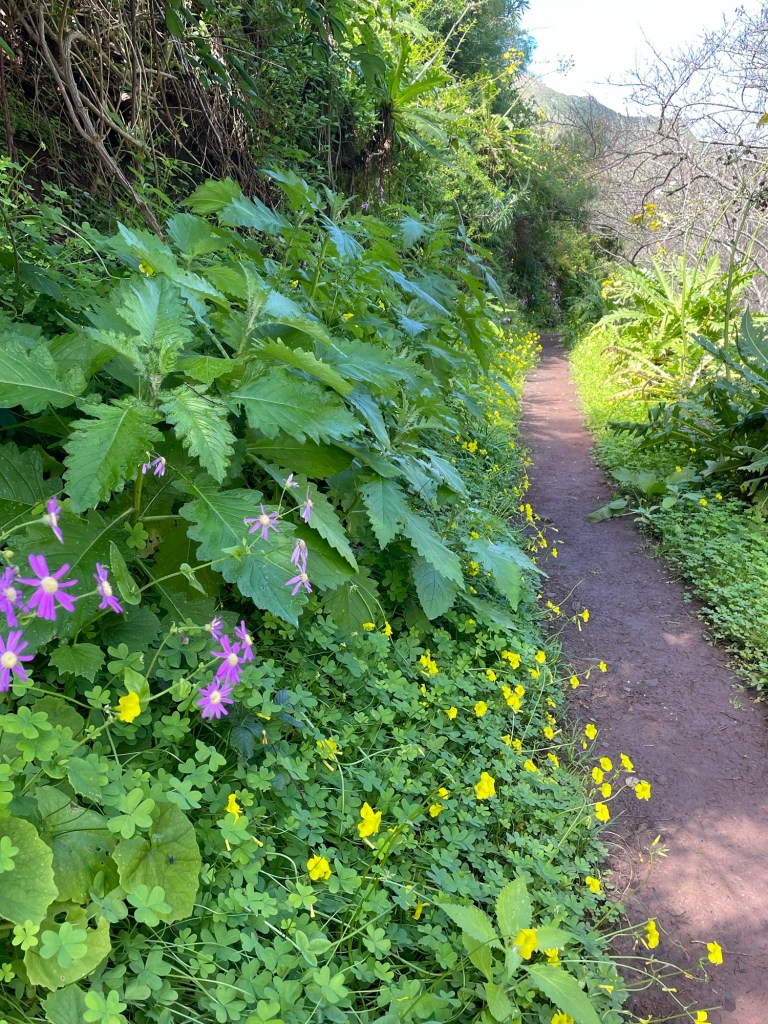
And for spring flowers on La Gomera…….

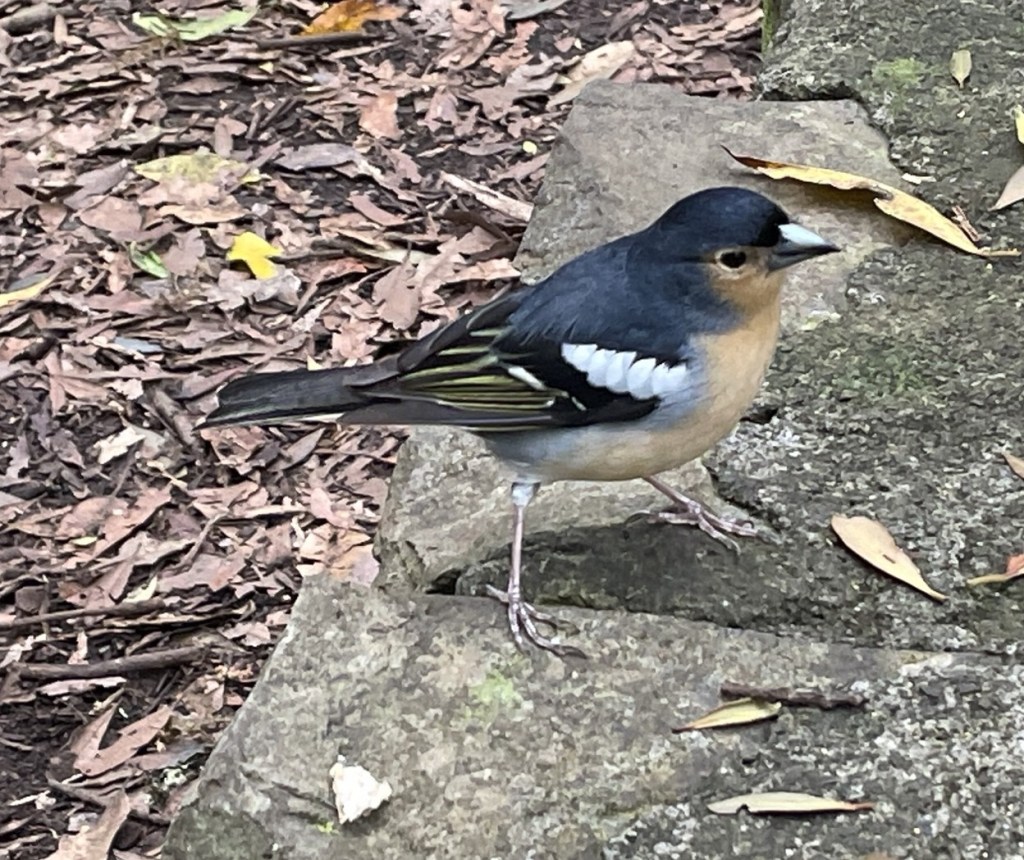
This handsome and friendly fellow, a Canary Island chaffinch, shared my lunch (he has a tiny appetite).

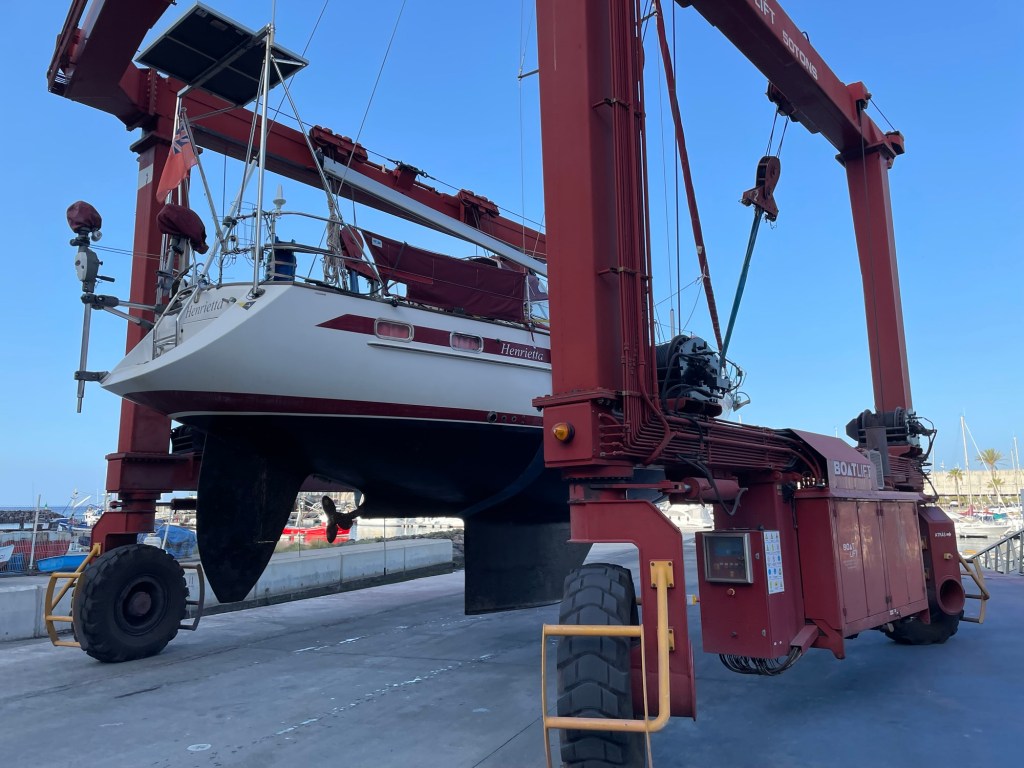
Now, on the island of La Palma, there’s a space in Tazacorte boatyard where Henrietta may rest awhile. With help from fellow live-aboard, Rian, she came out of the water this morning.

La Gomera-Tenerife-England (plane)

1st January to 15th March 2025

I’ve just flown back to sunny, very chilly England, and trips by plane are fresh in my mind.

I have to tell you that flying is a pretty dreadful way to travel!

After at least an hour’s delay in a crowded terminal you’re squeezed into a plastic and aluminium tube with lots of assorted others, breathing processed recycled bug-infested air. You feel your feet swell and your ears pop; and perhaps drink the world’s most overpriced and revolting coffee, and ponder the nagging guilt from your inexcusable contribution to global meltdown. 

Of course flying is fast and easy, but if you’re at all like me, you do anxiously look forward to getting your feet on the ground once more.

Despite its horrors, did you know that at any one time, well over a million of us are whizzing through the skies. Add to that the countless millions of others clogging airports – meeting, greeting, queuing and cursing – and it’s clear that a big chunk of humanity is swallowed up in the loathsome business of air travel.

I’d not been on a plane for several years and had almost forgotten how horrid it was. In future I’ll try to stick to my sailing boat.

But that’s enough of that. Flying is an unavoidable part of 21st century life.

Before the flight home, the start of 2025 passed happily enough – very happily in fact.  A few weeks in the much-loved island of La Gomera with another visit from two wonderful sons; walking, talking, playing, swimming. 

A rare cloudy day

Although I’m blessed (or perhaps cursed) with an unquenchable nomadic spirit, an almost constant urge to move on, I do appreciate the joys of staying put in one place for a while. In La Gomera, it’s wonderful to know local people, recognise regular visitors, and feel at home in local shops, on the beaches and along the many mountain paths that weave through the island’s magnificent rocky ravines and craggy peaks. 

Cuban music in La Gomera

Over the past ten years, I’ve spent more time in La Gomera than anywhere else on earth. What a thought. If I were Spanish, I think I’d live here.

With most of Henrietta’s repairs completed – sails, rigging, bimini, spray hood and electrics – it was time to move on to Tenerife for welding and other tricky bits that were beyond my rudimentary abilities. But, really, I doubt anyone wants to read about endless boat maintenance, so I’ll skip to something far more exciting – Tenerife at carnival time.
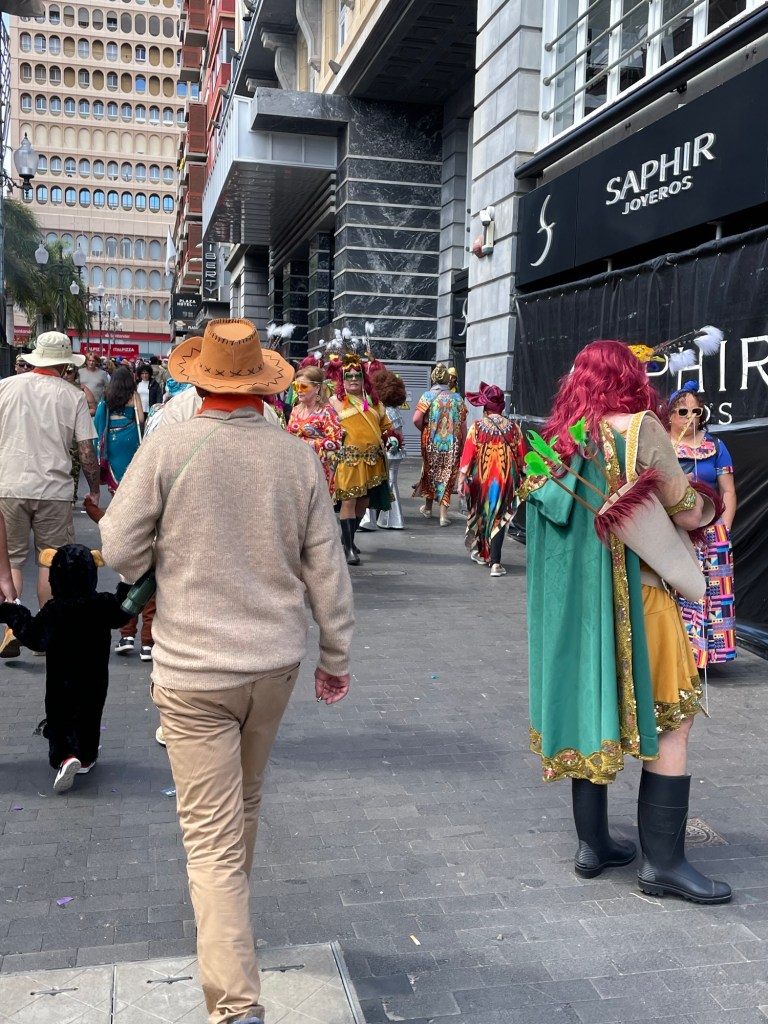
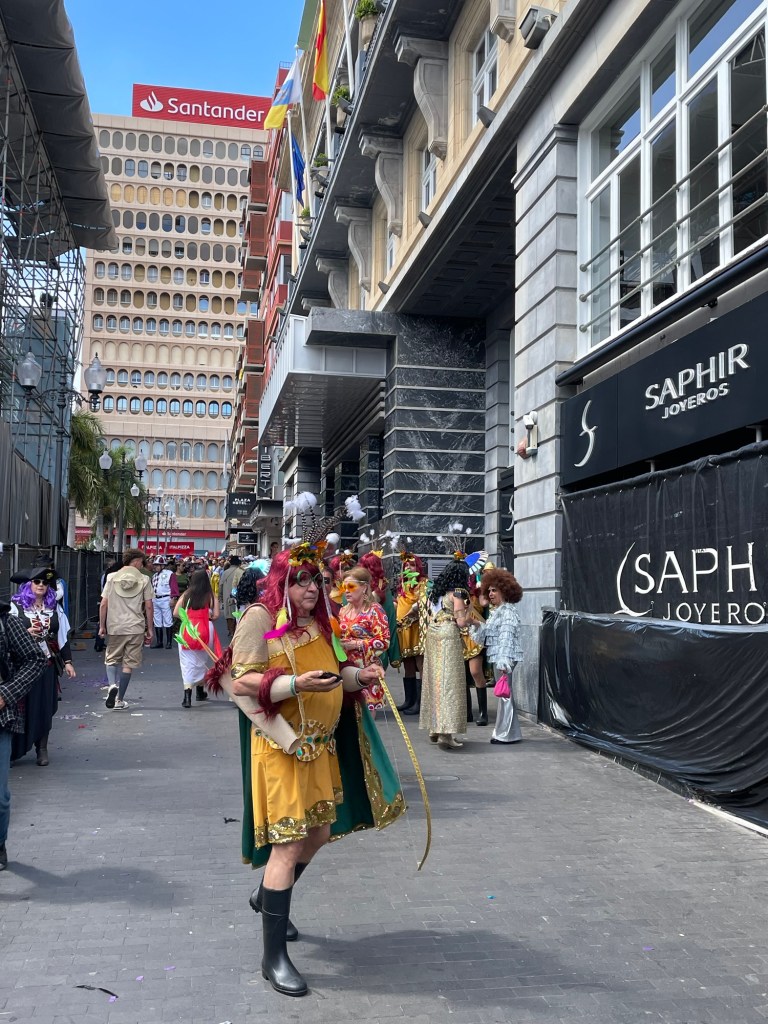
Colourful costumes are part of Carnival

Carnival is all about noise and colour – lots of both. And quite a bit of drink, too. The noise comes from several big stages set up with some of the world’s most advanced amplifiers and speaker systems. To get full advantage of the work that goes into setting up the stages, lights and noise systems, they blast out music much of the day and almost all the night – every night. (The noise, I should tell you, is the sort that thumps you in the chest and reduces your brain cells to mush.)

Well past the age of all-night revelry I’ve spent a couple of weeks lying in bed awake at 3 a.m. wondering if it’s finally time to invest in earplugs. I don’t get earplugs. Instead I tell myself to stop being so silly and appreciate my free front row ticket to a fabulous range of Canarian music culture.

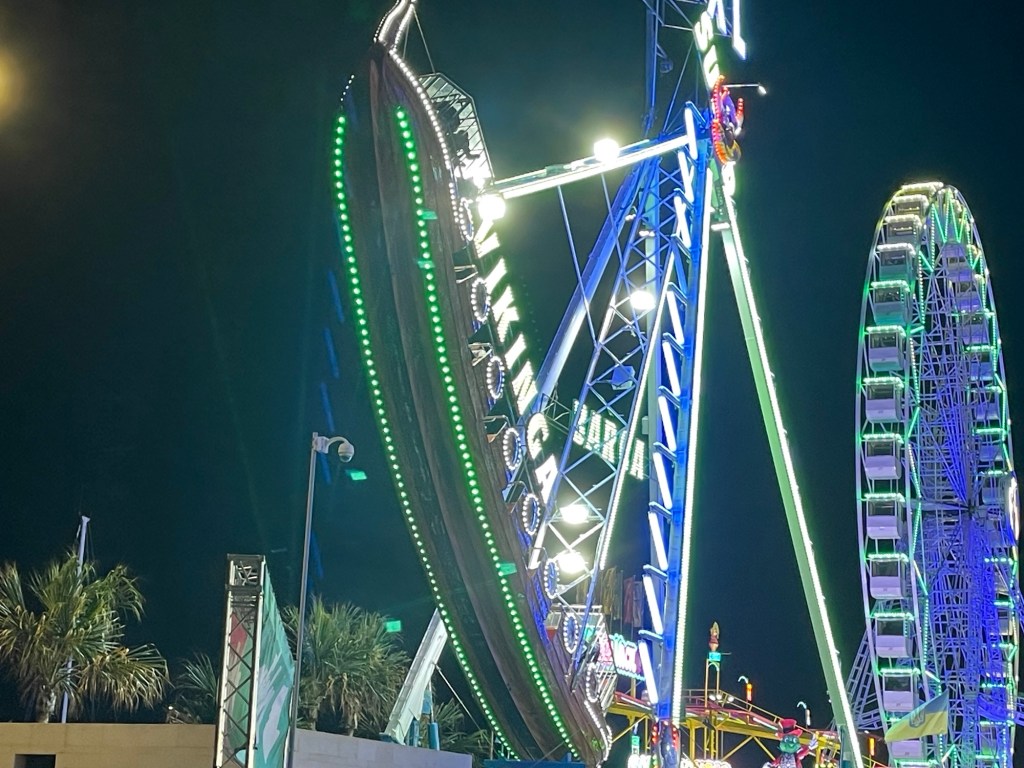
Oh! There’s also a funfair about a hundred metres from Santa Cruz marina. True to the theme of noise and colour, it’s full of thrills, colourful flashing lights and a chorus of the shrieks of overexcited youngsters. Action includes lots of gravity-defying whirly machines that can fling you, drop you, toss you and spin you – anything really to make you scream. Whatever happened to beautiful horses gently circling a carousel? Or winning a goldfish by tossing a little hoop over a stick?

One of many fairground delights
and another

Carnival concludes (except for the funfair) with a dazzling fireworks display – a final explosion of noise and colour. And by this stage, I’ve come to love it all.

Fireworks

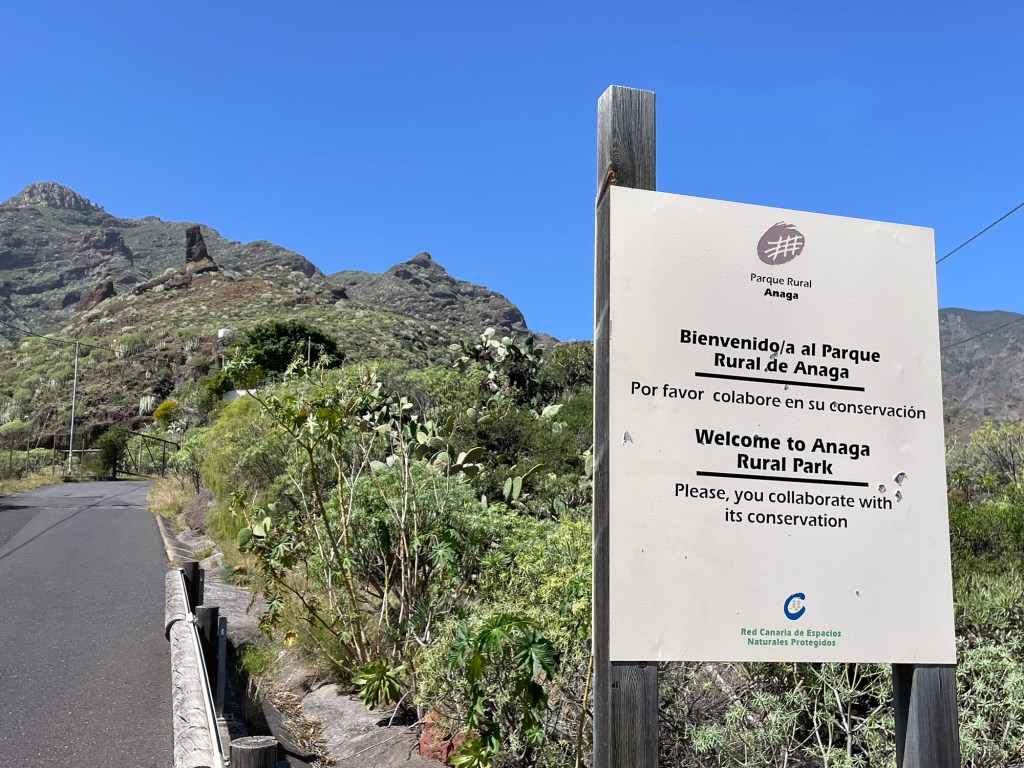
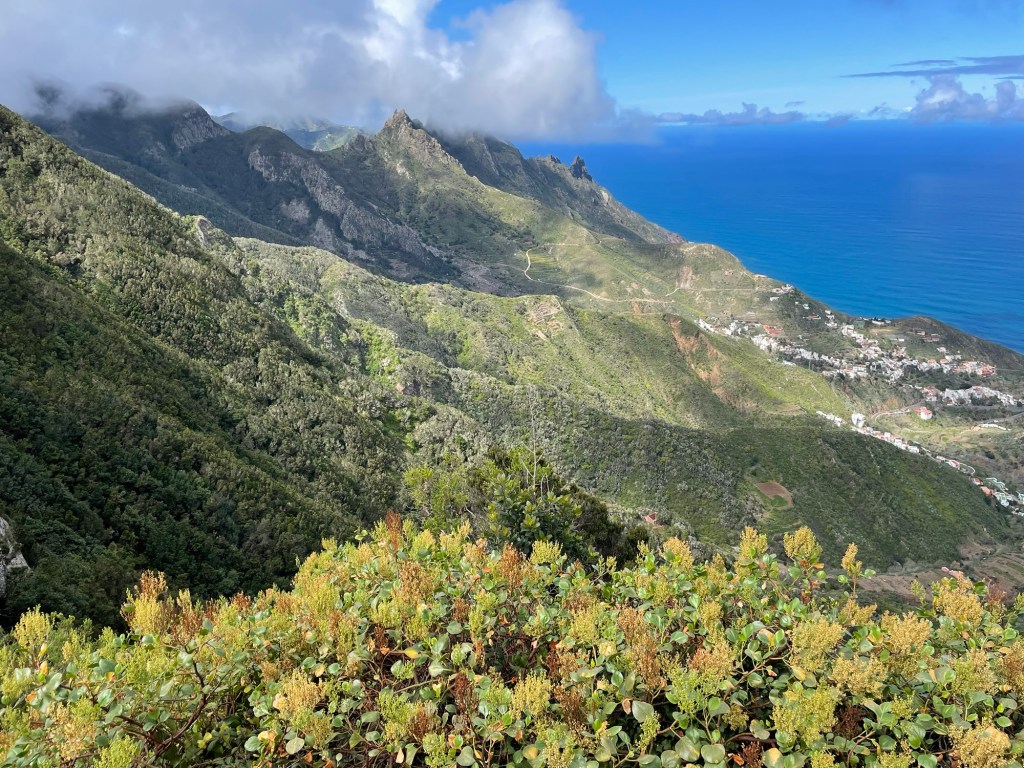
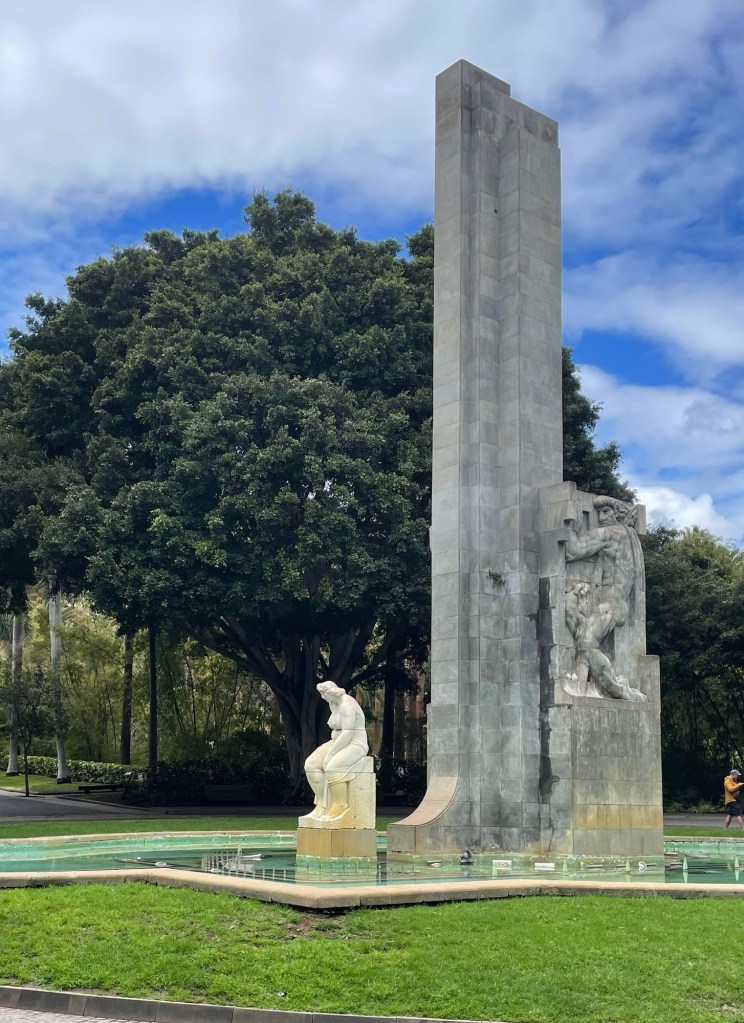
There are many fine mountain walks in Tenerife, so, together with local interests in Santa Cruz – museums, auditorium, parks – and extensive bus services, I’ve begun to find my way around the peaks of the Anaga Rural Park. 

Auditorium

Lanzarote, Tenerife, La Gomera and end of 2024

25th November 2024 to 1st January 2025

From Lanzarote there was a pleasing overnight sail to Gran Canaria before cruising on to Tenerife, a gentle few days to end November.

Overnight off this pretty village, Sardina, Gran Canaria
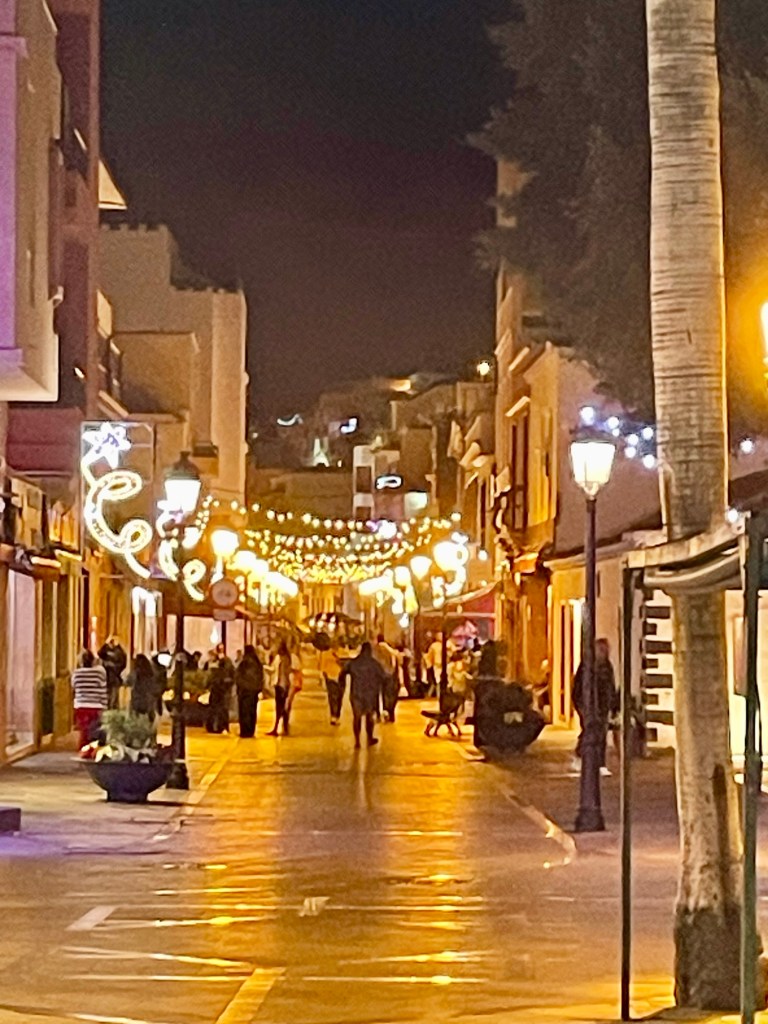
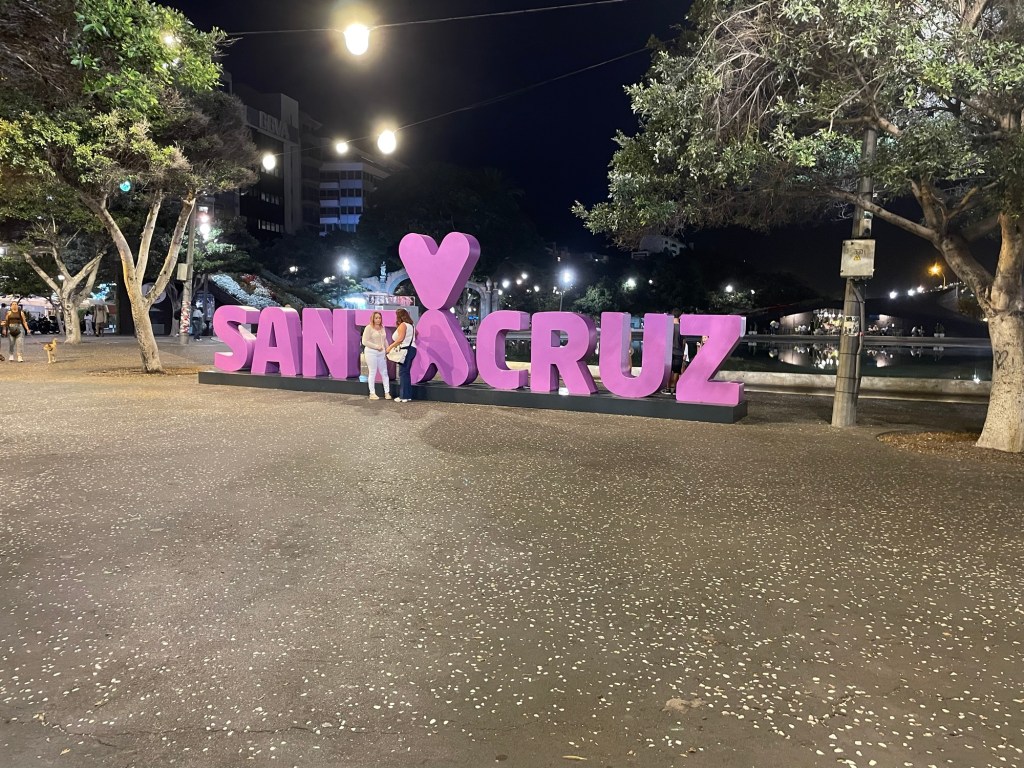
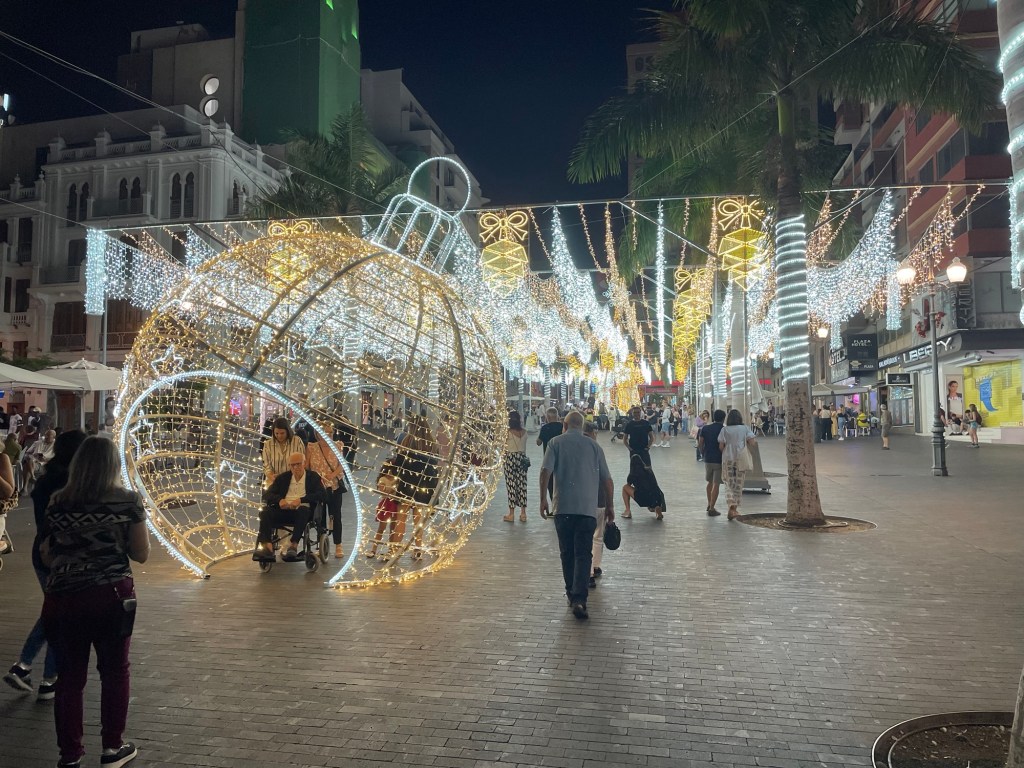
Santa Cruz, Tenerife, brightly lit for Christmas

But now, writing this at the start of another year, 2025, means I pause and reflect on the past year. 

For so many around the world, 2024 was a terrible year of struggle and suffering – especially you must think of those in Gaza, Ukraine, Sudan, Mayotte and countless other troubled places; you have to appreciate your own privileged extreme good fortune. If you’re reading this you are alive, probably safe, well fed, housed and generally unthreatened. 

For me, on Henrietta, the year gave just over 10,000 miles of great pleasure and adventure, a few frustrations and troubles – the highs and lows of sailing life. Meeting old friends and new, visiting well-known old haunts and finding new ones. Another extended Atlantic Circuit, cruising the English Channel, a two month rest in Exeter Canal and train trips to friends in Continental Europe.

Early December, Tenerife…..

Visits from sons, Johnny and Tom
Walking Tenerife (That’s Teide, Spain’s highest mountain in the background – we didn’t go up)

Now, I find myself back in La Gomera, my favourite Canary Island. This is just a short post as I’m still recovering from a long mountain walk yesterday and from noisy New Year festivities last night.

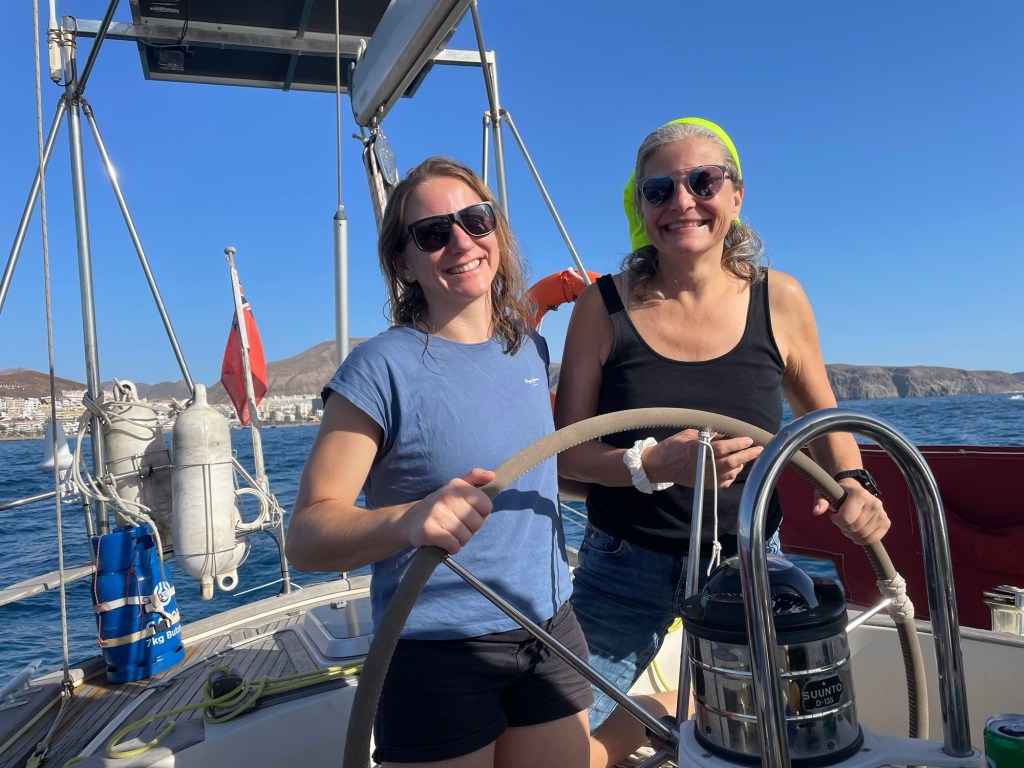
Sailing over to La Gomera with Laura and her mother, Yvonne
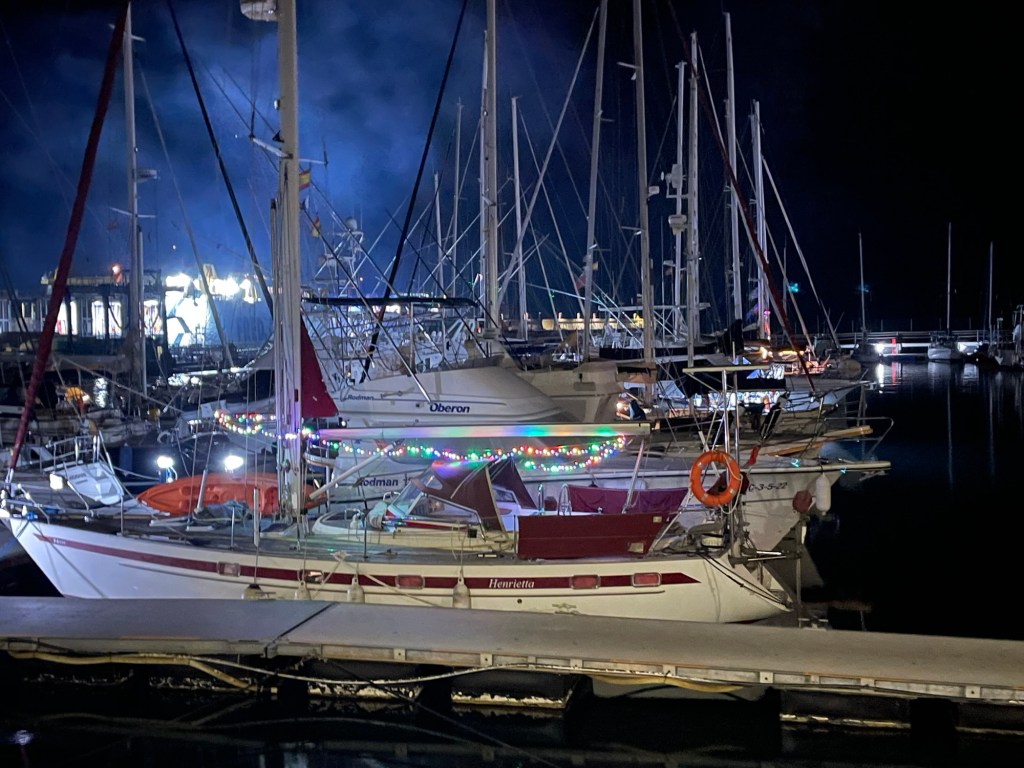
Henrietta with Christmas lights
New Year in San Sebastián, La Gomera

It’s been a joy to have wonderful visits from my two elder sons, Johnny and Tom; walks and meals with fellow West Country sailor, Nigel; a sail and brisk mountain walk with lovely Laura and her mother, Yvonne; and, as ever, boat maintenance work and extensive solitary walks in the mountains.

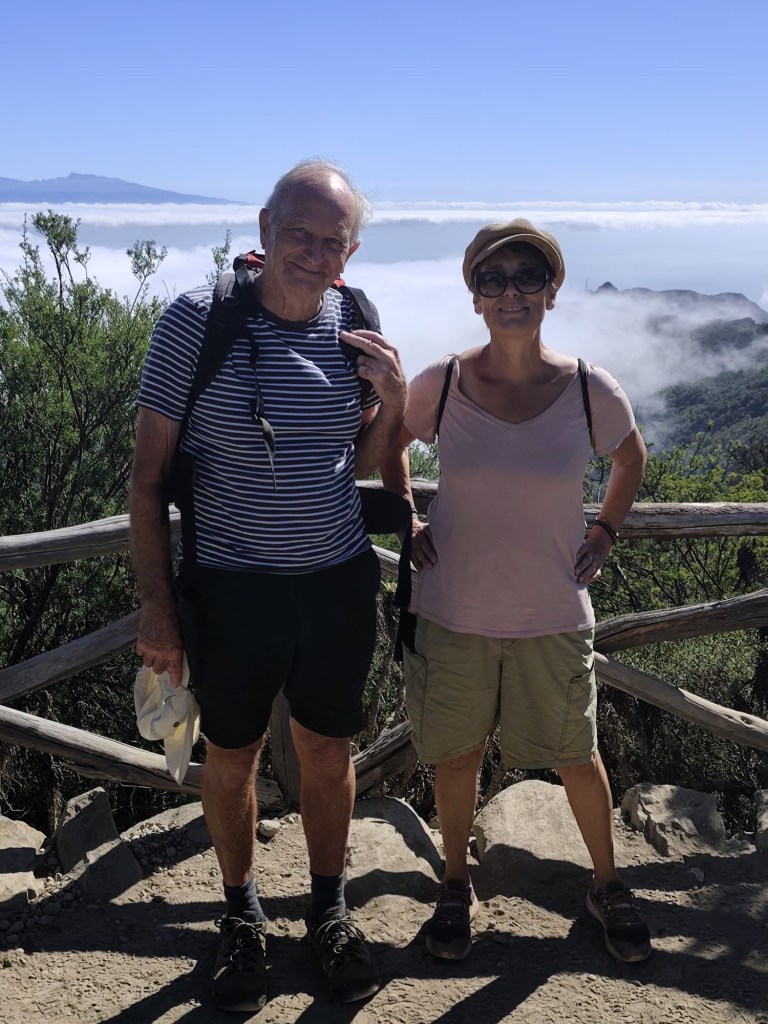
Senior citizens out for a walk, Nigel and I
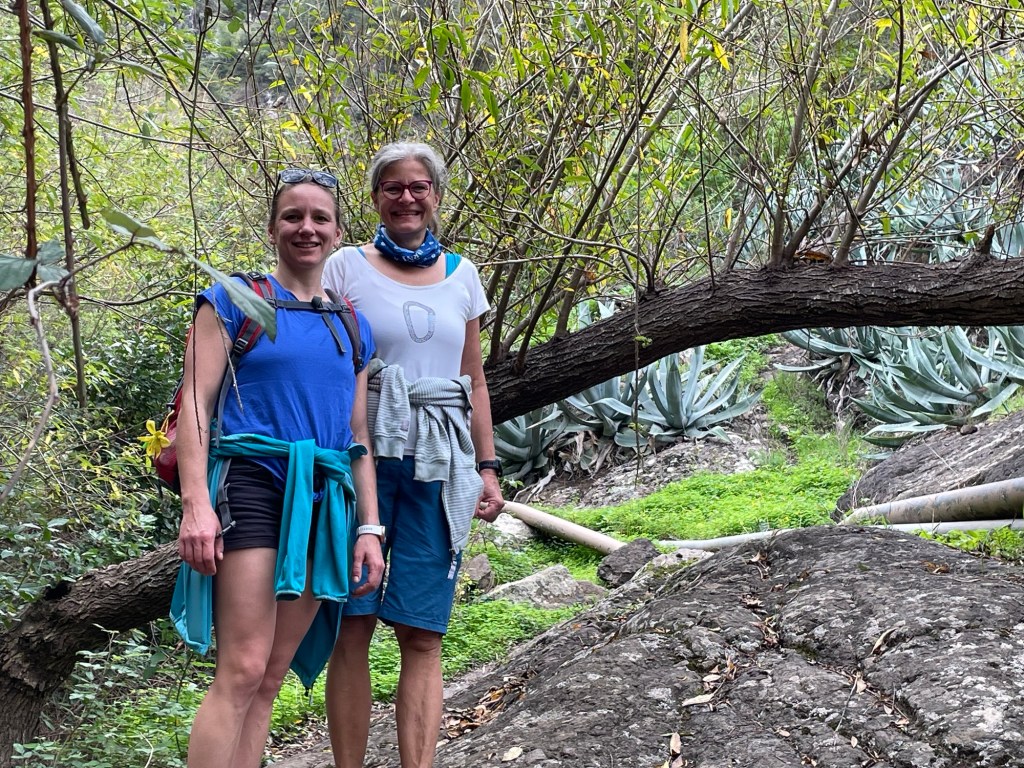
Junior citizens out for a walk, Laura and Yvonne

Spare a thought for the trans Atlantic rowers who left La Gomera well before Christmas and are now about half way to Antigua.

Madeira to Lanzarote

10th to 24th November 2024

If you sail between Madeira and the Canaries, you may come across a remote rocky outcrop, the Selvagem Islands (Savage Islands).

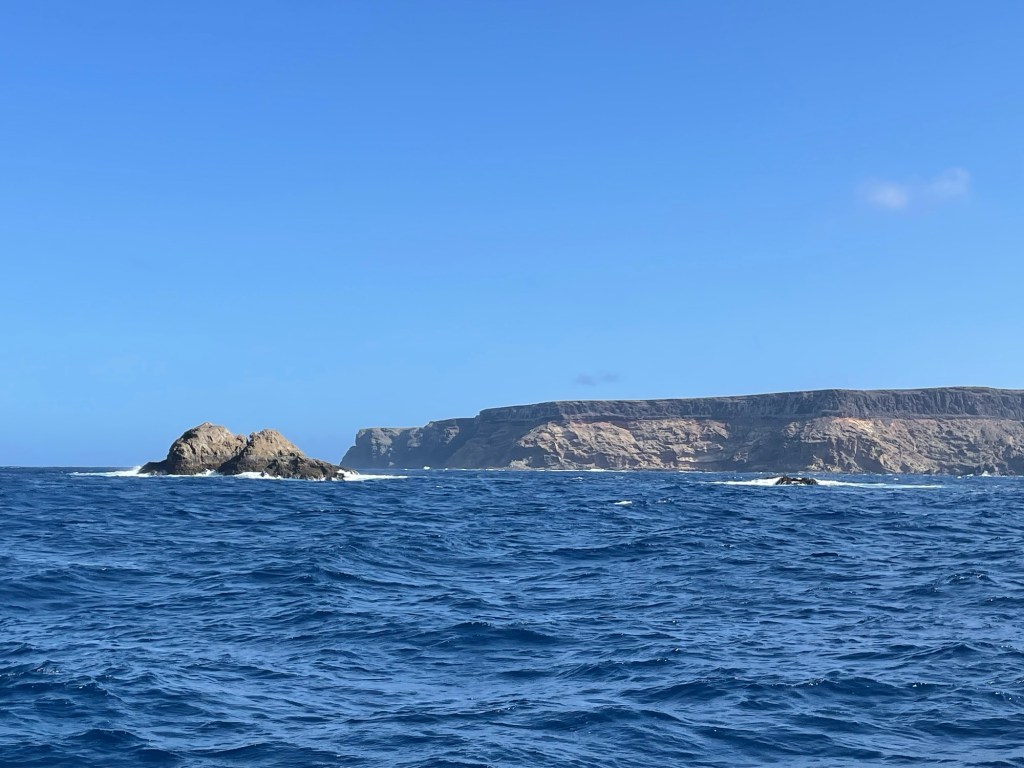
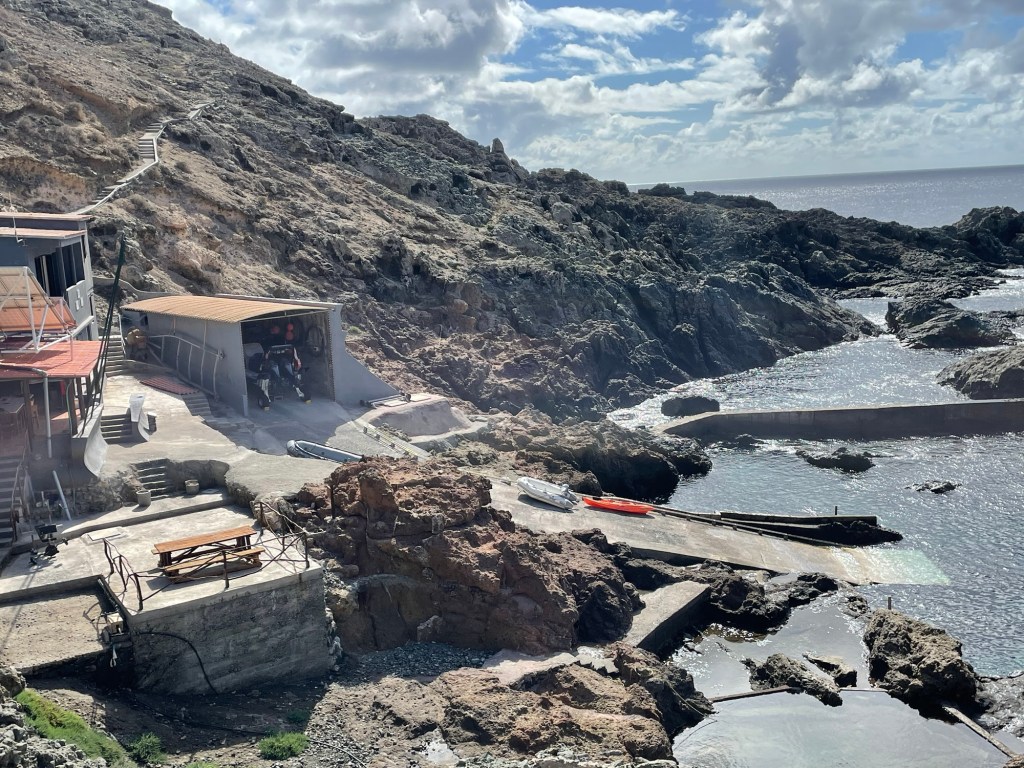
Approaching Selvagem Grande

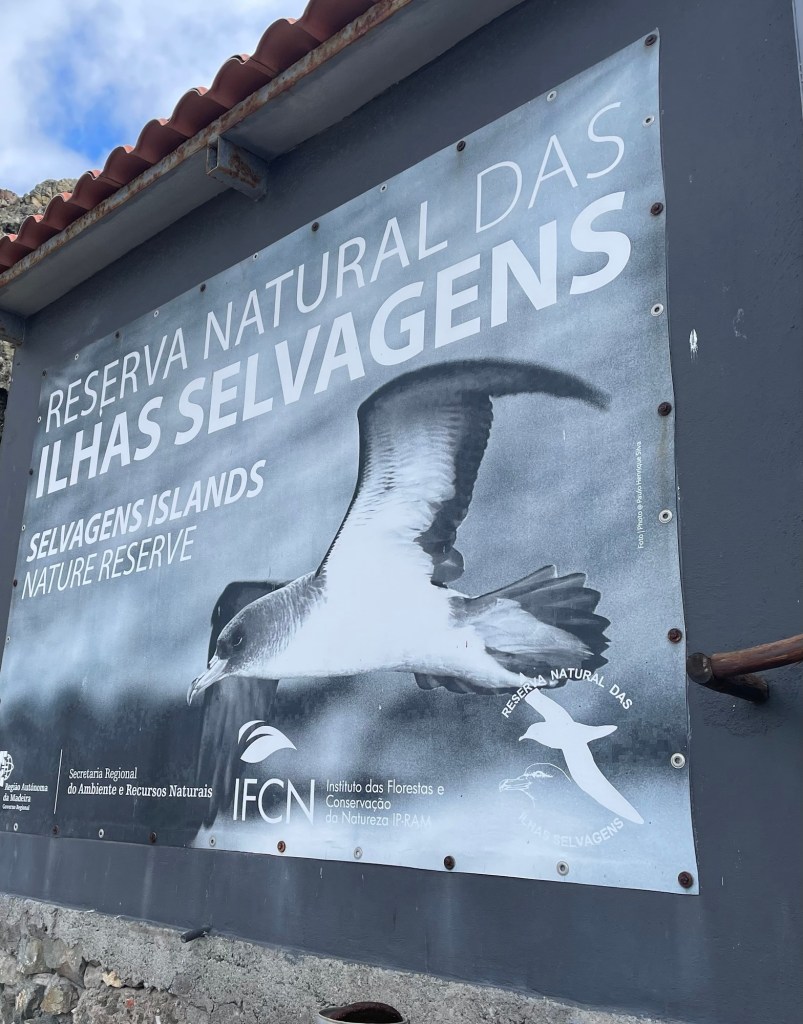
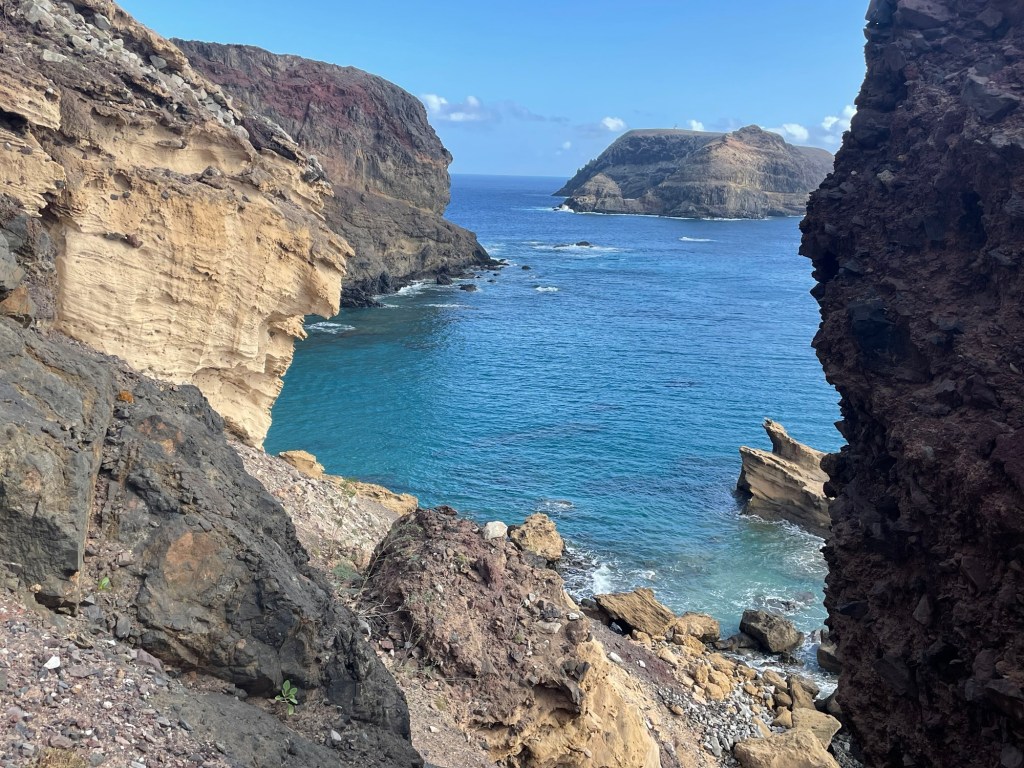
These islands form the southernmost part of Portugal. They are a well protected Nature Reserve but, with a  permit from Portuguese authorities, you can visit the larger one, Selvagem Grande, and if weather all right, can anchor in a rocky bay, and radio for permission to go ashore.

So, after a brisk and choppy overnight sail for the 170 miles from Madeira, I did visit Selvagem Grande, and dropped anchor on a sunny afternoon off the two concrete blocks that are home for the few temporary residents.

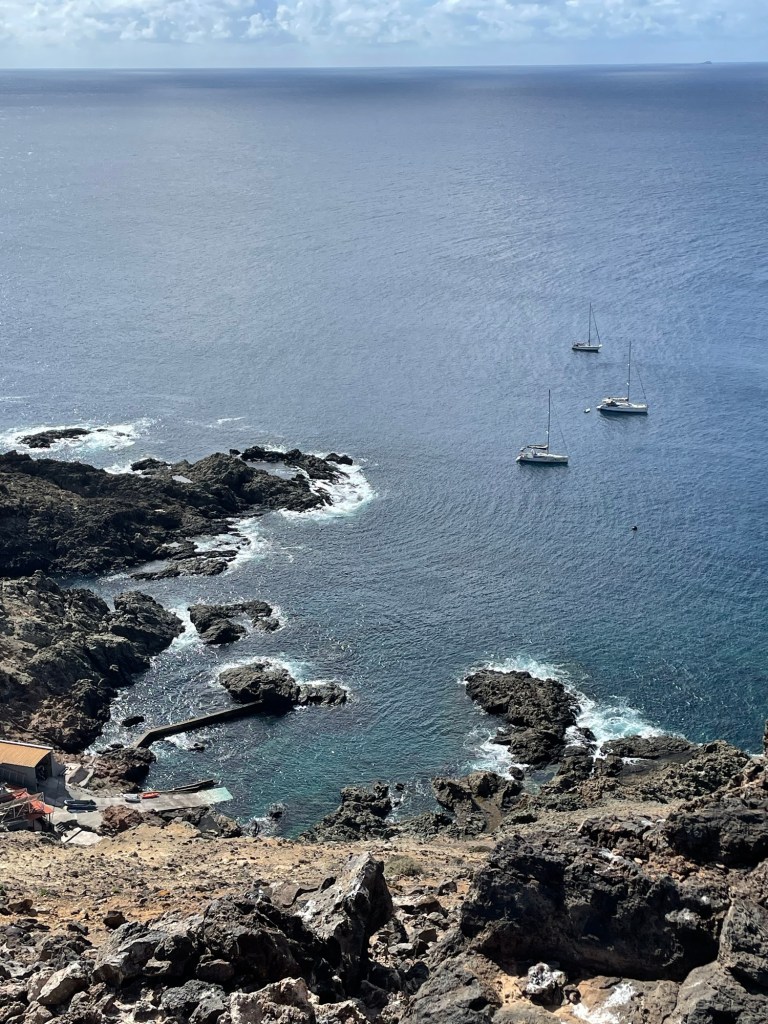
A rocky anchorage with crystal clear water

There were five people there: two policemen, two rangers, and a research student, all very interesting and friendly. 

One of the policemen, a young man from Lisbon, had the biggest biceps I’ve ever seen. Made Arnold Schwarzenegger look like a stick insect. It would have taken ages for the tattoo artist to get around such arms.

The rangers, at least the one who showed us round, had a truly vast understanding of everything about the history, geography and natural history of the area; there was no question he wasn’t confident in answering. And the young student from Lisbon University was researching the love lives of, I think, the Madeiran storm petrel. The gps-tagged birds she was watching hadn’t all returned to their nests within her three week stay, so she had to stay another three weeks – that being the time between each visit of the supply boat.

The temporary residents have a lovely sea view

Next morning, just as the ranger was about to take me for a walk (you can’t go on your own), two more sailing boats appeared:- One, a charter yacht with ten Poles, the other a charter yacht with three or four Austrians. So, by the time their papers and passports are checked, it’s another couple of hours before we finally set off for our guided tour, by then a pretty big group. 

Guided stroll

It was wonderful. 

I shan’t be dull with a long description of all we saw and learnt, but here’s the link to relevant pages of Wikipedia , if you want more.

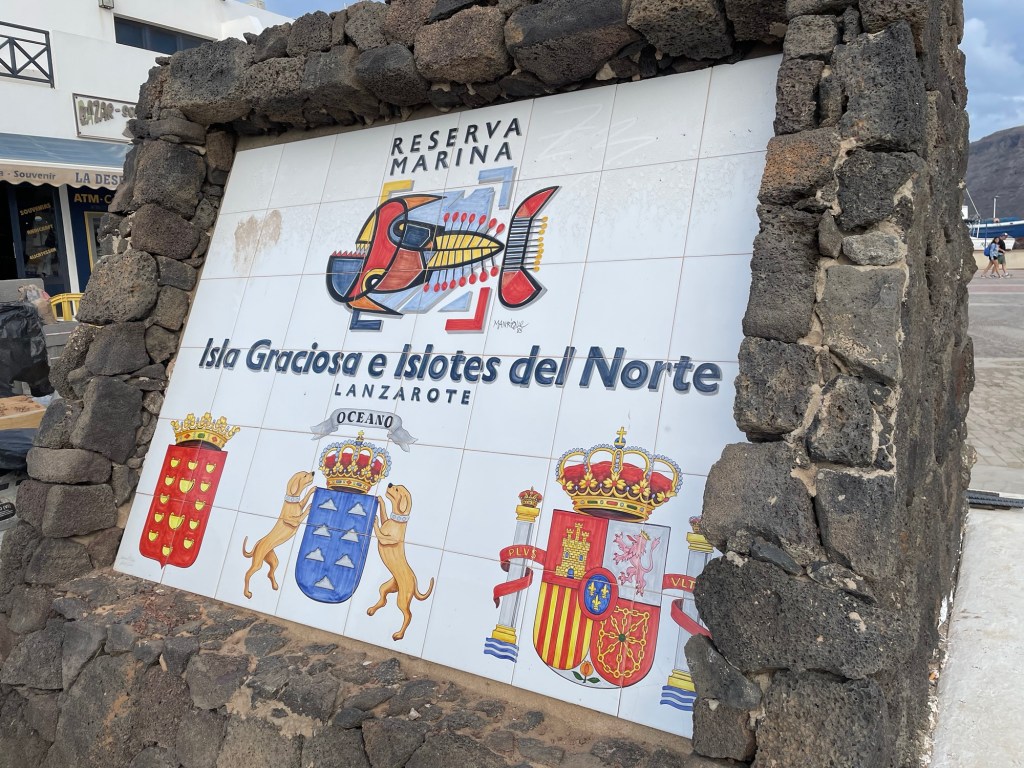
From Selvagem Grande it was another fine overnight sail to the island of La Graciosa, a Nature Reserve just north of Lanzarote in the Canary Islands. 

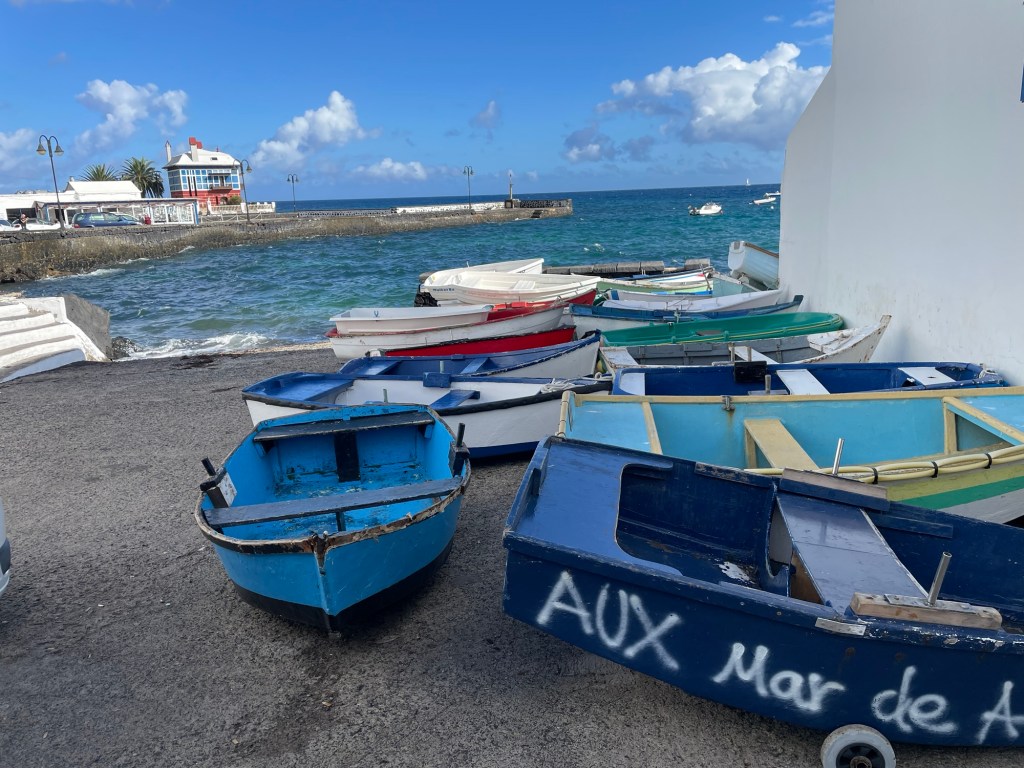
There are hundreds of people here, dozens of bars and restaurants, small supermarkets and holiday accommodation. Tourists arrive on frequent ferry services from Lanzarote.

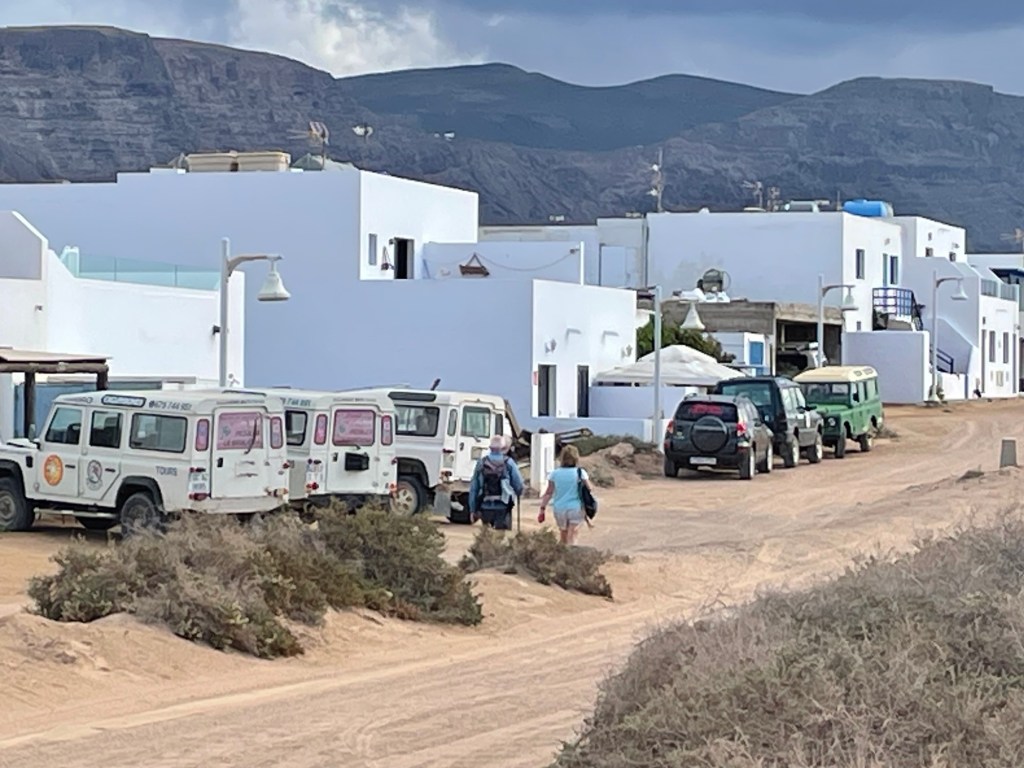
A fleet of Landrovers cruise and bump along the unpaved roads, clouds of dust in their wake. And energetic cyclists on rented mountain bikes pant and sweat on the few designated sandy tracks.

Landrovers to whisk you around La Graciosa

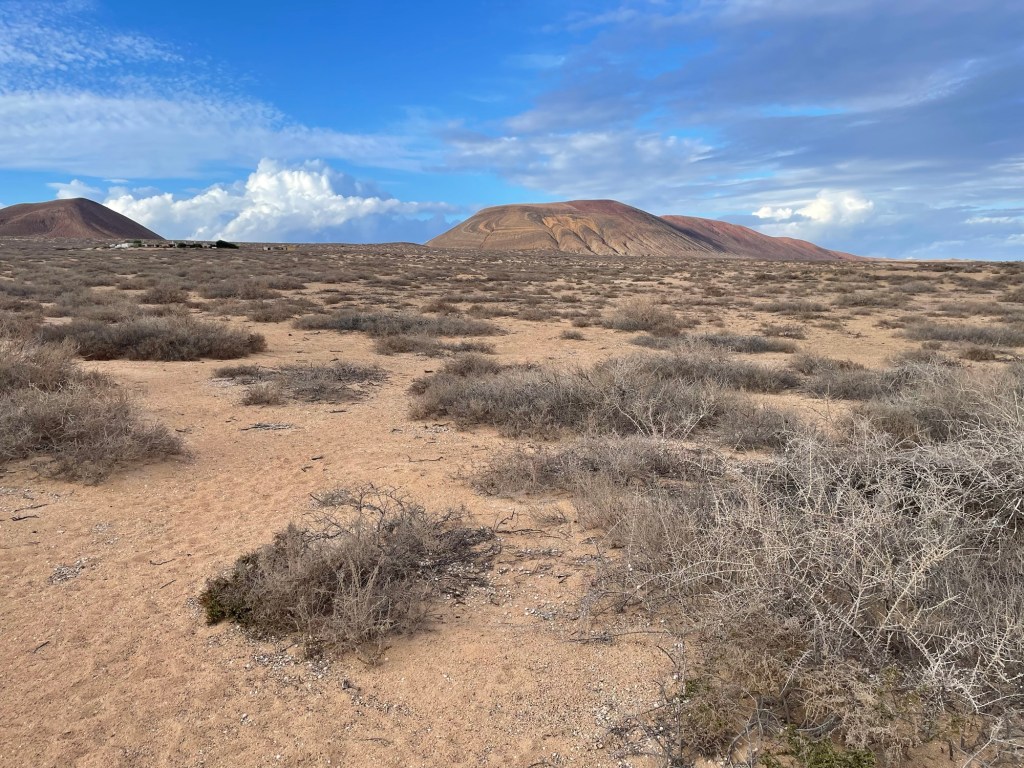
The whole place is dusty brown and arid, the two small towns having the feel of early settler places in the  American Midwest. Not really my cup of tea, so after a couple of nights, it’s time to move on south to Lanzarote.

Landscape of La Graciosa

You’ve probably been to Lanzarote (about three million visitors arrive every year) or live here (nearly ten thousand Britons do), so I shan’t say much about it. It’s about 30 miles top to bottom, with a series of desiccated brown grey volcanic mountains, long dormant volcanoes, along its spine. The only greenery comes from straggly cactus and a few palms.

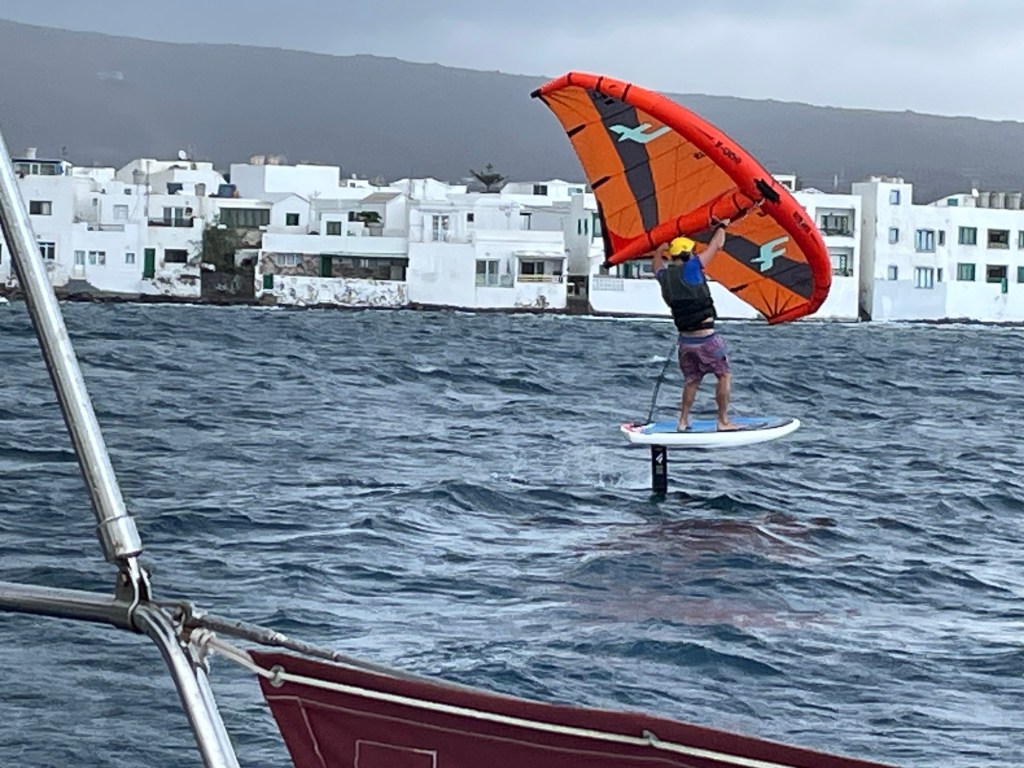
That’s not me

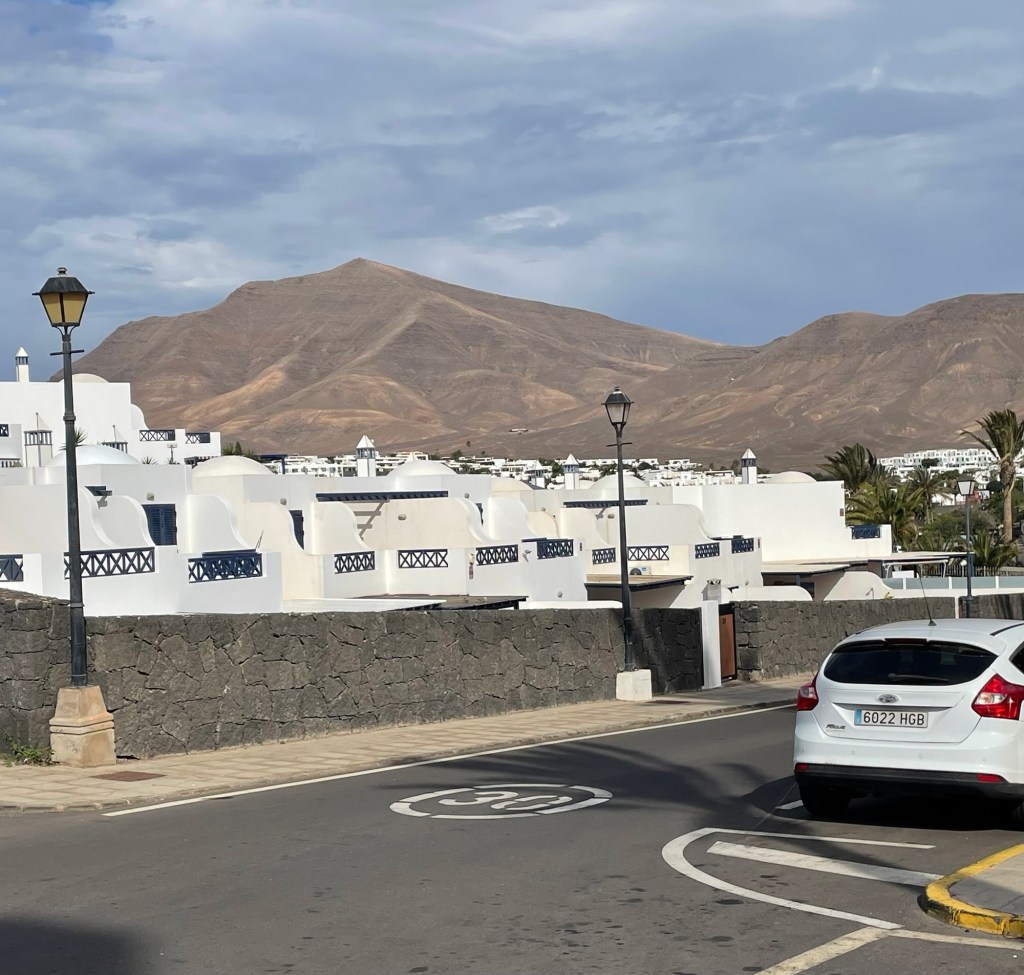
I’d wondered why all the houses are white – so asked. The answer is that a famous artist from the island, Cesar Manrique, decided it. After making a name for himself as a distinguished artist in New York, he returned to Lanzarote in the 1960s, renewed a childhood friendship with the island’s president, and set out his architectural and planning visions for development. Cesar must have been an influential fellow.

That building is one of very very few on Lanzarote that isn’t white

Lanzarote is certainly distinctive, with almost entirely low rise, brilliant white buildings, and pleasing imaginative meandering walkways in the many pedestrian areas. It’s much more upmarket than the tourist slum developments of Southern Tenerife. Plus, in Lanzarote you wouldn’t have to agonise over what colour to paint your house; you are not allowed anything except white.

Here in the Rubicon marina area, there’s an abundance of good quality bars and restaurants so, as I teeter on the brink of overindulged alcoholism, I know it’s time to go back to the beautiful simplicity of life at anchor and lots more snorkelling.

Rubicon Marina

Soon it’ll be time to head for the western Canary Islands that I love. I’m expecting important visitors.

Spain to Madeira

25th September to 9th November 2024

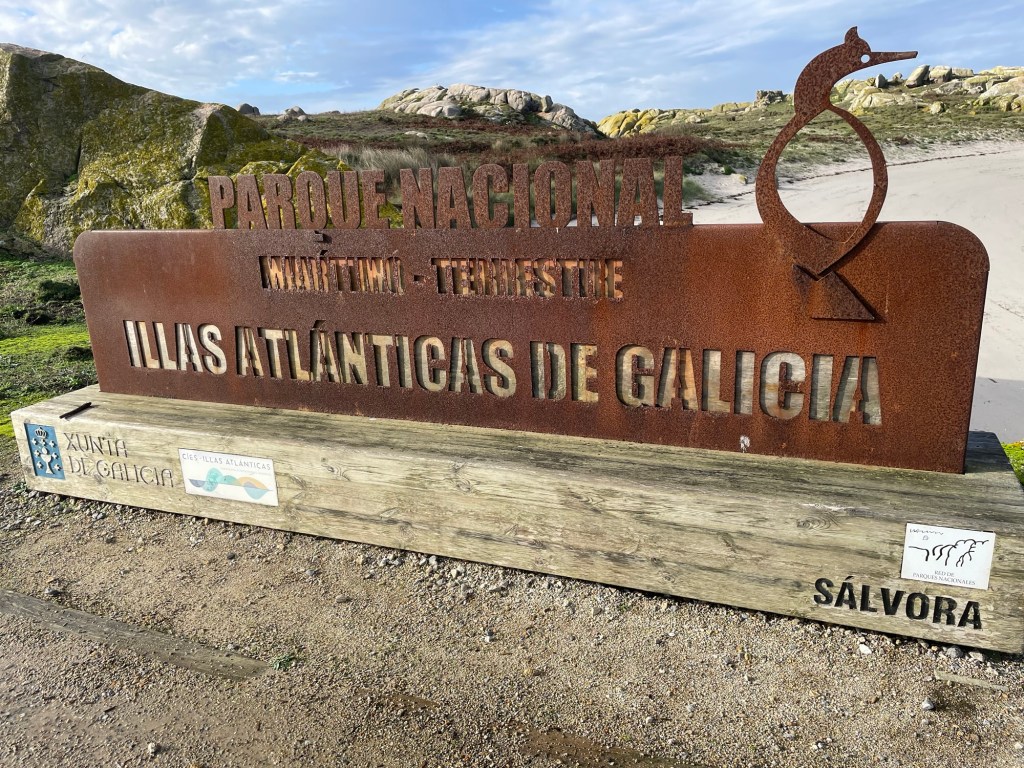
Anchored off Illa de Salvora, a protected nature reserve

Galicia covers the northwest corner of Spain. It’s different from the better known and more touristy areas of the Mediterranean coast. Tourists here are mainly Spanish who wish to escape the heat of high summer further south, and latter day pilgrims on their ways to Santiago de Compostela, plus passing sailors such as me, usually heading south from Northern Europe’s chilly winters.

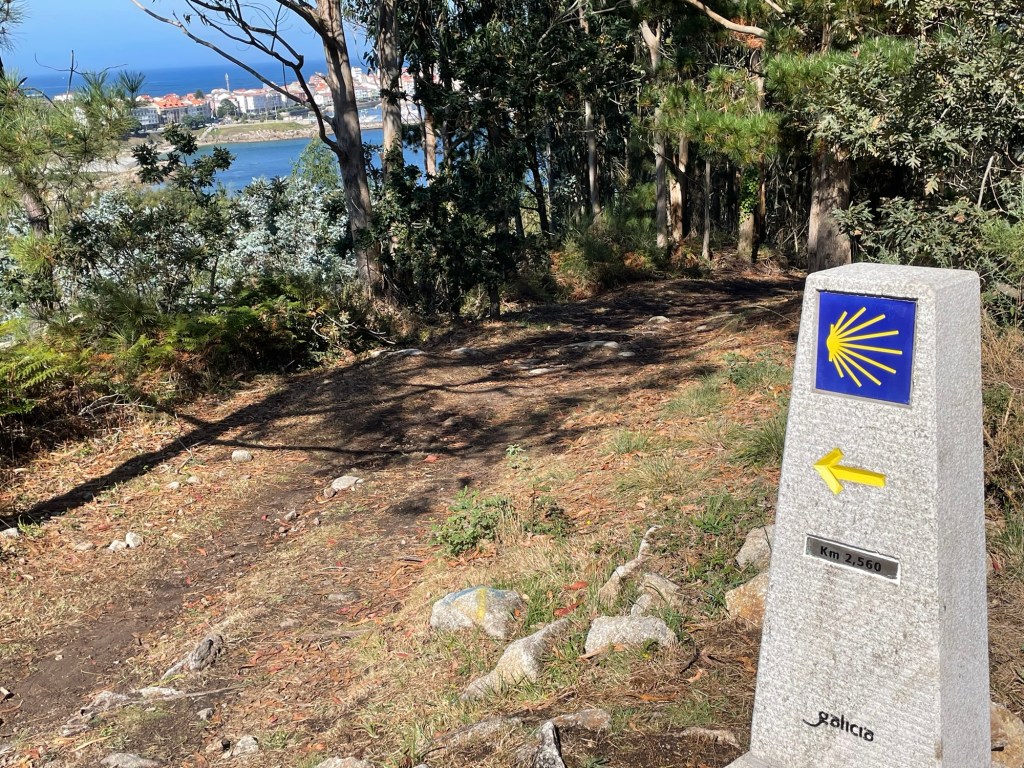
One of the pilgrim paths to Santiago (near Muxia)

In my view it’s the most attractive part of the Iberian peninsula. There is a series of rias (big bays) backed by wooded mountains which offer protection from whatever may be going on in the offshore Atlantic. There are lots of unspoilt sandy beaches and pretty Galician villages. The coastline is a mass of impressive cliffs and rocky outcrops, including Spain’s Cape Finisterre. There are offshore islands too, in a well protected nature reserve.

Half the population speaks Galician, half Spanish. And if you like to eat shellfish and octopus, this is where you’ll find them; more are eaten here than anywhere else. For me, alas, it’s all a bit yuk.

In the distance are farms for the mussels (Ria Arousa)

The sea between rias was rough, but I thought that would discourage the orcas who’ve recently been playing uncomfortable games with yachts in the area. You can see dreadful damage to rudders on many yachts in local boatyards.

As I sailed out of Ria de Muros, Henrietta received a radio call from Finisterre Coastguard. Oh no! my immediate reaction was I was being called up for infringing some rule – illegal immigration, bad navigation perhaps, or skinny dipping. But no, a small fishing boat had capsized nearby – it was pretty rolly outside the sheltered Ria. Two persons were clinging to the upturned hull, could I go and assist?

Initially I couldn’t see them (it’s hard to spot a small boat in a big swell) but, given a position, I spotted them. Quickly down with the sails and motor over to their precarious situation a few metres from a jumble of rocks and crashing waves. As I reach them and shout that I can pick them up if they jump in the sea, the Muros lifeboat roars up in a fine display of power and spray. Phew! I’m waved away. Coastguard thanks me and I’m on my way once more.

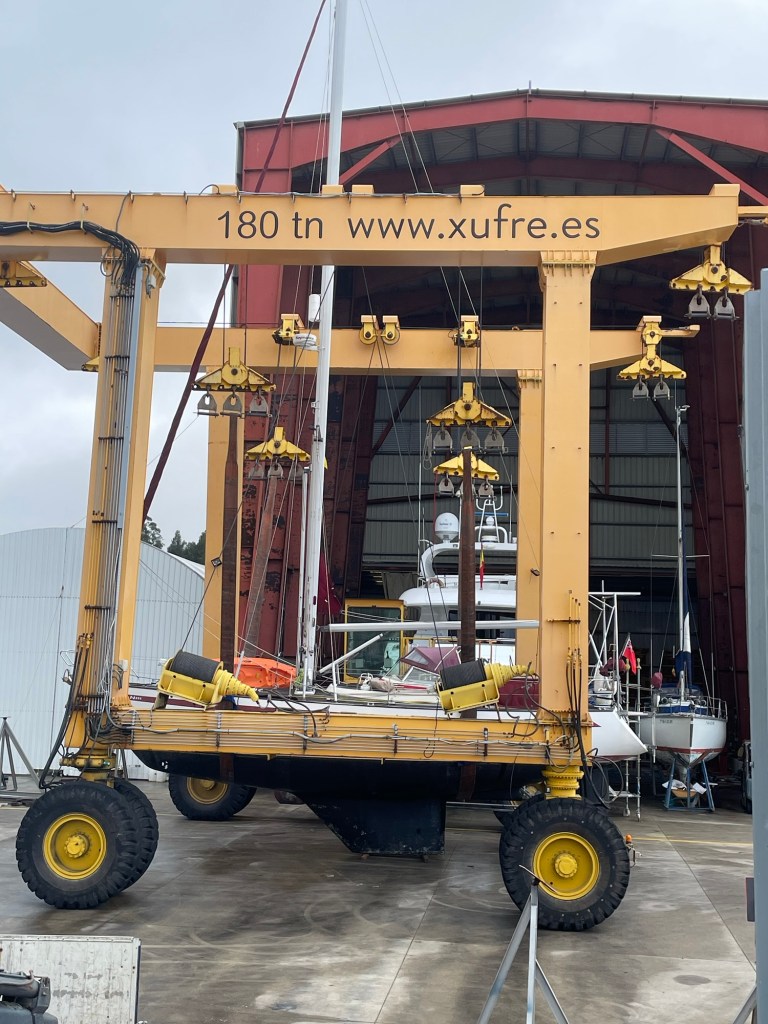
A bit further south in the wonderful boatyard at Xufre in Ria Arousa, Henrietta had her annual onshore checkup and new makeup applied (polish, anodes, antifouling and new shaft seal). 

Dwarfed by this big yellow crane

The boatyard is a sociable spot, particularly popular with Irish sailors, so plenty of good company. Apparently there’s some historic Celtic connection (Galicians play bagpipes) and many Irish boats spend the whole summer just cruising this area. They make excellent companions.

In early autumn Galicia is also often very wet. It rained nearly every day I was there and after a busy fortnight I was ready to leave.

Five days and nearly 700 miles over the ocean, often rough and with crossing the busy shipping routes from English Channel to Med. and Suez, South Africa or South America, it was rather tiring. 

A dream, then, to arrive in the little island of Porto Santo, near Madeira. It’s my fourth visit. It gets busier with more yachts every year.

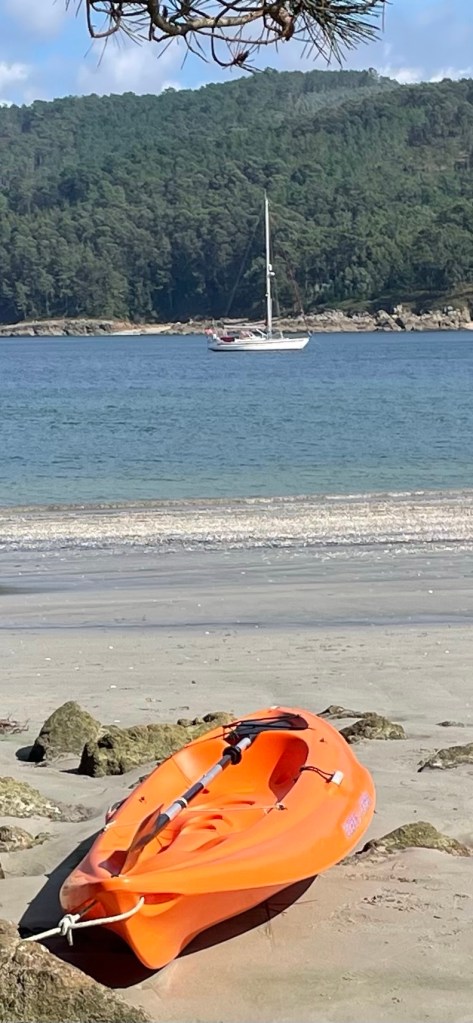
Beautiful sandy beach, S. Porto Santo and rocky coastline (below)

Porto Santo is the low key, peaceful and ever-so-charming little sister of Madeira.

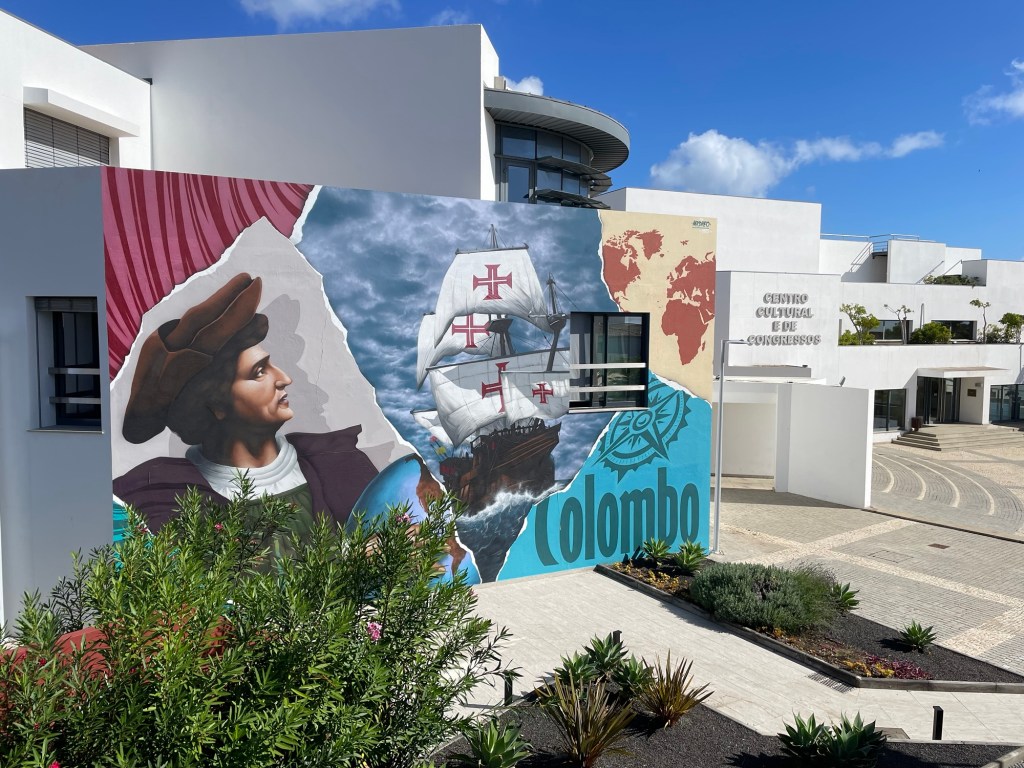
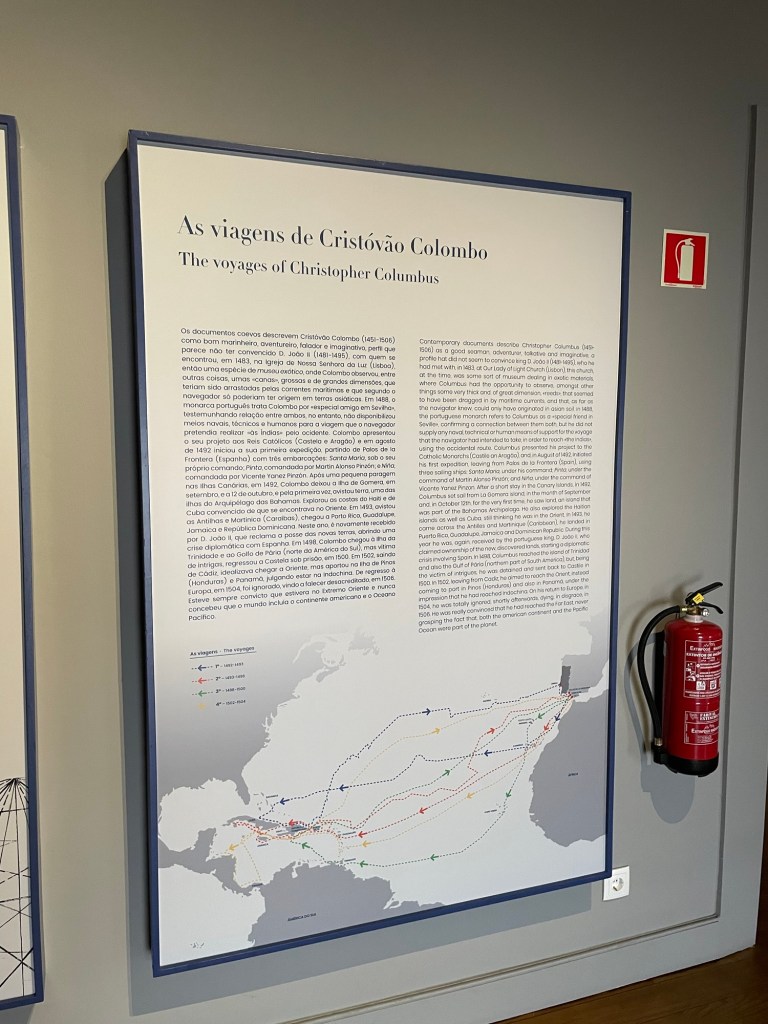
Like lots of places, it claims historical connections with Columbus, and he did indeed stop here before his transatlantic voyages to the Caribbean. There’s an informative little museum to fill in detail. Though I’ve recently read that DNA analyses and so on, suggest he was from Spain, not Genoa in Italy.

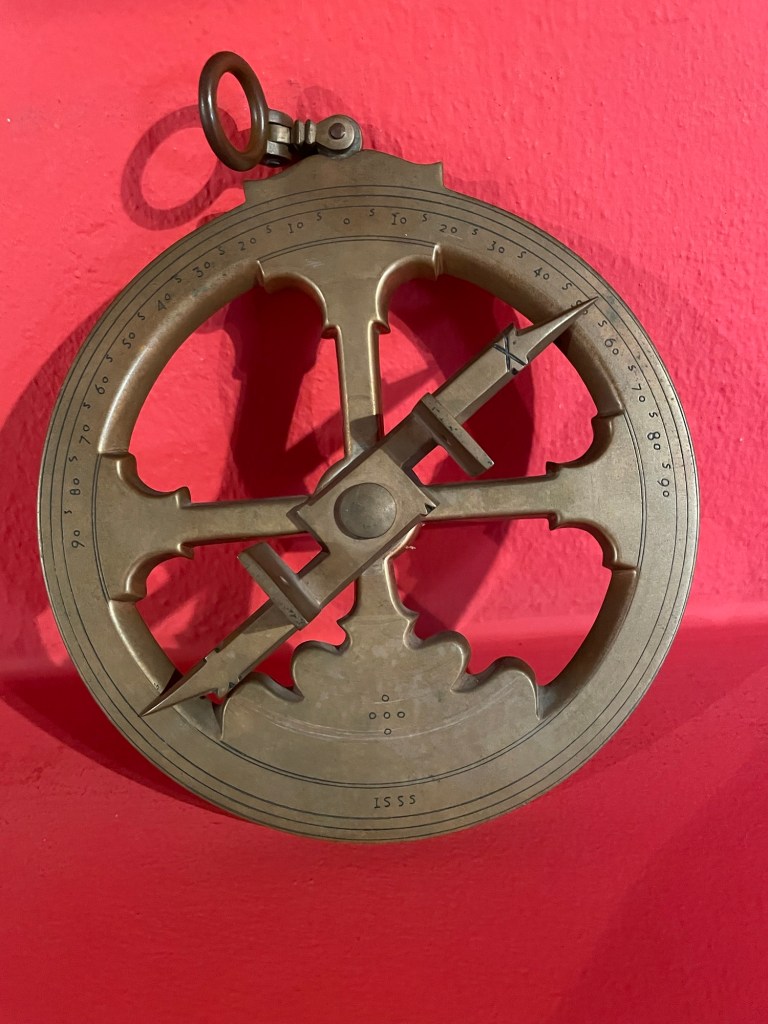
Astrolabe (I’ll tell you more another time)

Next stops were in Madeira. Millions of visitors have come to this island and continue to come here, and have no doubt enjoyed the wonderful mountain scenery, striking coastline, and maybe a noisy nightclub, as well as the quiet polite courtesy of the people.

I like it a lot.

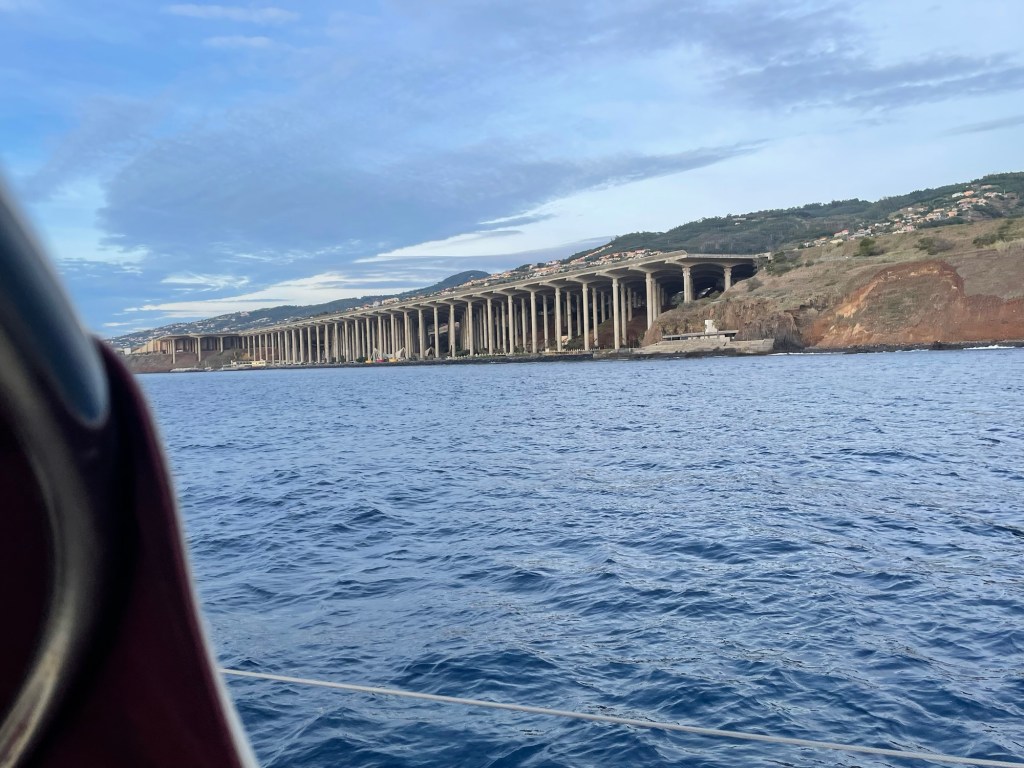
Ashore at Machico. Anchorage under the end of Madeira’s runway (below)

But the forecast wind is looking good for sailing on towards the Canaries, so it’s time to leave.

Marina beneath the cliffs at Calheta

Sailing out of England 2024

16th July to 24th September 2024

A few weeks rest for Henrietta in Exeter Canal

In summertime Britain and my home country of England are delightful. My home county of Devon is green and gorgeous and Exeter, my home city, is lively and wonderful. My little road and house are off the scale – heavenly. 

Picking blackberries, seeing family and friends, travelling hither and thither with excellent public transport, BBC, serene rolling green hills, libraries, freedom to move, to speak, to play, and a comfy bed that is warm and stable. All these everyday privileges of living in Britain are not to be sneezed at. Nearly two months of land dwelling life has passed very quickly. I’ve enjoyed the time at home.

So, this time more than on previous departures, I was in two minds about sailing away in Henrietta. Especially as I write this, two days out and half way across the Bay of Biscay, Henrietta rolling wildly, with every muscle in my body aching, several new bruises and feeling exhausted and queasy. (The life of the ocean sailor isn’t all rosey sunsets and oneness with nature, you know.)

Anyhow, I left and sailed away. There were many days of chronic indecision beforehand. But, holding to the belief that it’s usually better to make mistakes than have regrets, I took off. The possible mistake of leaving home was, I reckoned, probably better than a regret at not leaving home. But I’m still a little sad to have left.

Given the fickle nature of early autumn weather in Bay of Biscay and a reasonable forecast, I sailed straight out of Henrietta’s temporary mooring place on Exeter Canal, and out to sea, Devon’s coastline bringing a tear to my eye as it faded behind me into palest grey invisibility. Ah, what am I doing?

Dawn of day 4

Then a lone dolphin appears. He seems to recognise my doleful mood and playfully dives alongside before leaping excitedly out of the water ahead of the bow. “Cheer up old fella’, life’s good”, he said, before swimming off to find his mates. He’d come to raise my spirits. He did.

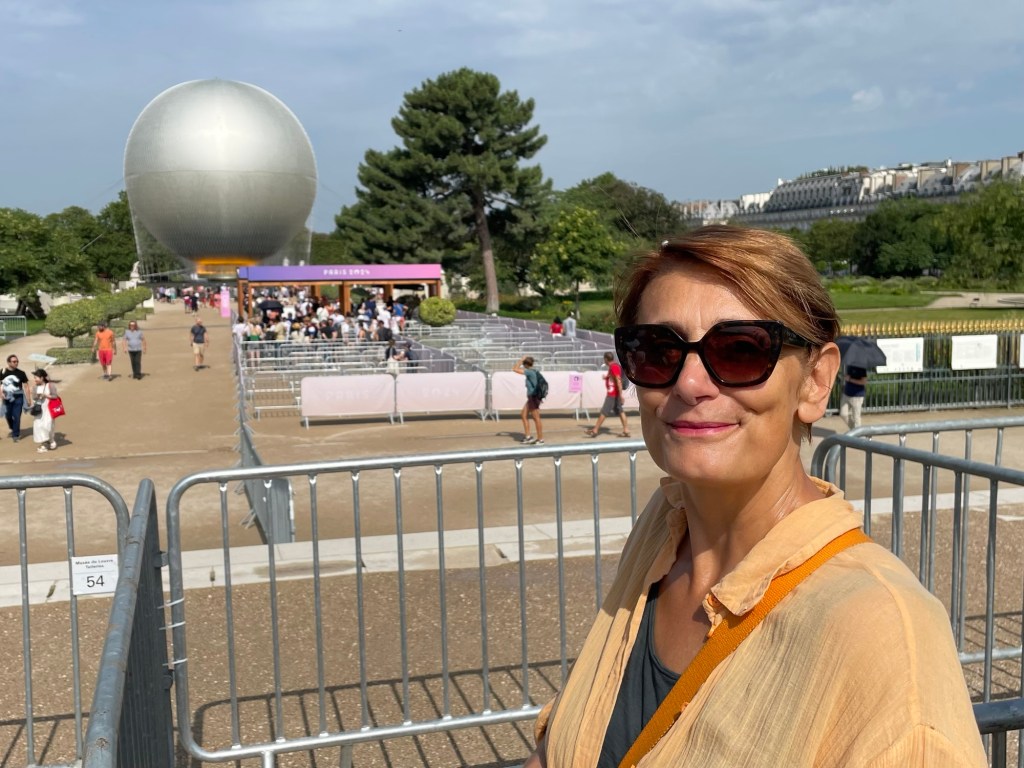
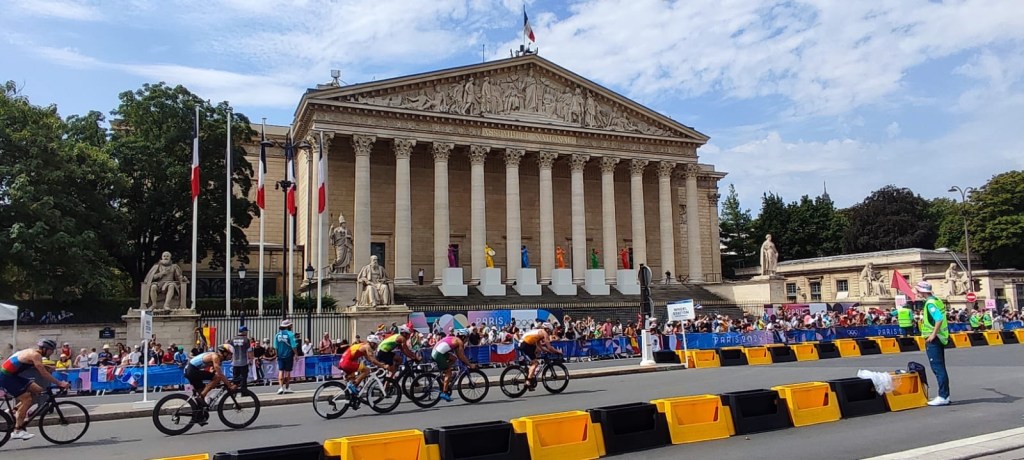
I’m full of good memories of this brief trip home. Paris, whistle stop Eurostar to see Armelle (first time since Borneo) and tiny bit of Olympic excitement; Sheffield and Peak District to see eldest son, Johnny and Roz; younger sons Tom and George; brother, sister, cousins, friends. And then there’s good fresh food, hot showers, country walks, radio and telly, plentiful books. The list goes on. You can understand why, much as I love life at sea, I was a bit sorry to head off over the horizon. 

Armelle and Olympic flame (grounded by day)
Triathletes fly past
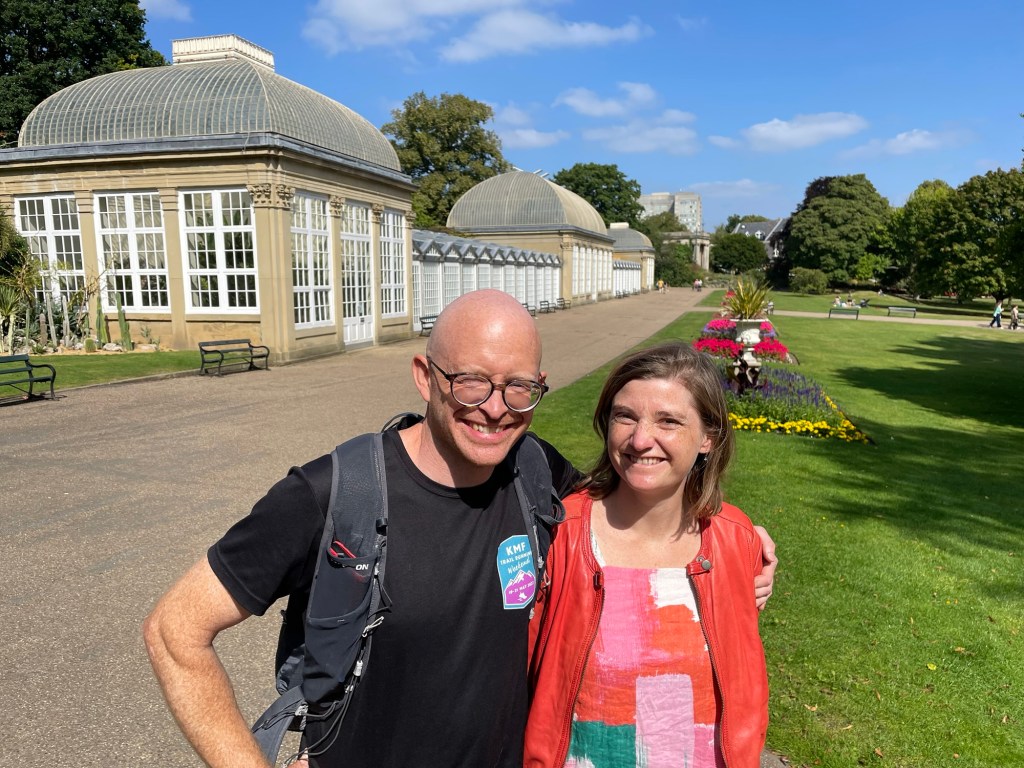
Sheffield (botanic gardens) with Johnny and Roz

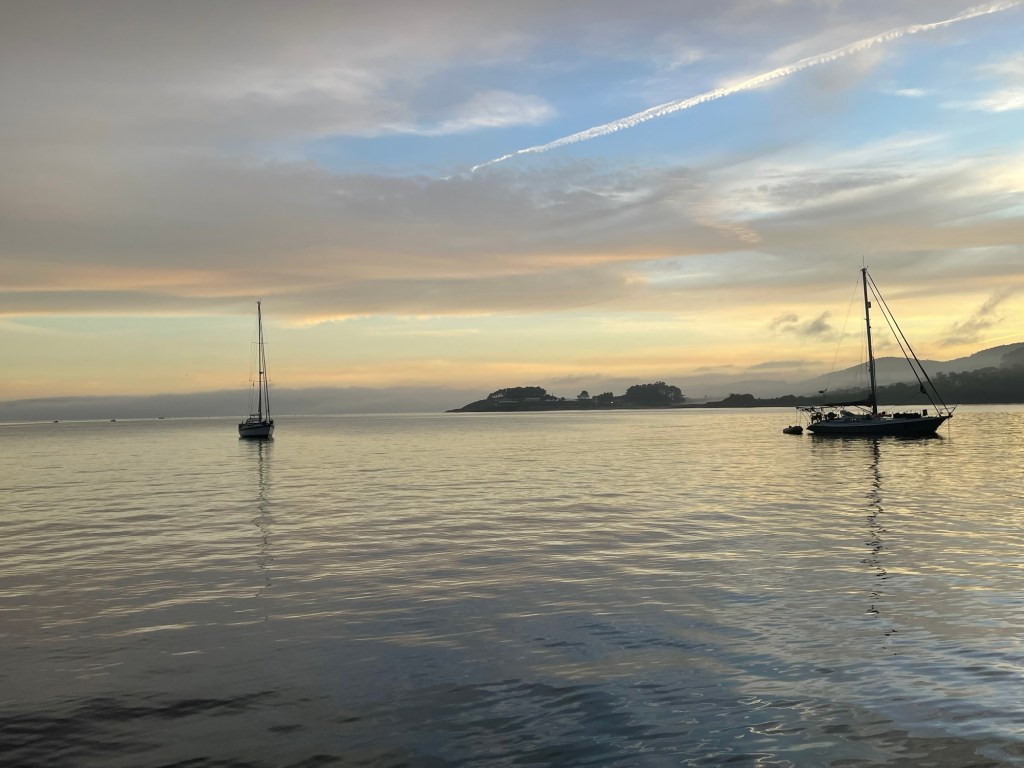
….but, this morning two days later, we’re anchored in Ria Camarinas in Northern Spain and it’s calm, beautiful and oh so peaceful. Mist rises from nearby forest, distant wind turbines stand still and lifeless, and nearby little fishing boats harvest mussels and small silvery fish. Cup of tea in the cockpit after a good sleep with such a panorama to wake up to, reminds me of the marvellous aspects of sailing life.

Ria Camarinas

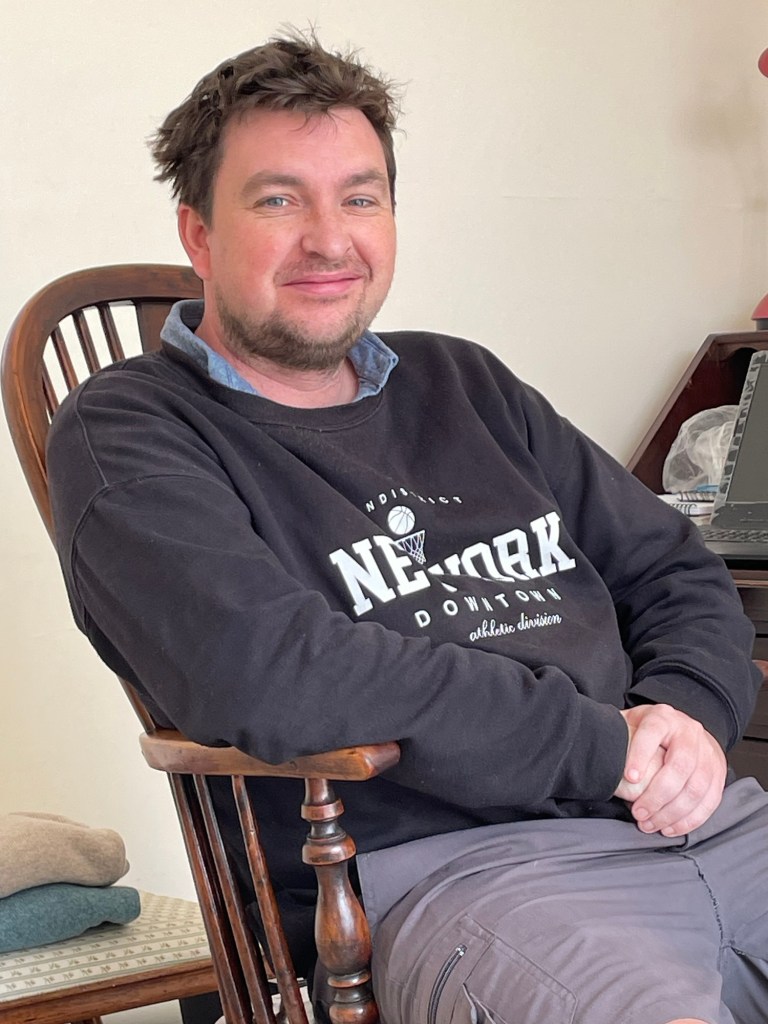
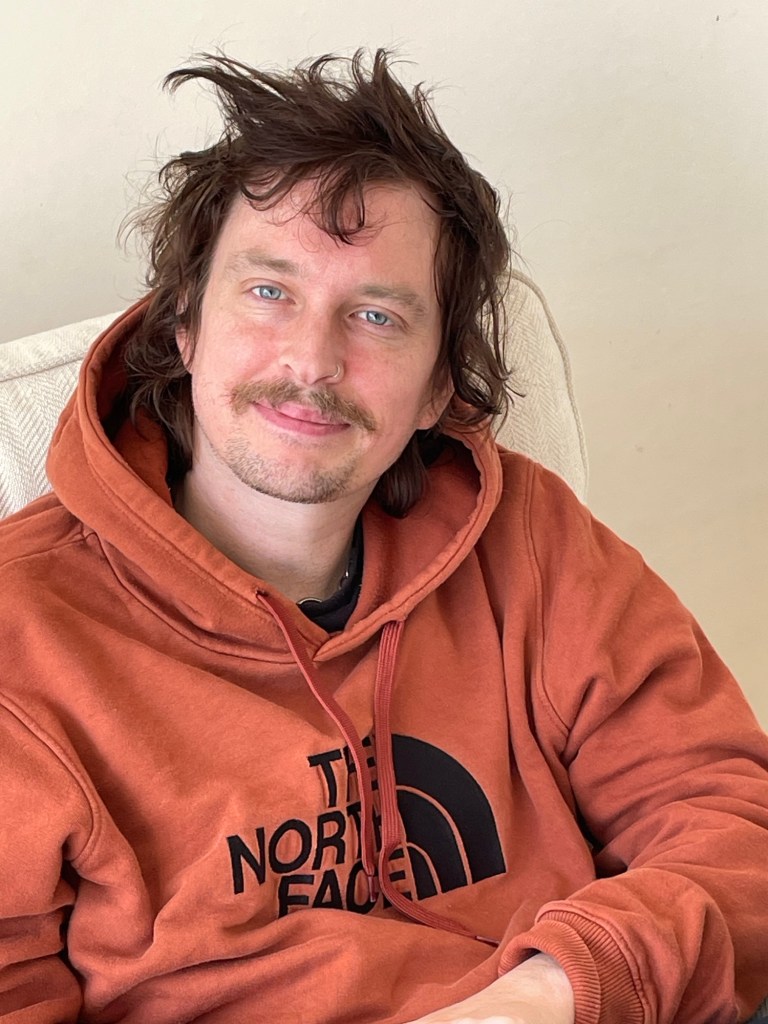
Here are a few more photos of sons and cousins, and odds and ends…

Anchored near Muxia

Sailing and Excursions – English Channel

1st June to 15th July 2024

For Europe’s sports fans June and July are bumper months. Tennis, cycling, cricket (ok, not much of Europe for cricket), golf and football (soccer for Americans) and other lesser known odds and ends. Then of course. there’s more to come for everyone with the Olympic Games about to start in France. Brings on a sweat just thinking about it.

It has been football that’s aroused most hysteria – Euros 2024. In England there’s been obsessive coverage and, though I like watching the odd game and don’t wish to kill others’ joy, it is faintly embarrassing to witness this level of national mania. Hysteria has now cooled following defeat. Never mind, next time maybe.

There was also a UK General Election which, at the time, generated almost as much interest as the football, but since recently visiting France, Belgium and Germany I find most people outside Britain have long lost interest in British politics – ever since we cast ourselves adrift with the great big Brexit folly.

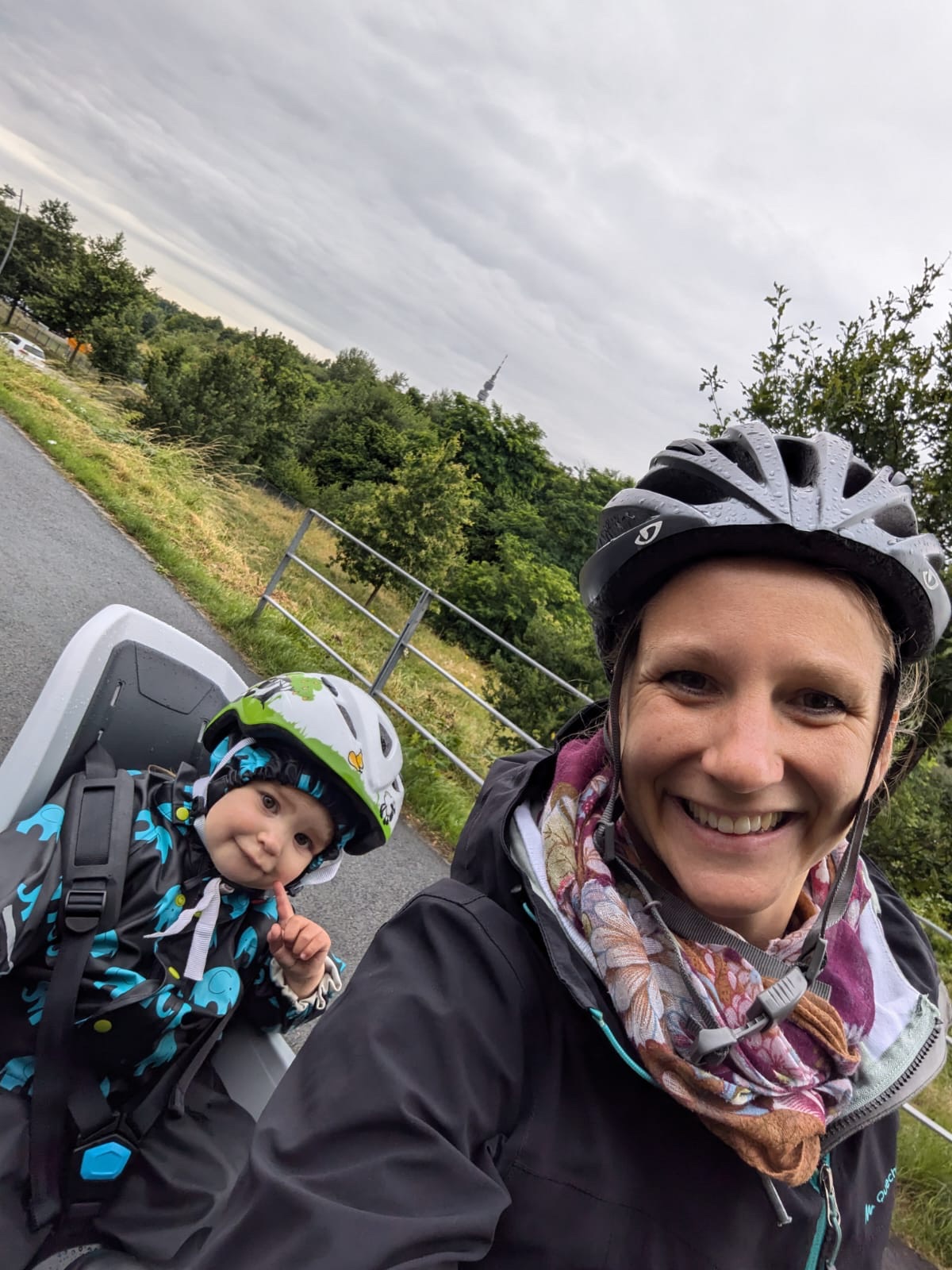
I happened to be in Dortmund a week before the semi-final football match there (England vs. Netherlands). The German hosts were incredibly organised with clear signs all over the city, a green carpet to guide spectators across town and information all over the place.

Westfalen Park (Adjacent to the stadium)

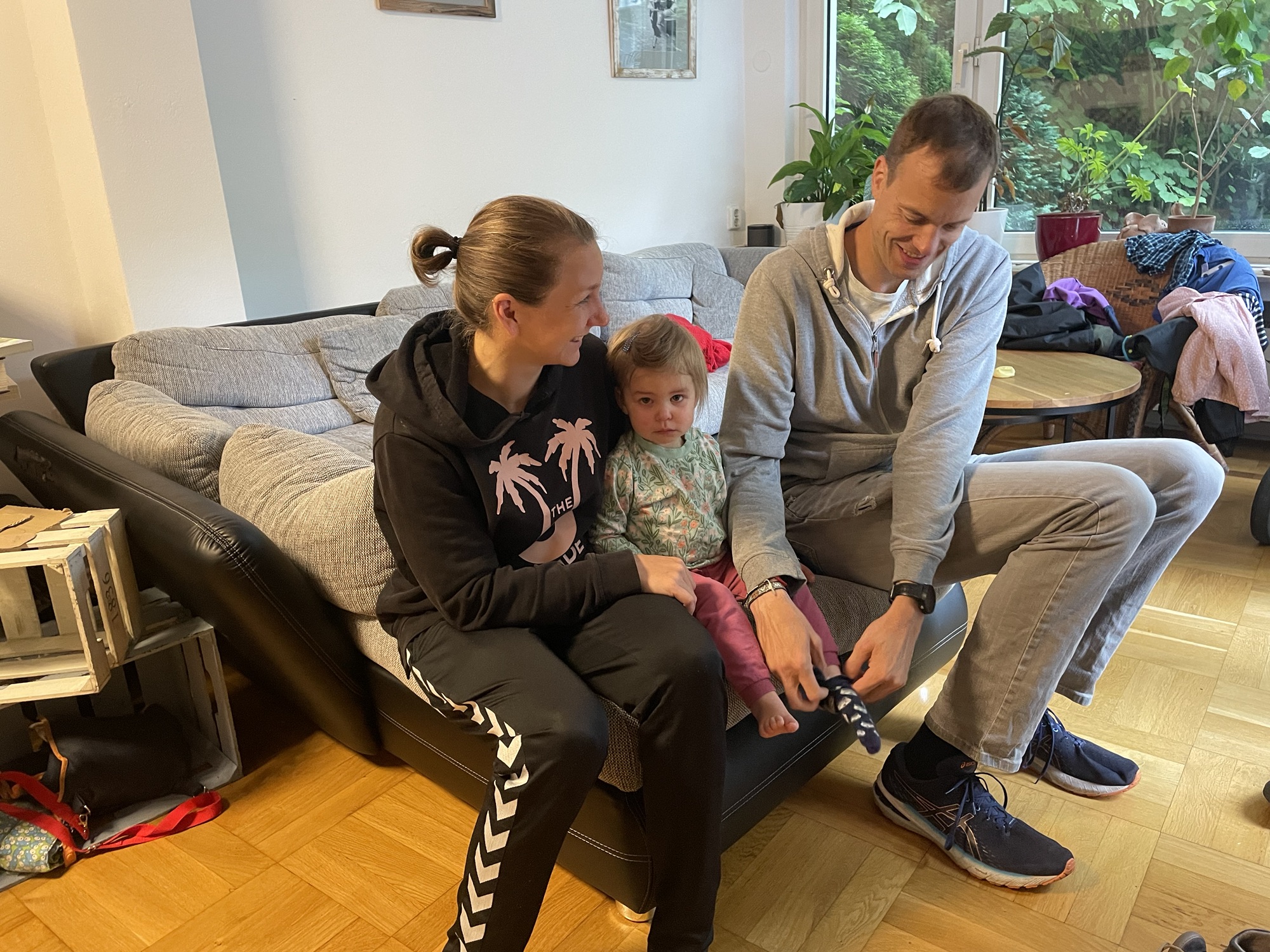
But I’d gone there to visit former sailing crew, Laura and family, rather than for football. It was wonderful to see them and their enchanting young daughter. 

We all have periods of life that seem busier and more fun than most; spells when nearly every day is interesting, exciting and unusual. I guess prime ministers, presidents, and other powerful or important folk are always pretty busy and excited (and perhaps having fun).

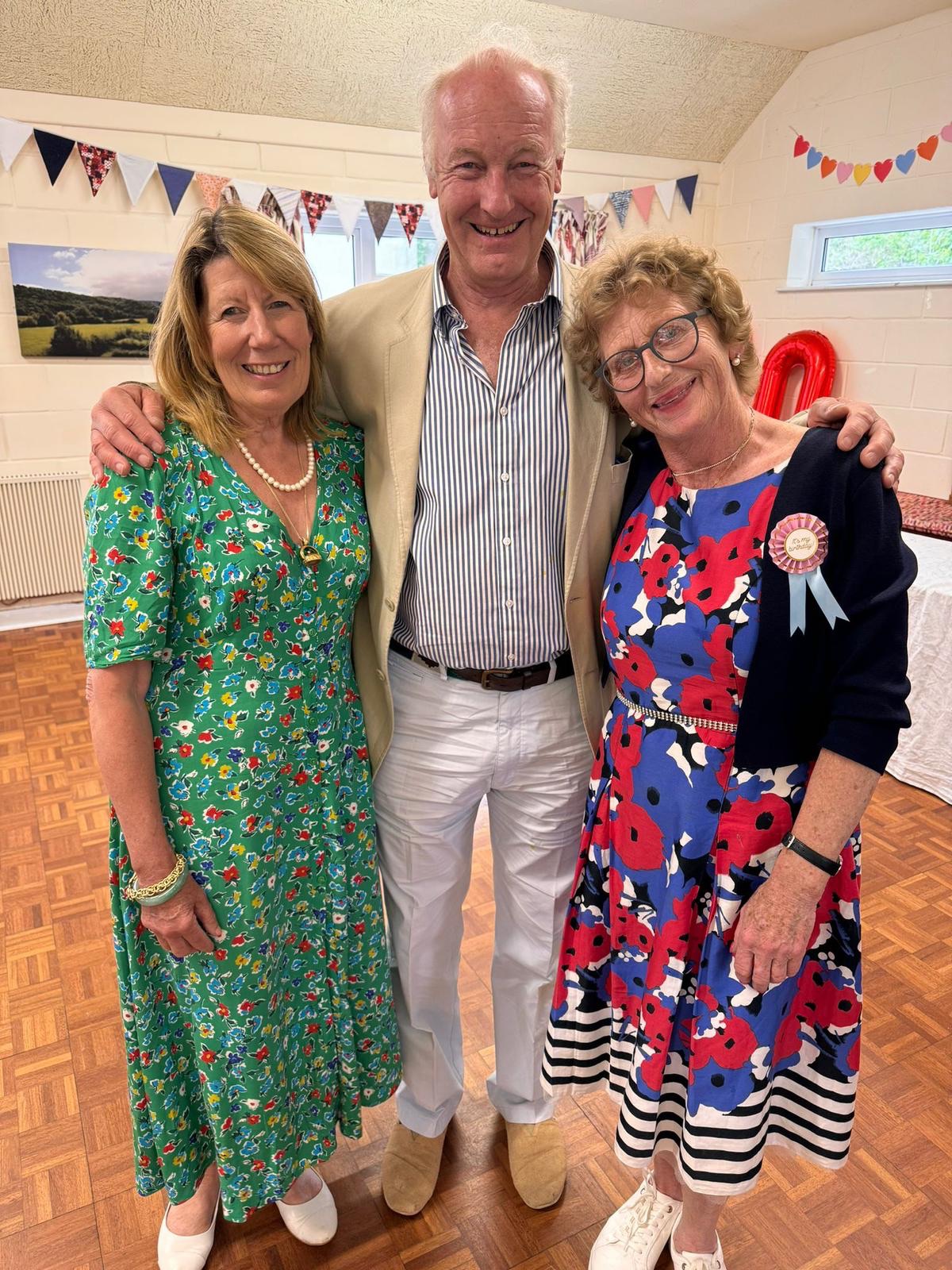
My life isn’t normally particularly eventful. It’s sometimes definitely uneventful, even a bit dull. But recently it has been a happy, busy and sociable spell. Apart from meeting sailing friends along the way, there has been my sister’s birthday party in Somerset, visit to two sons in Bristol and then after sailing east up the English Channel, trip to Dortmund from Dunkirk, courtesy of seven trains (French, Belgian, German) and a bus each way.

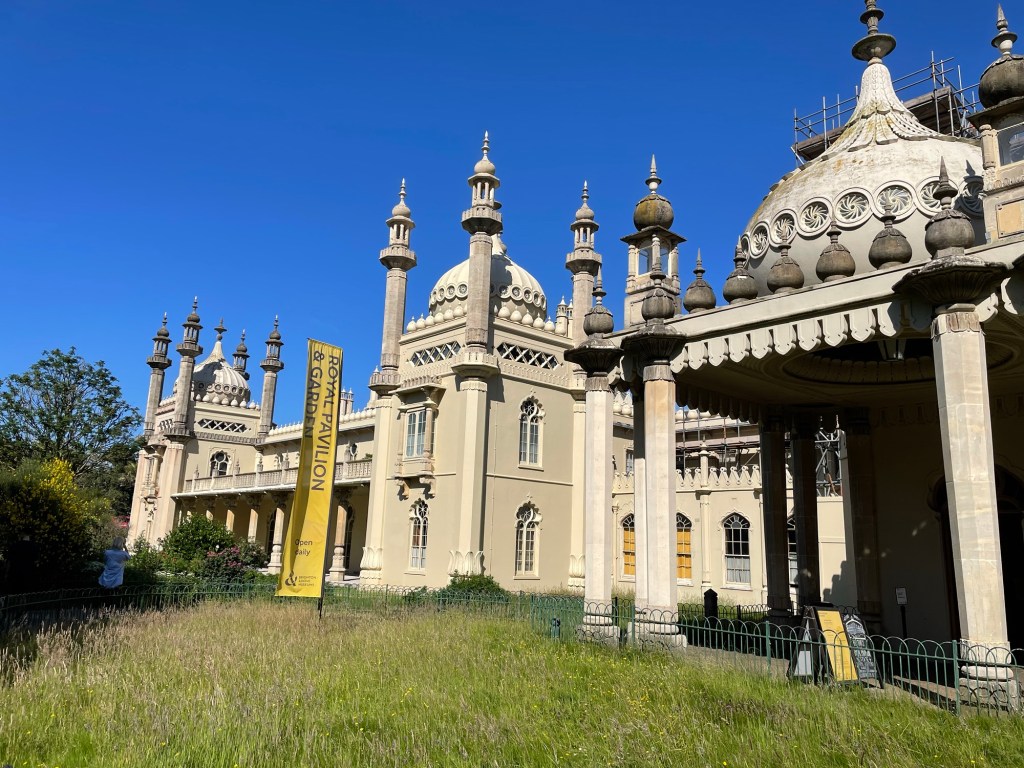
Before wizzing to Dortmund by train, Henrietta and I visited lots of familiar UK South Coast spots, sailed again with friend Andrew, then briefly Brighton, Dover and over to Calais. But you don’t really want a tedious account of all that. Suffice to say, there were lots of highlights. 

A sunny day in Brighton (note blue sky)

The small and excellent museum in Dunkirk that commemorates the troops’ evacuation in 1940 is superb, enough to bring tears to your eyes. Well worth a visit if you’re nearby.

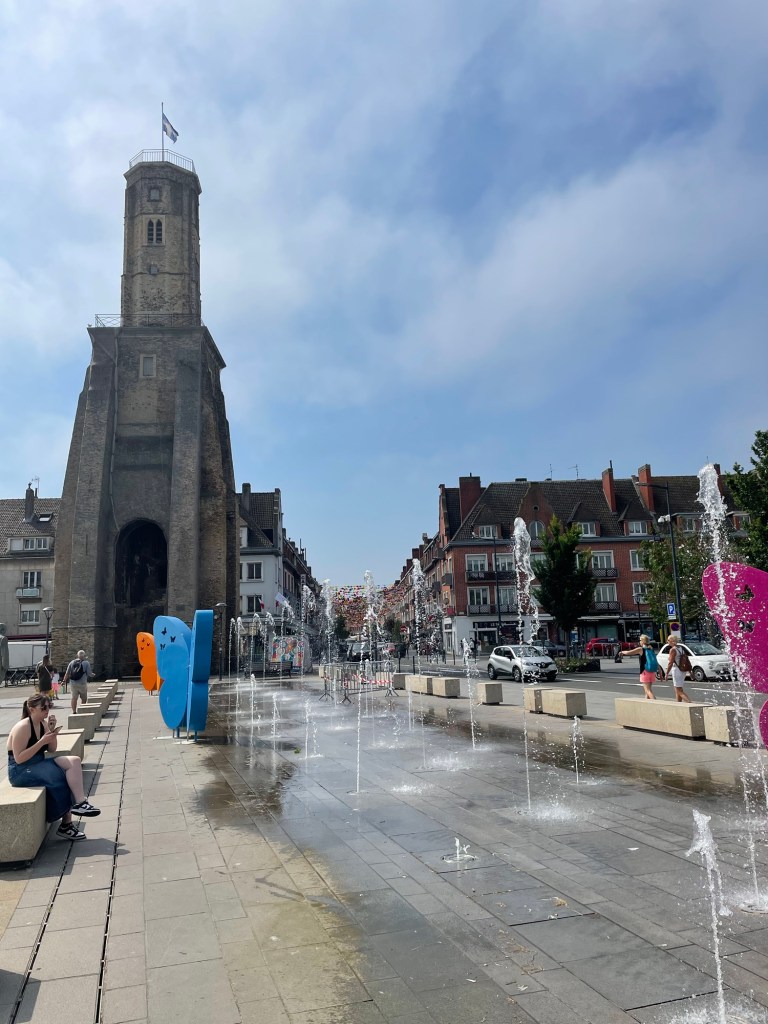
Calais

From Dunkirk it was a short sail on east to Ostend. If you have been spoiled with the beauty of the Devon and Cornwall coastlines of England, you, like me, would find the stretch from Calais to Ostend to be pretty horrible. It’s a flat, busy, industrial area with huge ships, fast ferries and sandbanks dividing channels of fast flowing tidal currents, and onshore a mass of chimneys, factories and steam or smoke belching into the sky. You have to stay alert and there’s no time to make coffee, let alone doze off.

Then, at the end of a long day, I entered Ostend in a strong wind to discover we must go through a lock and three swing or lifting bridges to get to my berth, stopping three times for traffic lights to let me go on. Such manoeuvres are no joke for single handed boating and I was happy eventually to reach a peaceful berth in the middle of the city.

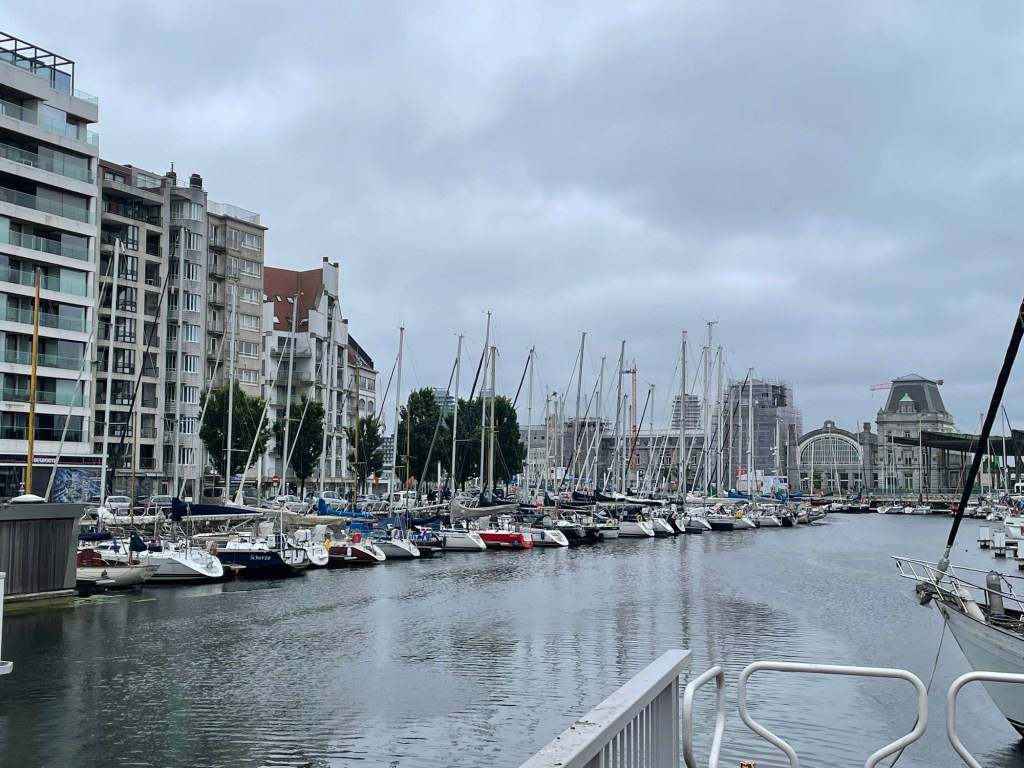
Ostend Mercator Marina

Ostend was a good place from which to visit the seething-with-tourists Brugge (station is next to the marina) and, next day, the West Flanders battlefields of WW I, neither of which I’d ever done before. 

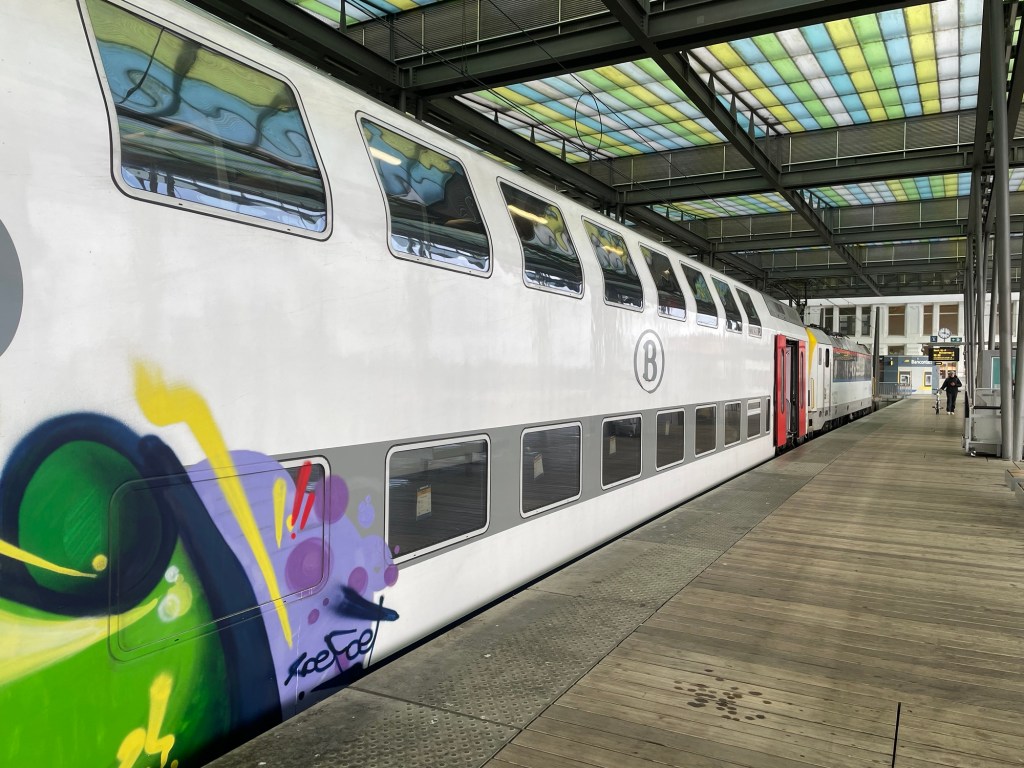
Punctual Belgian trains

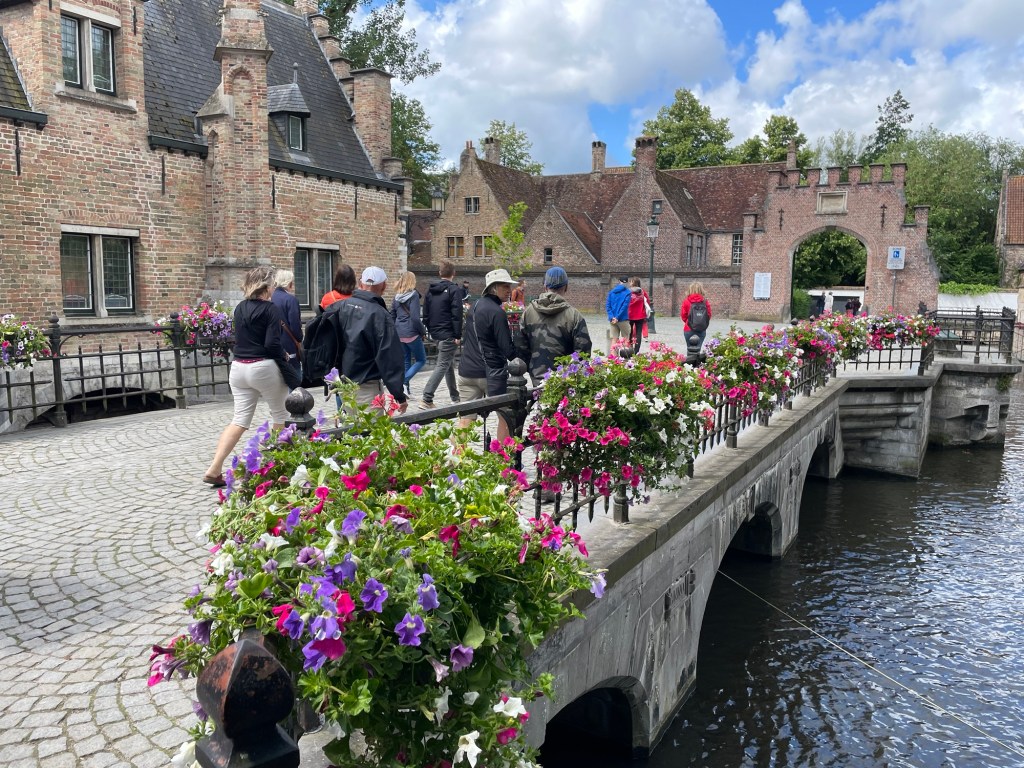
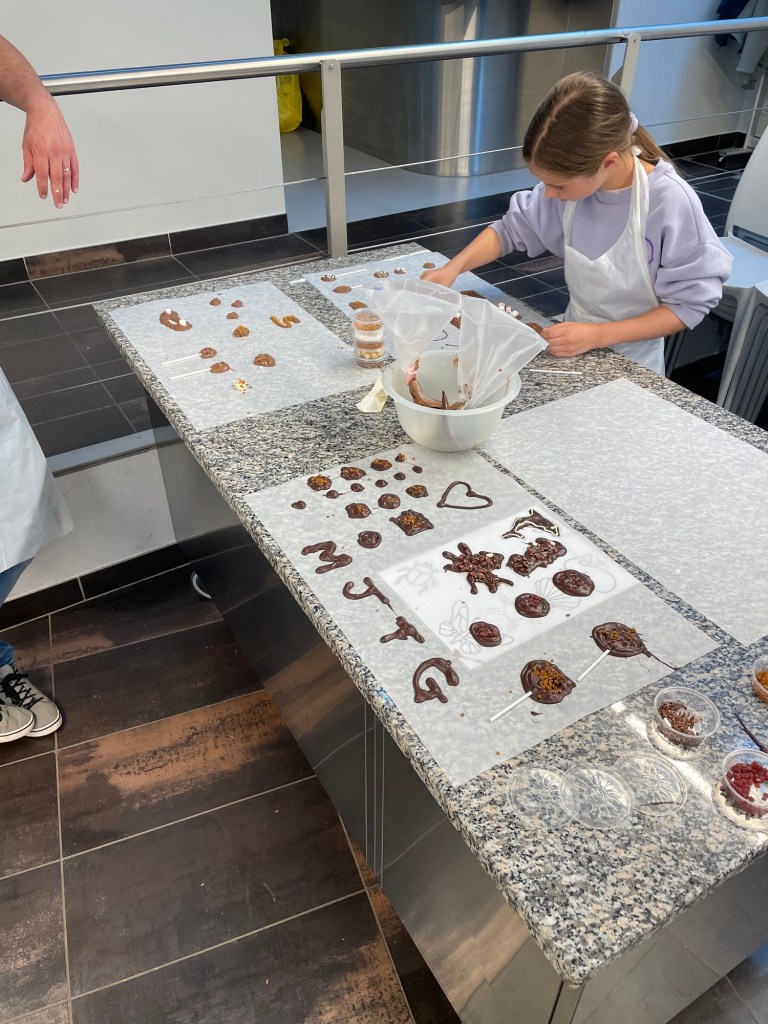
In Brugge I was one of the 10-12 million tourists who arrive each year. It felt like it – though I enjoyed a guided walk and learnt to make my own Belgian chocolates (very yummy but rather misshapen).

Brugge
A lesson in making chocolate

In harsh and sobering contrast I visited next day the grave of a great uncle, one of the early Flying Corps pilots who’d died in 1916 aged 23, buried along with over ten thousand others in Lijssenthoek Military Cemetery, overwhelmingly young, who were sacrificed in the cause of misplaced patriotism. 

Lijssenthoek Cemetery

Later that day on to the Flanders Fields Museum in Ypres. Such a day, immersed in thoughts of man-made pain and grief, must leave you acutely aware, if you weren’t already, of your good fortune in living a hundred years later.

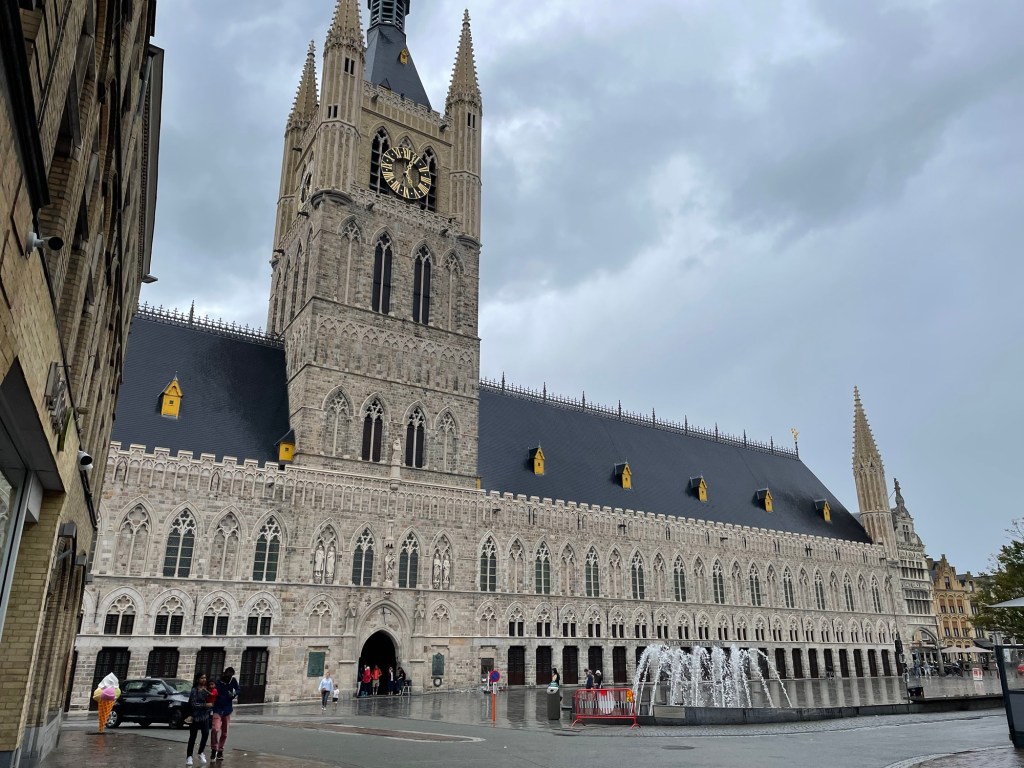
A handsome home for Flanders’s Fields Museum, Ypres

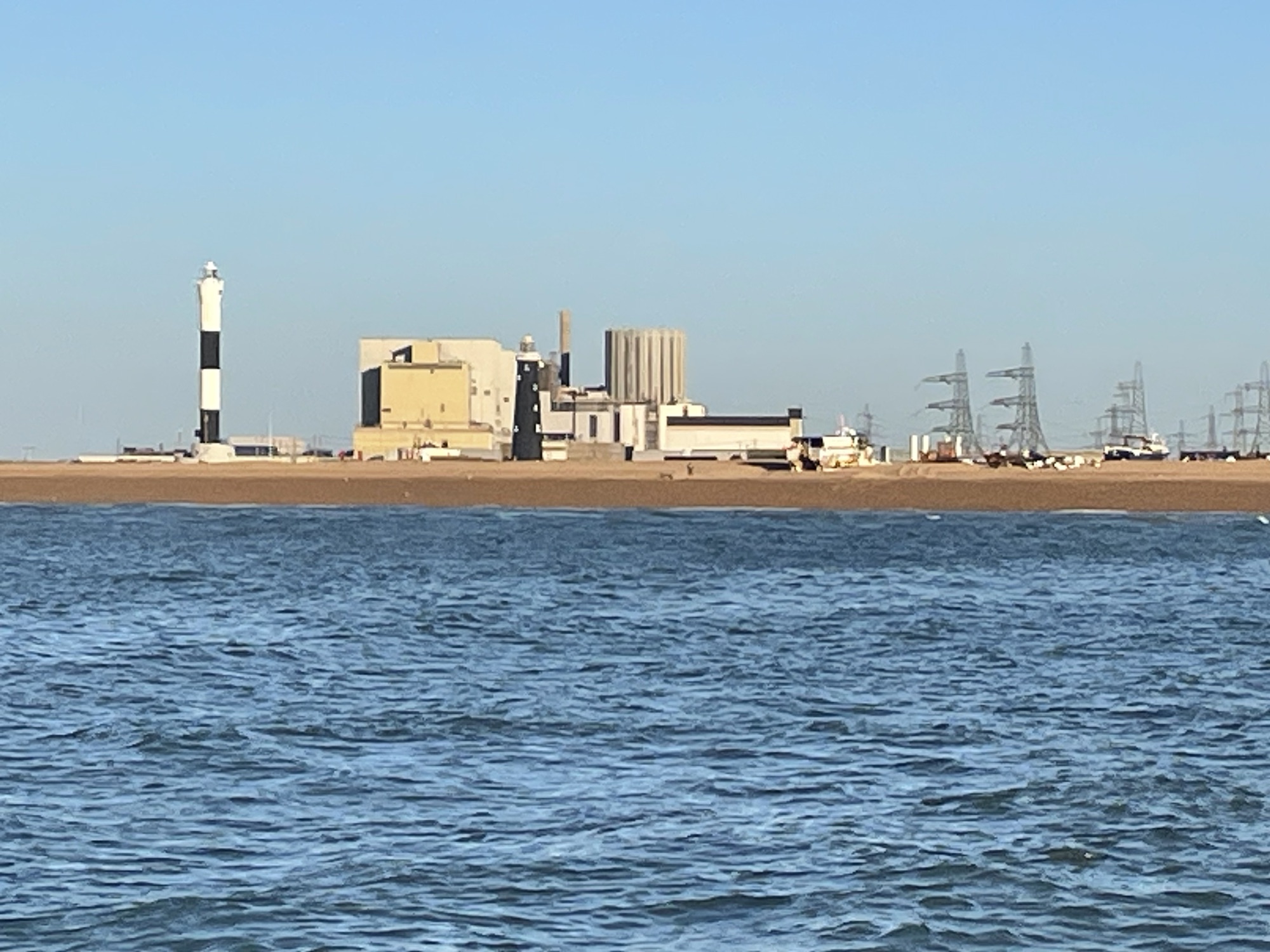
Then, on leaving Ostend, Henrietta and I retraced steps down-Channel, and after stops off Dungeness nuclear power station and next night Seven Sisters white cliffs, followed by Chichester Harbour, I now find myself rolling wildly off Swanage, a popular English seaside resort, while rain pours out of leaden skies. It’s too rough and windy to land, so time to write this update!

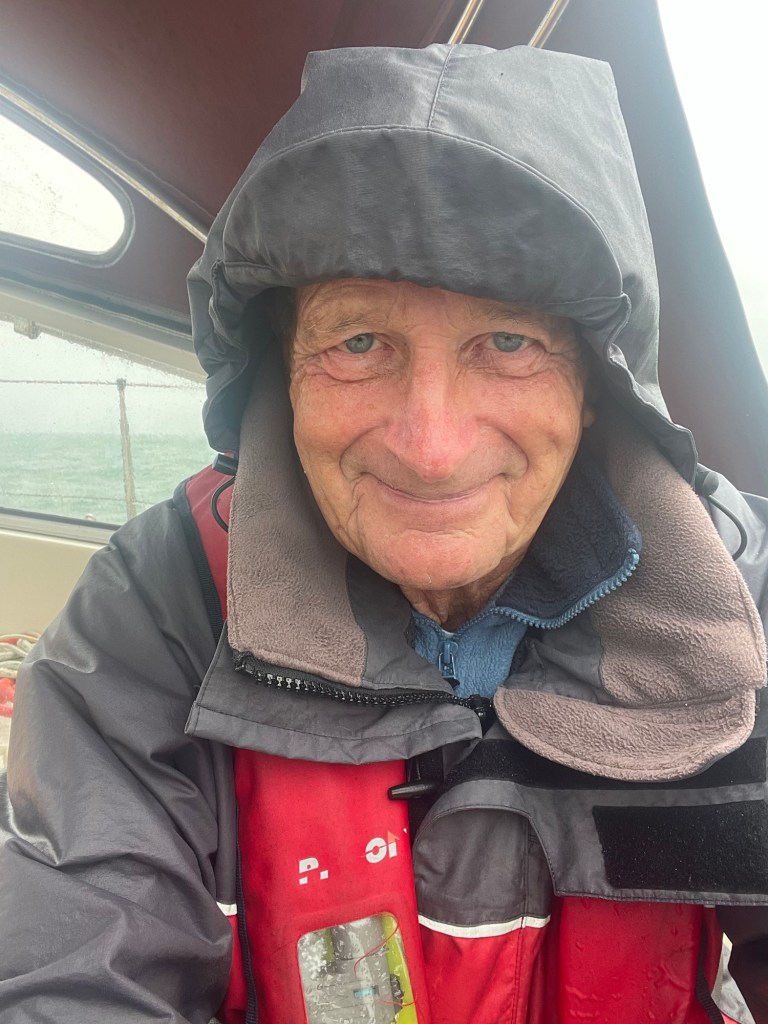
Another cold soggy day at sea
Scenic anchorage off the Seven Sisters (Nr. Eastbourne)

Azores to Scilly Isles, 2024

13th to 31st May

Angra do Heroismo, on the island of Terceira in the Azores, is a beautiful little city, understandably a UNESCO Heritage City. I love it. It makes me feel happy just to be there and walk along its charming streets, revelling in the delight of handsome and colourful houses, with their ornate wrought iron balconies and shuttered windows. Glimpses inside homes show prettily patterned tiled walls and an air of calm.

It was first settled in the 15th century and you can readily imagine its historic past when this was the capital of the Azores and, being central to the North Atlantic, became a focus of trade and power, bustling with commerce, piracy and fighting (at different times Spanish, English, French and Dutch all fought and squabbled in the area). 

Nowadays it’s peaceful – though American airforce maintains a NATO presence and controls the island’s airport. Mid-morning most days, I’d stop for coffee and some sort of irresistible cake, before wandering on through museums, old forts, monuments to heroes of the past and especially the central public gardens, Jardim Duque da Terceira, which are so utterly delightful that I called in many times. 

Bit of museum
The Gardens

If you add in the charms of Portuguese hospitality and friendly helpfulness, some beautiful rural walks, and huge dollops of interesting history, it’s hard to beat the Azores. Being a bit early in the season, weather was still cool and sometimes wet, but just about warm enough for swimming. Most days the sun shone brightly and the crowds of visitors who swamp Angra in the summer season were absent – though one talented pianist and singer on a boat drew in a small crowd for her two performances (below).

Anchored at Angra

After ten days fixing bits of Henrietta, meeting fellow sailors from Devon and elsewhere, and waiting for better forecasts, it was time to leave the Azores and head for England and home.

I sailed gently out of the anchorage at  Angra do Heroismo. This time it had been my only port of call in the Azores. The final leg across the Atlantic to the Isles of Scilly is about 1,100 miles. Thanks to strong winds (and the magic of Iridium wind forecasts to help find a good route) it took eight days, the quickest of the several times I’ve sailed this route.

Strong winds and big swell

The friendly Scots captain of a passing superyacht, Adix (goodness, it’s over 60 metres long), gave me more accurate up to date weather information, before he altered course to miss the worst of a coming gale. I should have followed his example, but didn’t.

As a result, Henrietta and I had two very uncomfortable days with gale-driven rain when I felt queasy, damaged my creaky body and almost lost the spinnaker pole, not to mention being soaked through several times.  My feet have yet to warm up and Henrietta is still damp. Not for the first time she tells me she’s not a submarine.

First anchorage in Britain was the sheltered Cove at St Agnes in the Isles of Scilly, one of my favourites. It offers pleasing gentle walks as well as the indulgence  of draft beer. And for me, the joy of seeing busy guillemots, gulls and cormorants – so much more cheery than the sea birds of the tropics, and much more numerous. Britain has a lot to offer (but it’s really very chilly this May).

St Agnes

Caribbean to Azores 2024

19th April to 12th May 2024

West to East across the Atlantic

In this quick update covering my sail from the Caribbean to the Azores, I’ll tell you a bit about the weather and a bit about food. Most people, especially sailors, often think about the weather. And almost everyone thinks about food a lot.

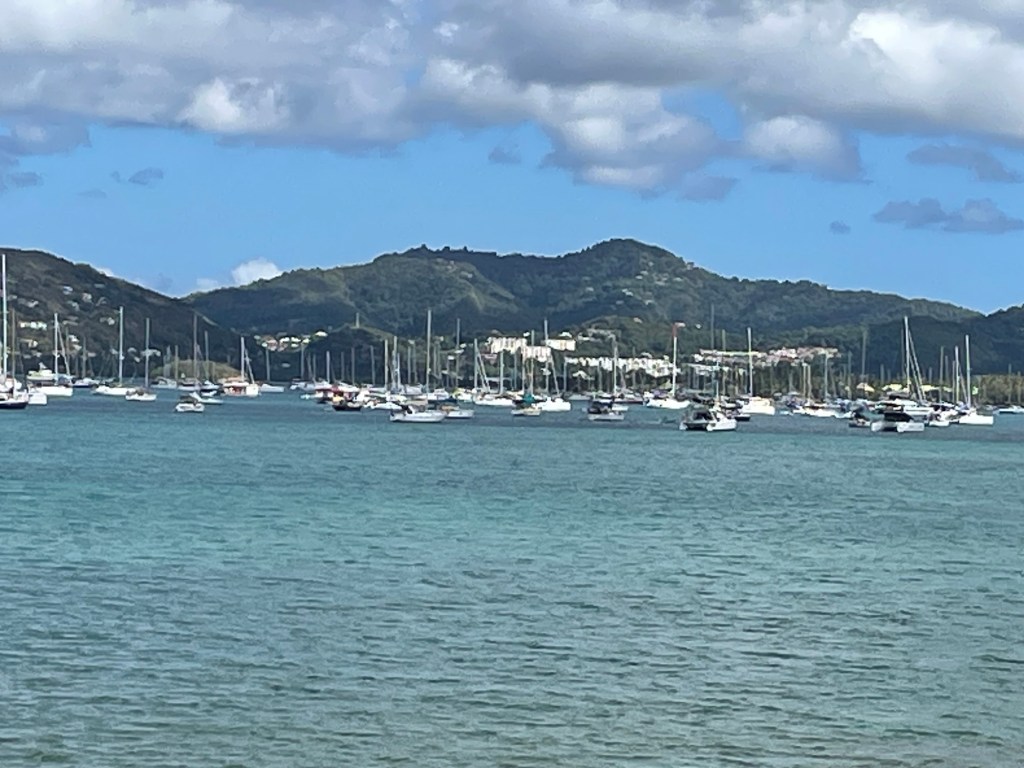
While enjoying the last few days of peace and sweltering sunshine in Martinique I witnessed the arrival and departure of no less than three cargo ships which had called in to pick up yachts and take them back home to Northern Europe or the Mediterranean – either as deck cargo or, in the case of one plump Dutch ship, in a clever sort of dry dock – loading at the stern.

You could get home this way

These cargo ships enable yachtsmen to avoid the troublesome weather that’s often encountered while sailing from west to east over the North Atlantic. It costs a bomb – but it’s quick, safe and reliable. Of course, it can also cost a bomb if bits break on your little yacht in stormy seas. But Henrietta would feel humiliated to ride piggy-back on a huge ship, so we have always sailed home.

This was the third time Henrietta and I have travelled this route. But it’s the first time I’ve had a good way to get weather forecasts.

In the past I looked at clouds and the barometer and held a damp finger in the air and muttered “Hmmm”. This wasn’t very accurate. I always encountered some horrible weather. So invested in an Iridium Go, one of those high tech modern devices, so that, via satellites, can download Grib files generated by mighty computers that forecast wind a few days ahead. It makes quite a difference to the route you choose. I still look at clouds and the barometer, but I have to say computers are better.

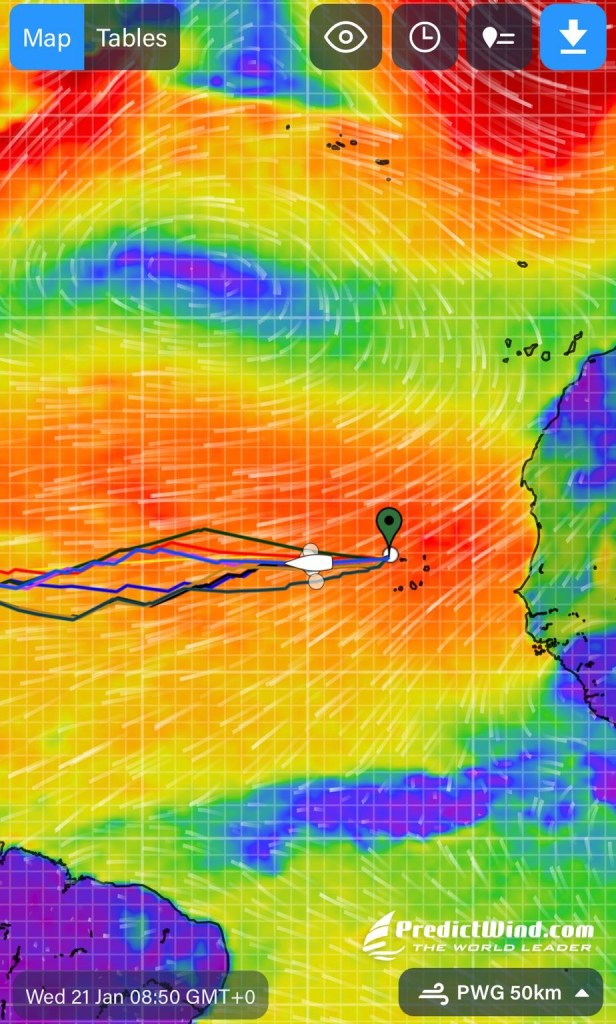
Possible routes???’

Alas! Even with high tech gadgets you can’t change the weather; you just get more warning of what’s on the way. Sometimes you can alter course to miss the really rough stuff and stay away from calms. I found it very helpful. The downside, apart from having yet another gadget in your life, is that you spend time fretting with anxiety as you watch gales coming your way and can’t get out of the way in time.
(The whole question of satellite communications for sailors is a topic as big as topics like batteries or electronics or engines and I’ll not go there. Everyone already seems to have their own view anyway. I’m a laggard in having satellite gadgetry; lots of boats have taken the next step and have limitless internet via Elon Musk’s armada of mini satellites, about six thousand of which are already orbiting and cluttering the space above you.)
Sailing the time honoured arc first northwards and then eastwards, around the Azores High, you cover many more miles, but avoid using the engine. (Avoiding engines as much as possible is one of my core sailing principles.)
Rare company en route

Leaving the Caribbean, hot steamy tropical sunshine soon gives way to gorgeous sunny days and cooler nights. Your brain reignites after the lethargy and enervating drain of too much humid heat, and you find energy you thought you’d lost, and usually sleep comfortably at night (even if just in short stretches). Then, quite abruptly, it feels pretty chilly and the low pressure systems that bowl across the Atlantic en route to Northern Europe have you looking for socks and waterproofs, and that cosy duvet.

Whatever my forecasting method, on this voyage back across the Atlantic I’ve usually had a mix of balmy calm and brisk challenging stuff. This time it was rougher and windier than it used to be. Perhaps I left too early in the season, or perhaps mankind really has screwed up global wind systems, or perhaps I’m no longer young enough.

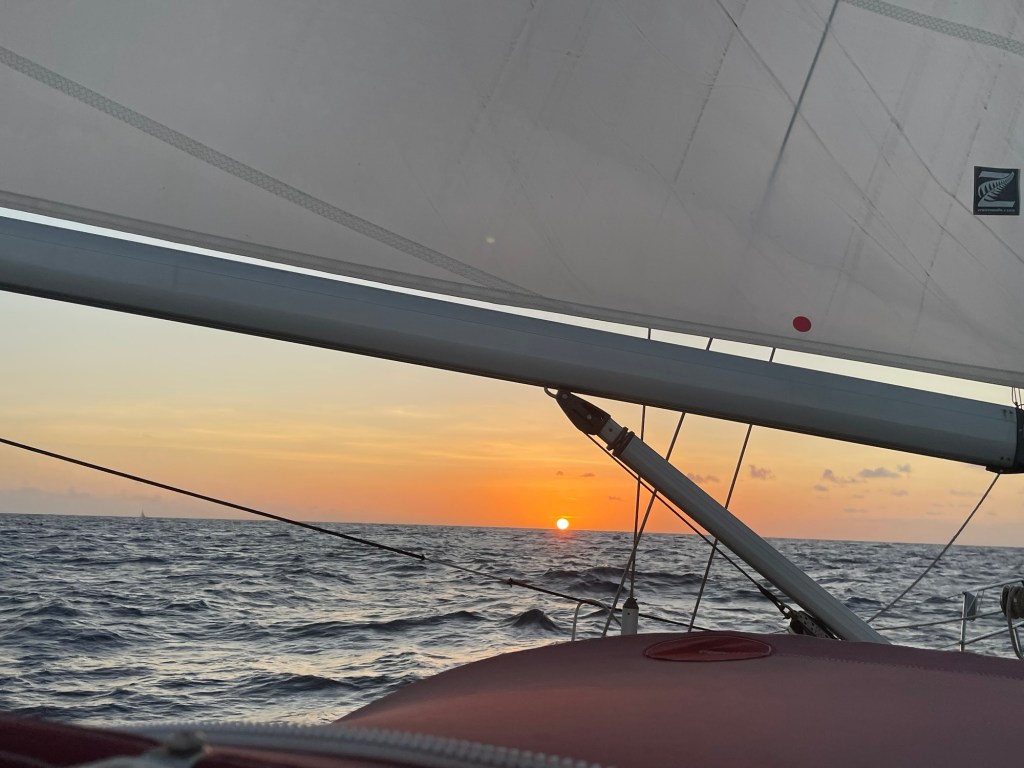
Soothing sunset on day of departure

I have never felt anything other than awe in the face of the world’s oceans. Whether it is the gentle heaving of languorous swell during calms or thunderous crashing and driven spume from waves in a gale, I know the seas are massively powerful and can be unforgiving. It seems trite to say they are beautiful, majestic and endlessly fascinating but, however many hours and days I’ve watched the sea, I am always filled with wonder. In fact we only had one short-lived gale with gusts to 50 knots, a few bruises and a sleepless couple of nights.

Dancing eastwards (see tanker wallowing in the distance)

There were many visits by pods of playful Atlantic spotted dolphins. How I love to watch them leaping and powering their way across Henrietta’s bow, surely showing off like precocious children. There was also a pod of three or four humpback whales, a family group perhaps, heading north alongside us for an hour or more. I marvel at their grace and size, but they were at times too close for comfort, an added source of anxiety,

It is truly important that we look after the sea – please, no plastic rubbish, no oil drilling, no giant turbines – and do we really need to eat so many fishes?

That’s enough about the weather. Let us now consider food – or ‘victuals’, the word used in some sailing manuals.

The RYA’s courses see ‘victualling’ as part of the training required of proficient skippers. It just means having enough food on board for everyone. I’ve always found it a dull part of a skipper’s tasks, preferring a more scatty approach and just buy what comes to mind, roughly enough to have half an onion and a bit of fruit and veg per person per day, plus some tea and coffee, with other stuff like pasta, rice, beans and spices according to what’s available.

This time my victualling was rather too scatty and I soon ran out of fresh veg, eggs and biscuits. In fact I’d completely forgotten about eggs and biscuits. But apparently a bit of fasting does no harm, and there was enough milk and powder to make yoghurt. Anyway, there’s a locker full of rusting tins with everything any top chef might think of.

It’s often quite tricky fixing a meal because the wild motion of a rough sea makes cooking slow and hazardous. Indeed, while making my yoghurt, which I do in a giant thermos thing with boiling water to heat the mix, I spilled said boiling water onto my tummy button. I didn’t scream (no point if no one’s around) but it did hurt a lot. Steaming water sizzled my wrist, tummy and delicate nether regions. I’ve learnt a lesson. Also I subsequently learn that spilling boiling water is one of the most common accidents to befall galley slaves. Be careful! Not sure if skin will ever be the same again.

Dance of dinner

In the spirit of necessity being the mother of invention, and with an urge for something sweet to eat, I created a sponge pudding – of sorts. In case you ever feel tempted, it involves flour, bicarbonate, sugar (I had some little packets from coffee shops), a splash of oil and water and then about half an hour in the pressure cooker. Yum – when you’re very hungry! Probably not if you’re not. The mark II version also has cinnamon, grated ginger and currants – even more amazing. (N.B. Don’t try this at home.)

Sponge pudding, Mark 1

Goodness me, this update has gone on much too long. It helped occupy the hours while sailing over the ocean.

Dawn of final day

After nearly 20 days and 2,447 miles I sailed into the charming historic town of Angra do Heroismo on the island of Terceira. Need to rest a while and fix broken bits……