Had I not kept a diary it might have been hard to recall what has happened in recent months. Days and weeks slip quickly easily by.
Every morning I waken to blue skies and warm sunshine, Henrietta bobbing gently or rolling wildly beneath me, knowing how very lucky I am to have a boat, love sailing, have health, family and friends and be far from the world’s horrifying wars and immeasurable suffering. Us liveaboard sailors are truly blessed with good fortune. We know how lucky we are.
Without a self-indulgent description of every place, person and activity seen, met and done, I’ll just say I’ve flitted through familiar islands, met dozens of fine and fascinating people, and enjoyed many invigorating mountain walks and soothing seaside swims.
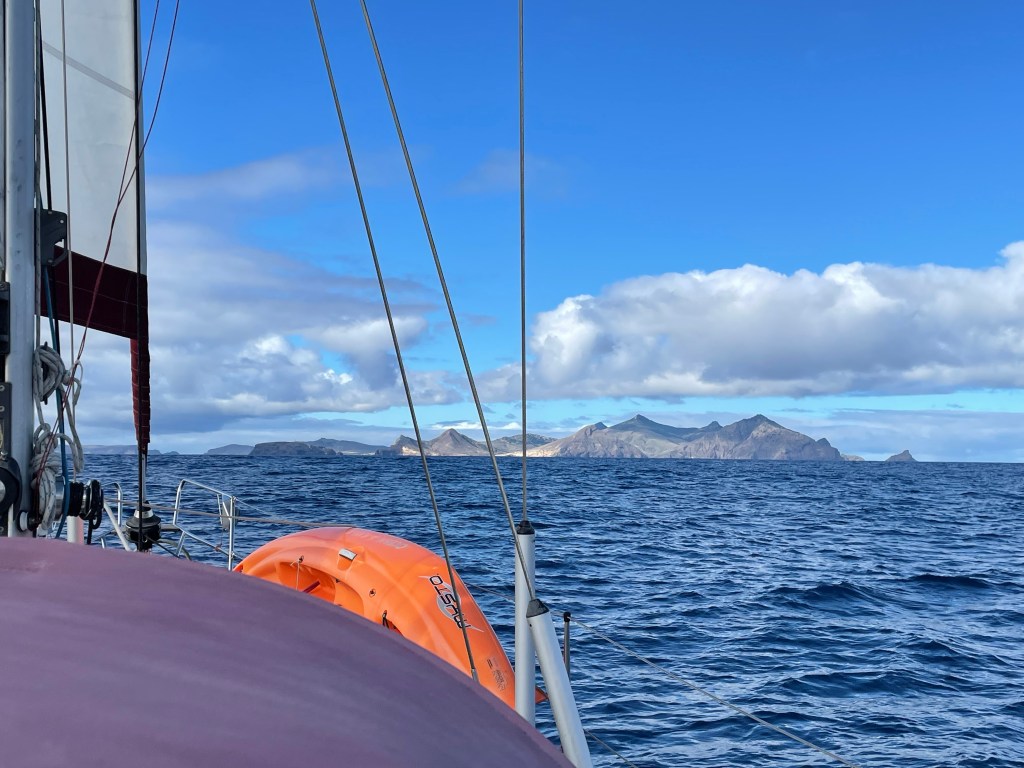
Approaching Porto Santo
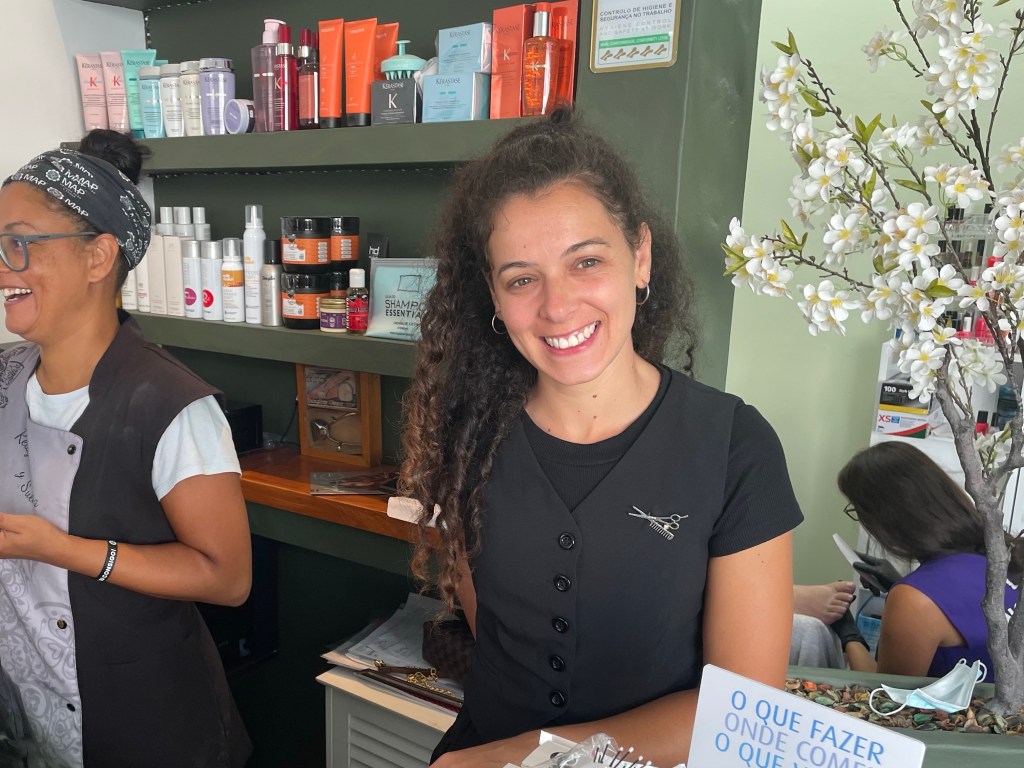
First stop after mainland Spain, the island of Porto Santo (a small Portuguese island near Madeira), for a haircut. This little island is home to the world’s best hairdresser.
I’m a fairly scruffy, balding, grey-haired English pensioner. Yet, despite this, she deals with every wayward bit of fluff and whisker with all the delicacy, diligence and skill of a brain surgeon.
It’s well worth a two hundred mile detour to get smartened up in Porto Santo; and it’s an utterly charming spot anyway. (But, I ask myself, why on earth would you be interested in when and where I have a haircut? It’s not the sort of thing that normal well-balanced people talk about. Draw your own conclusions.)
The world’s best hairdresser (look at her brooch)
Then, on south once more for a quick stop in the Canary Island of La Palma. I’d hoped to lure a Dutch friend to sail with me……but couldn’t.
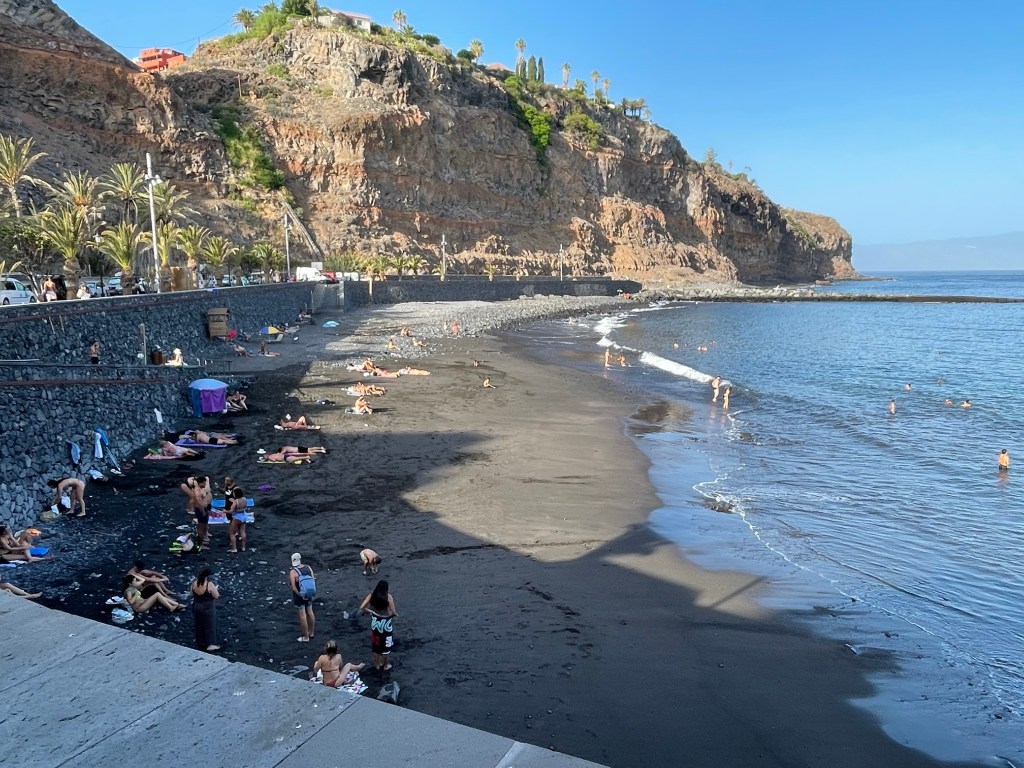
On next to La Gomera, which, if you’ve followed my earlier travels, you will know is my favourite of all the Canary Islands.
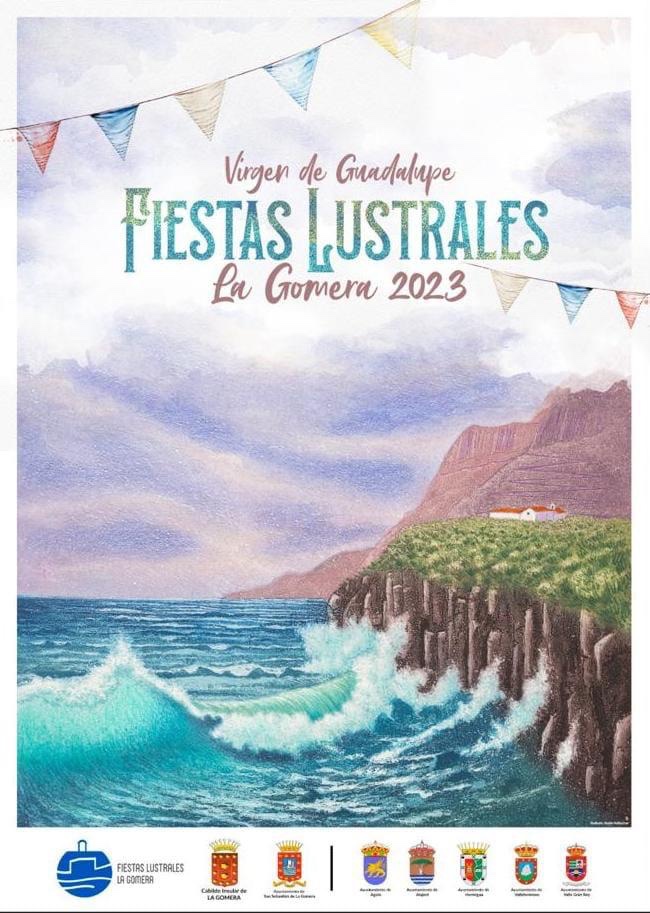
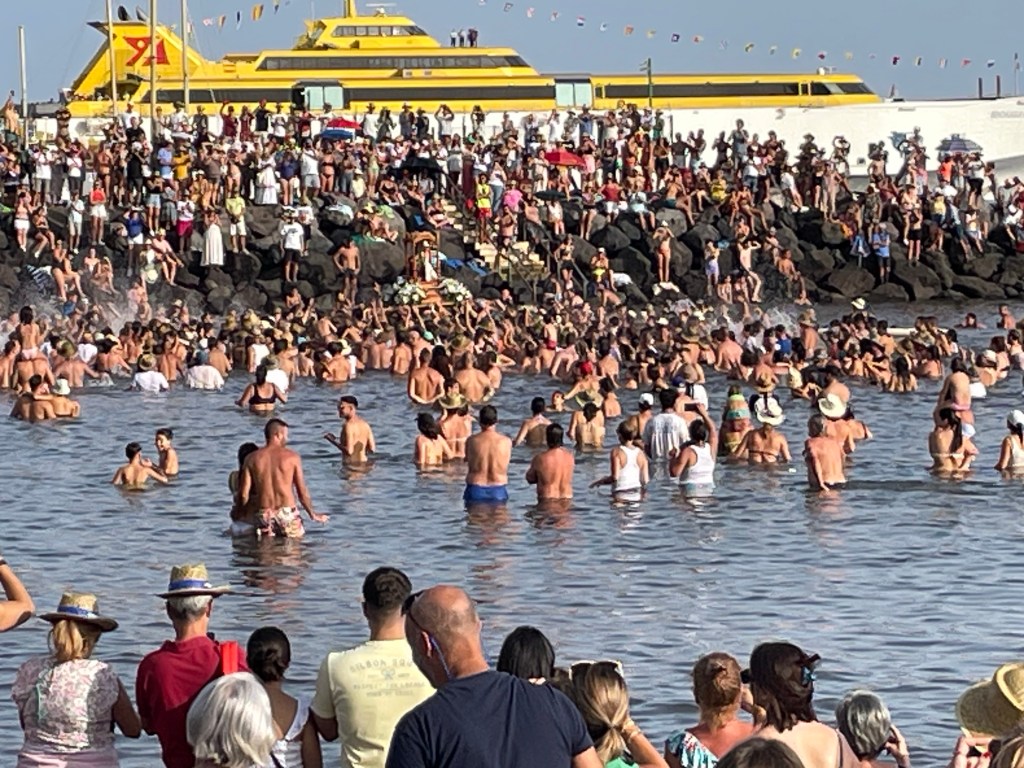
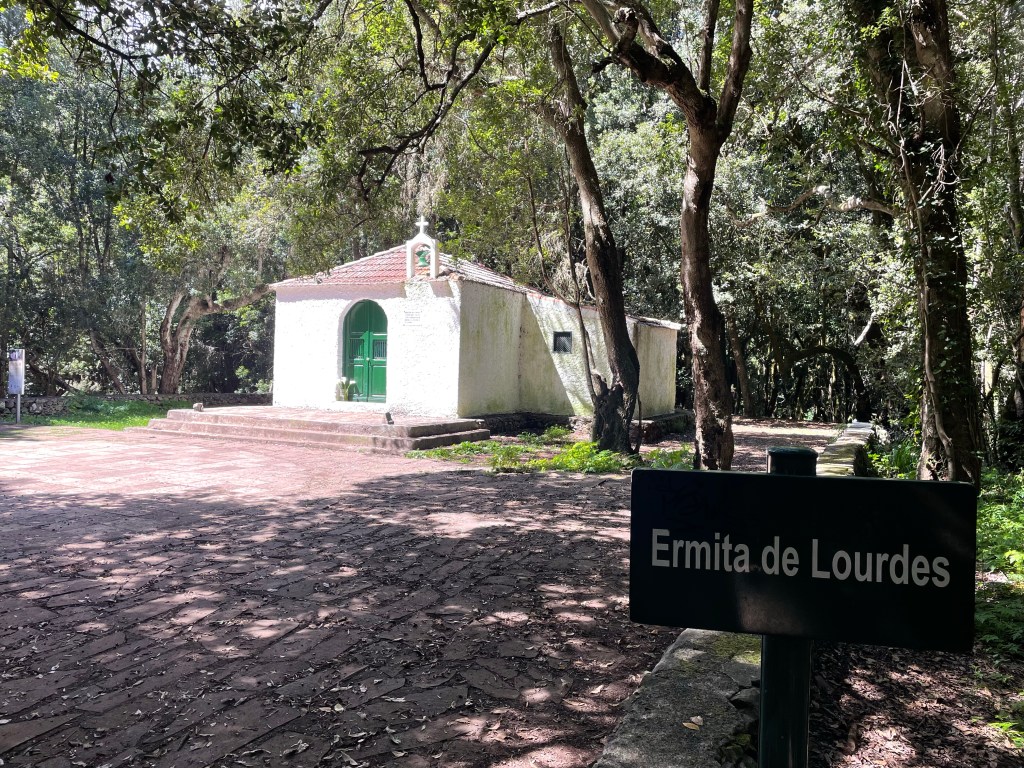
This year in La Gomera there’s a once-in-five-year festival. Our Lady of Guadalupe, or Virgin of Guadalupe, (at least her image) comes out of her remote chapel in the north of La Gomera for a grand tour of the island, starting with a boat ride to the capital, San Sebastián, and continuing for the next few weeks around different towns and villages.
Awaiting her arrivalComing ashore
This may sound like a bit of trivial Catholic tradition, but it is not trivial at all. It is a huge event. A flotilla of boats escorts her to the local beach, where thousands of islanders and visitors are waiting to see her safely ashore.
The atmosphere is super-excited with awe and anticipation; helicopter flies overhead; television crews capture key moments (YouTube from Canaries TV below is long – skim through if you want!)
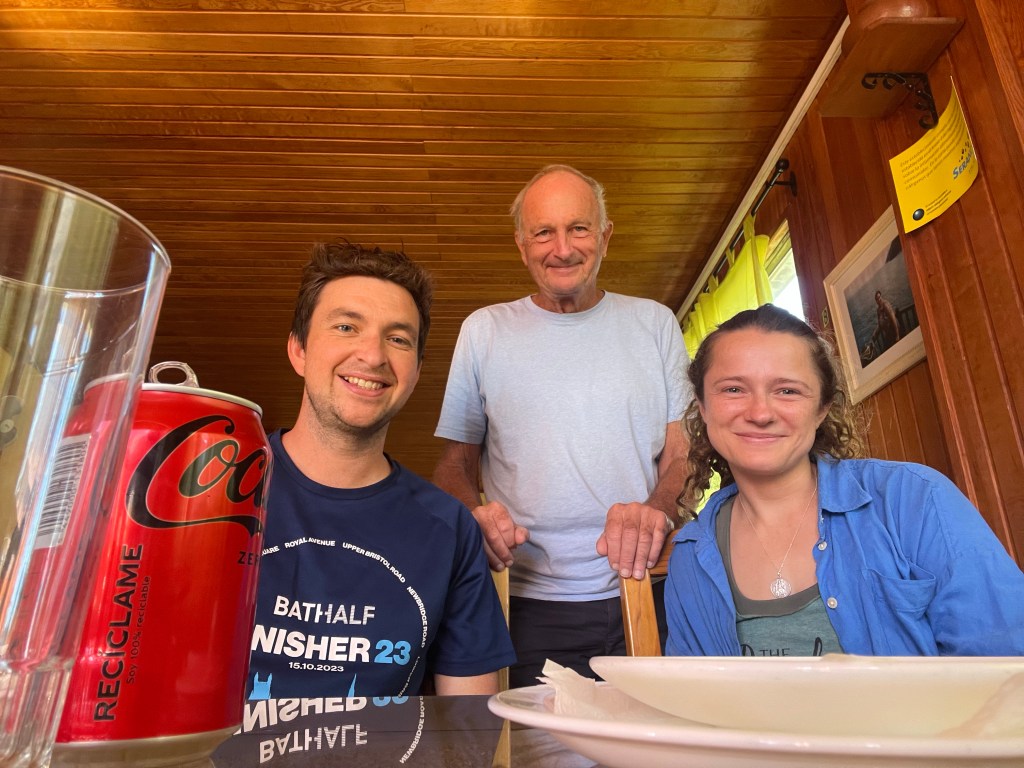
That was in October. Since then, I’ve had son George to stay, lots more wonderful walks in this gorgeous island and an uncharacteristically sociable couple of months (and another haircut).
With George and KezOCC gathering (not my boat)
In the next few days, I’ll sail south to Cabo Verde. It would be too easy to spend many more months here!
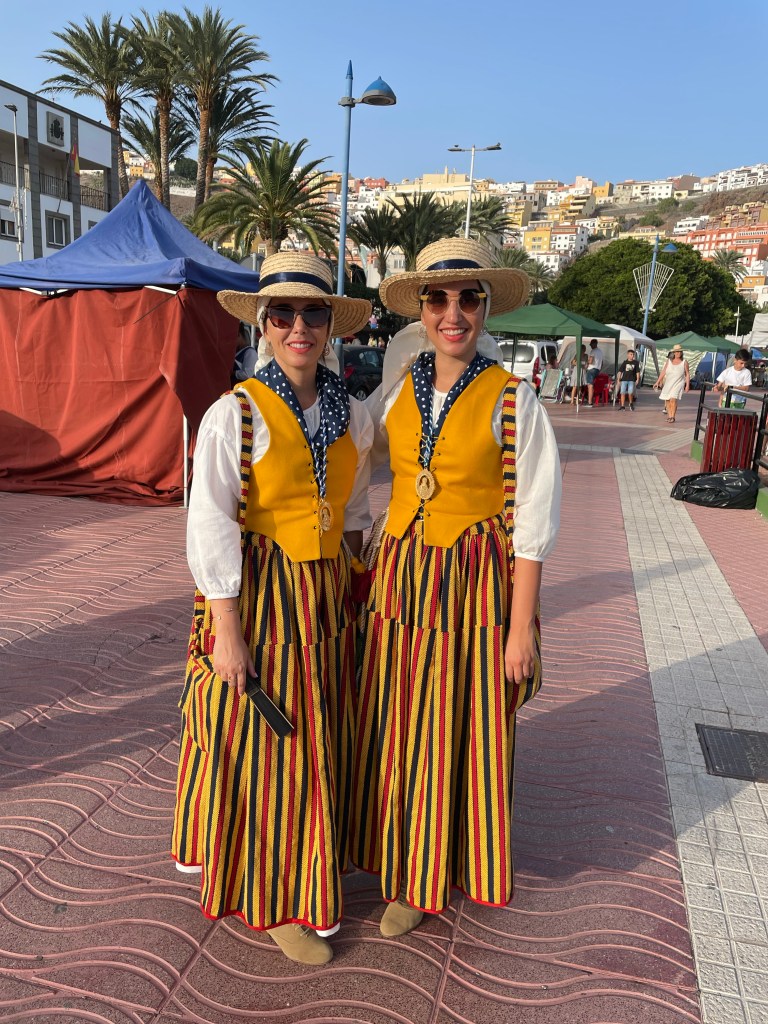
Agulo with Tenerife in the background Vallehermosa (favourite place) and Roque Cano Traditional dress
Little over a month ago, at the start of August, England was wet and windy.
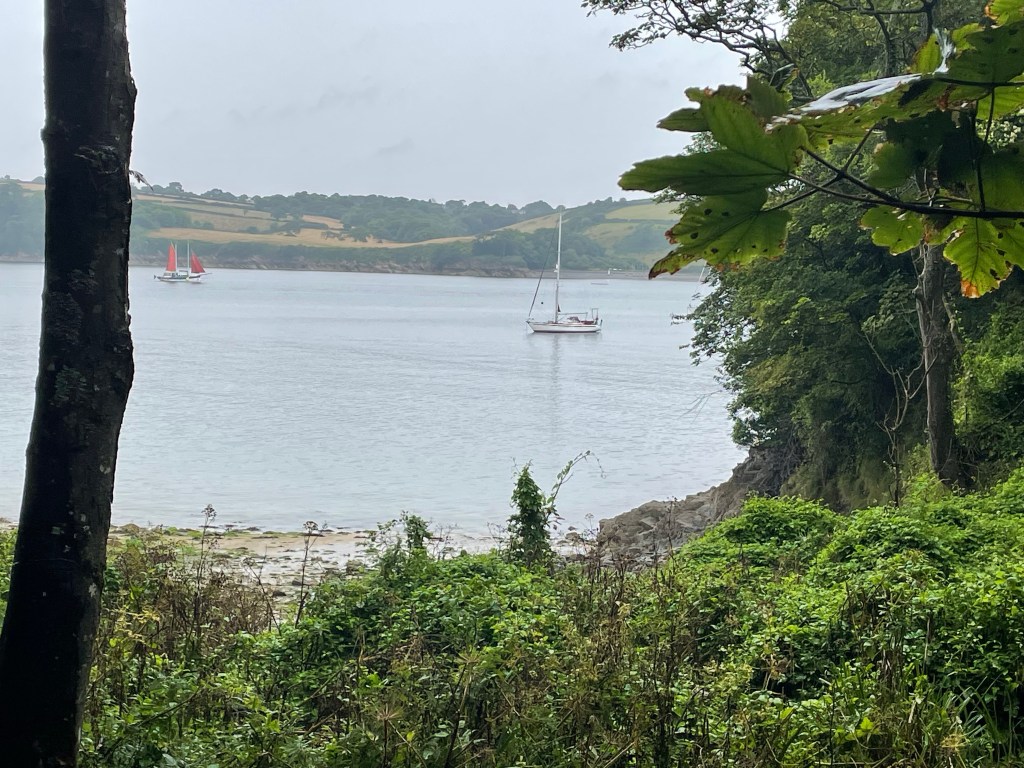
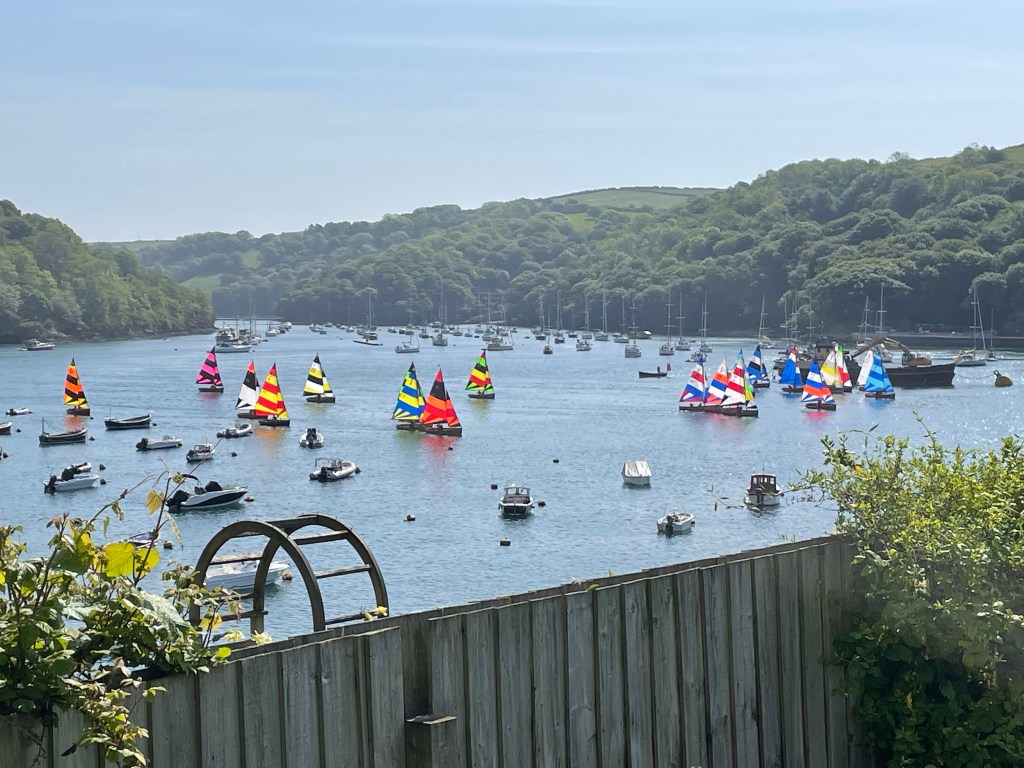
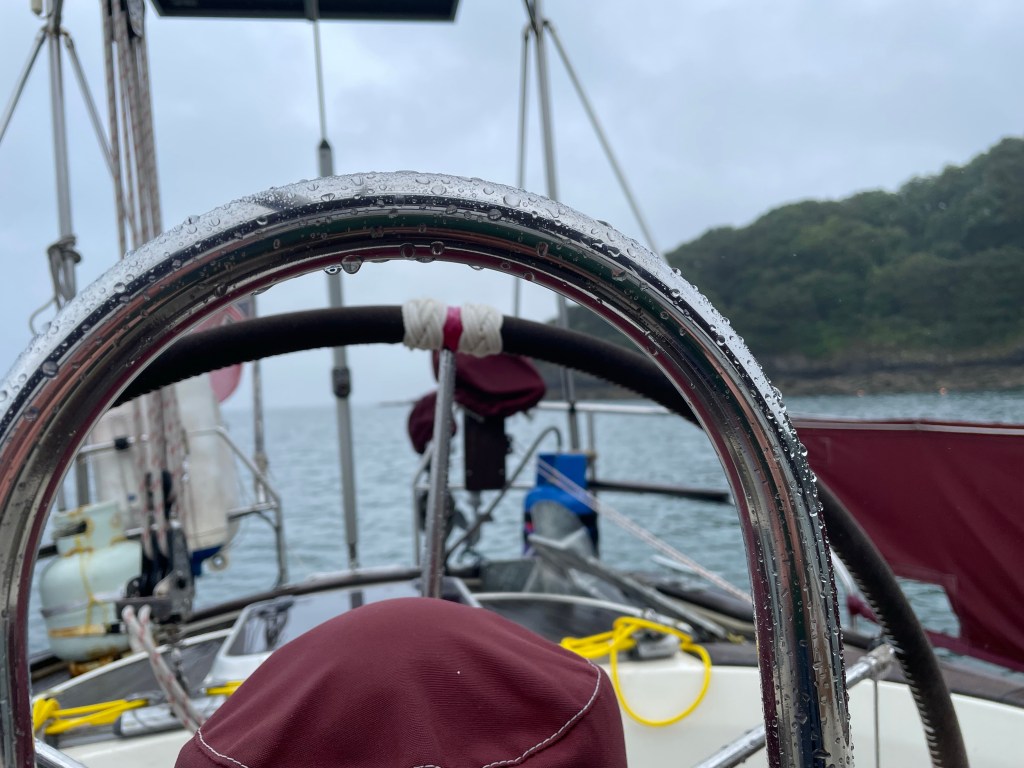
In a summer of uncharacteristic weather extremes, lurching from record breaking heatwaves to wretched chilly wetness, Henrietta swung wildly at anchor in Cornwall’s beautiful Helford River. I was waiting for a few days of calmer seas to sail across the Bay of Biscay to Spain.
Thought I’d get south before this arrived.
At last there was a forecast for a couple of days respite before yet another gale came through. I lifted the anchor and left. It was still a bit rough but, as ever, it was exhilarating to be skipping over the waves once more.
The gale I thought I’d escape was then upgraded and expanded, and christened Storm Antoni. It was too late to turn back. I hurried south hoping to get away – but couldn’t go fast enough.
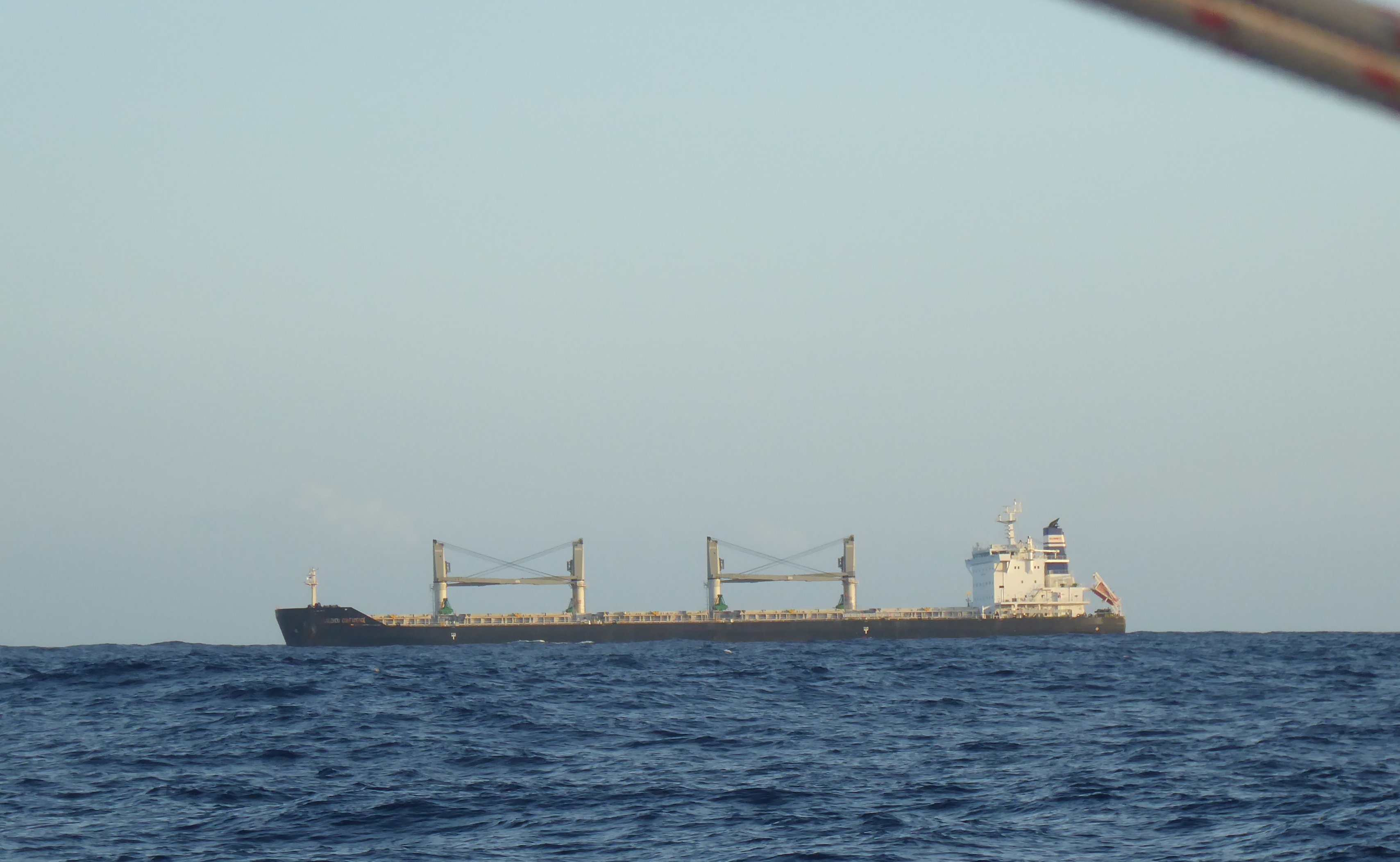
And so it was a very rough crossing, easily the roughest of the several Biscay crossings done to date. Perhaps I was a bit frightened, something normally only reserved for lightning, and I was exhausted. Trouble was I felt sick, again not normal in my sailing travels. Add to this, that the wind on the second night backed and strengthened, forcing me across the busy lanes of shipping heading to and from North European ports.
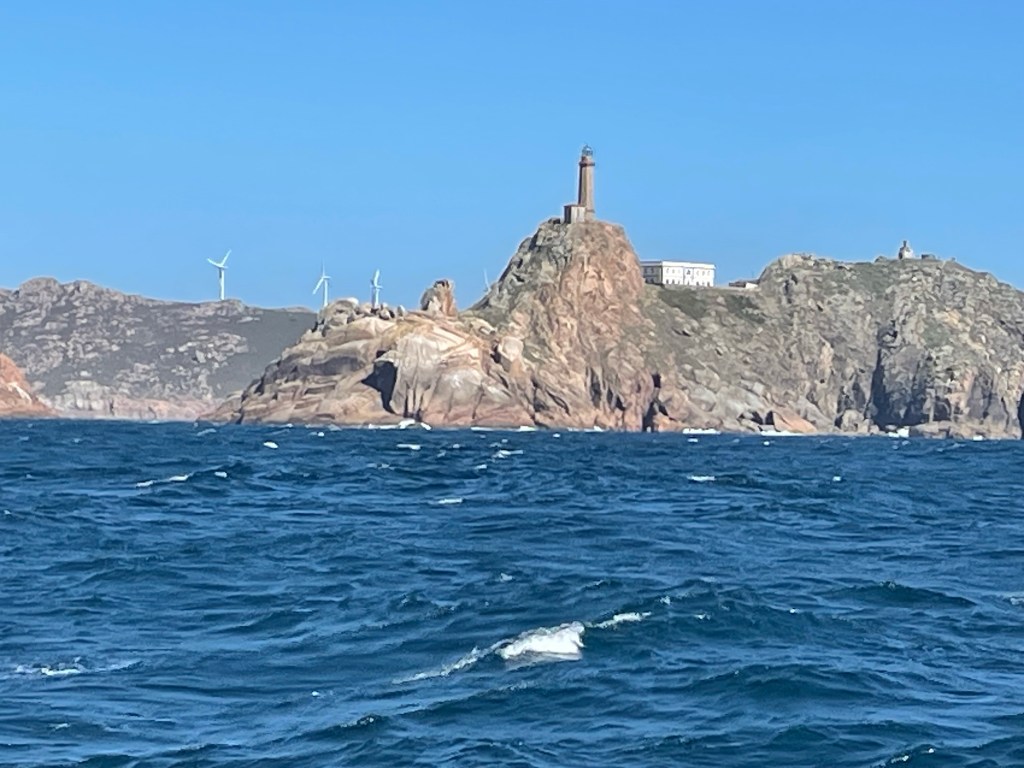
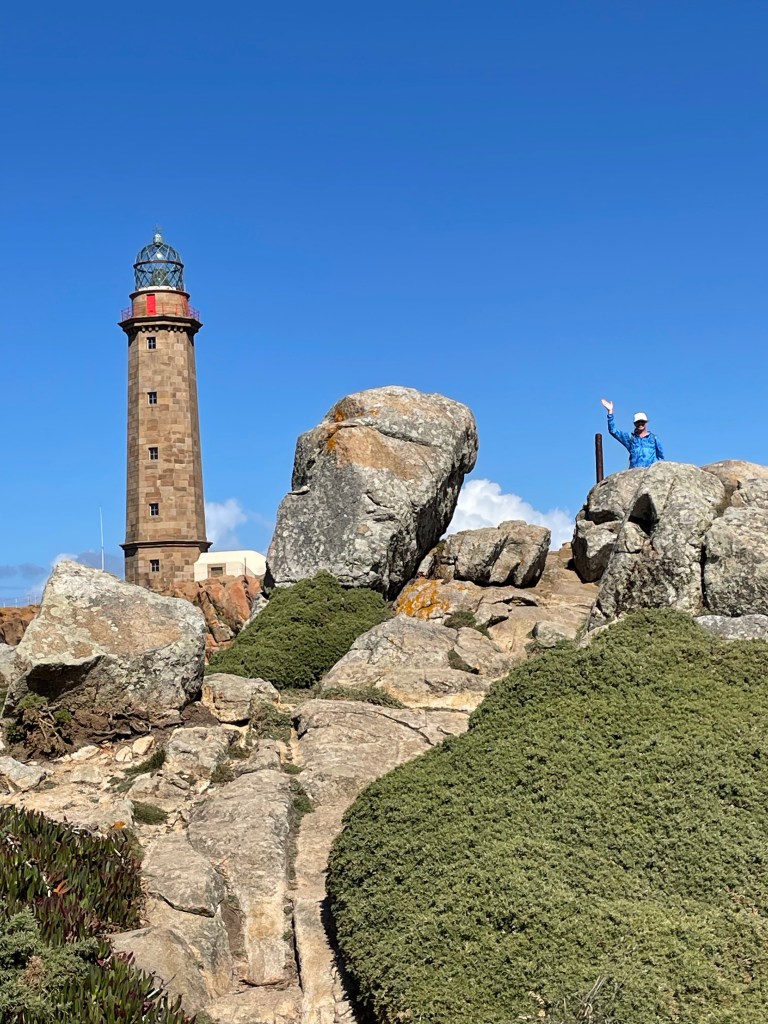
Welcome sight of Cabo Vilan lighthouse
Yet, it was a quick passage lasting a mere three days for 460 miles; roughest Biscay crossing yet, fastest yet. The sun came out as I swept into Ria Camariñas in Northwest Spain, and lowered the anchor at a familiar spot. In a few short minutes mood lifts from a state of exhausted anxiety to pure joy, blessed relief and plain old happiness.
These wild swings of mood are a characteristic of this sailor’s liveaboard life. The normal cycles of emotional state, cheerfulness and grey gloominess, seem to be exaggerated by the challenges and rewards of life at sea. From utter despair when equipment fails, the sea is violent and rain is relentless you can be elevated a few hours later to serene pleasure with sunshine, a dolphin’s playfulness and cormorants with wings outstretched on nearby rock.
(There’s a special place in hell for those who write books, magazine articles and tales that dwell only on the positives of liveaboard sailing life! It isn’t all sunshine, golden sunsets and smiling contentment you know.)
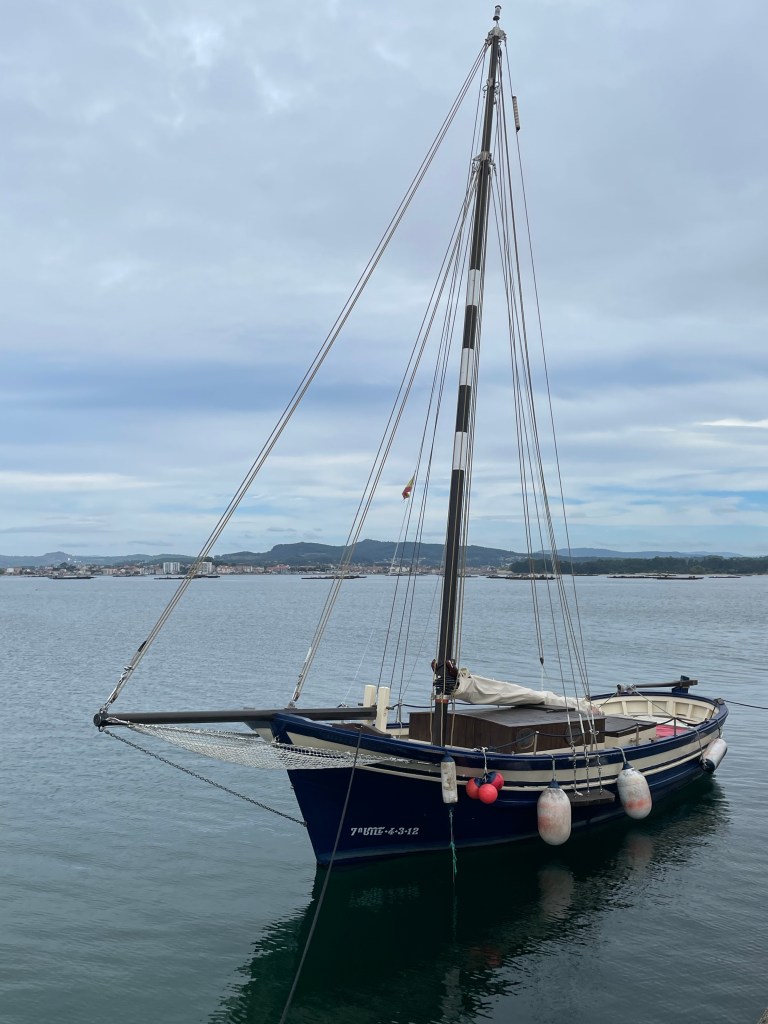
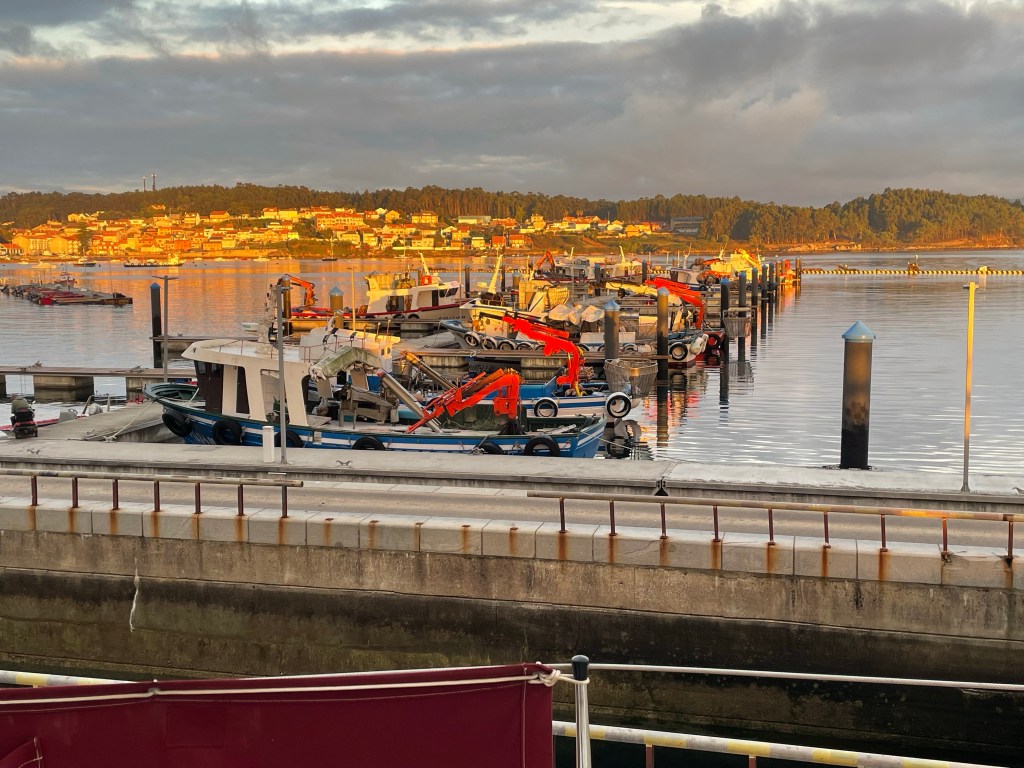
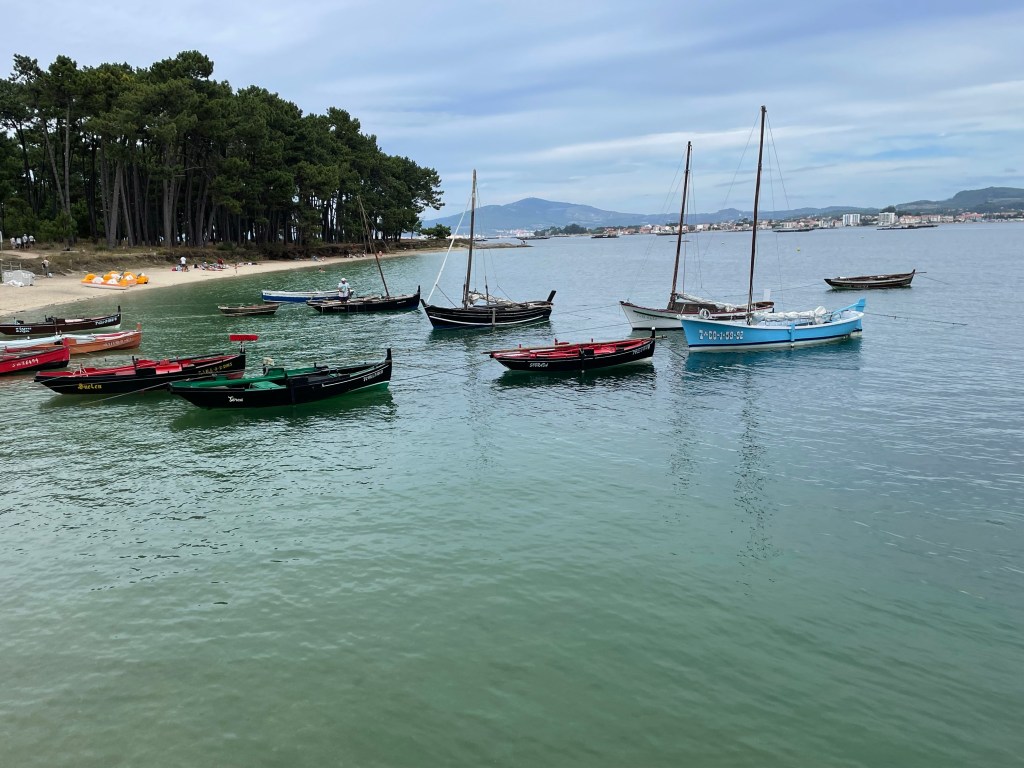
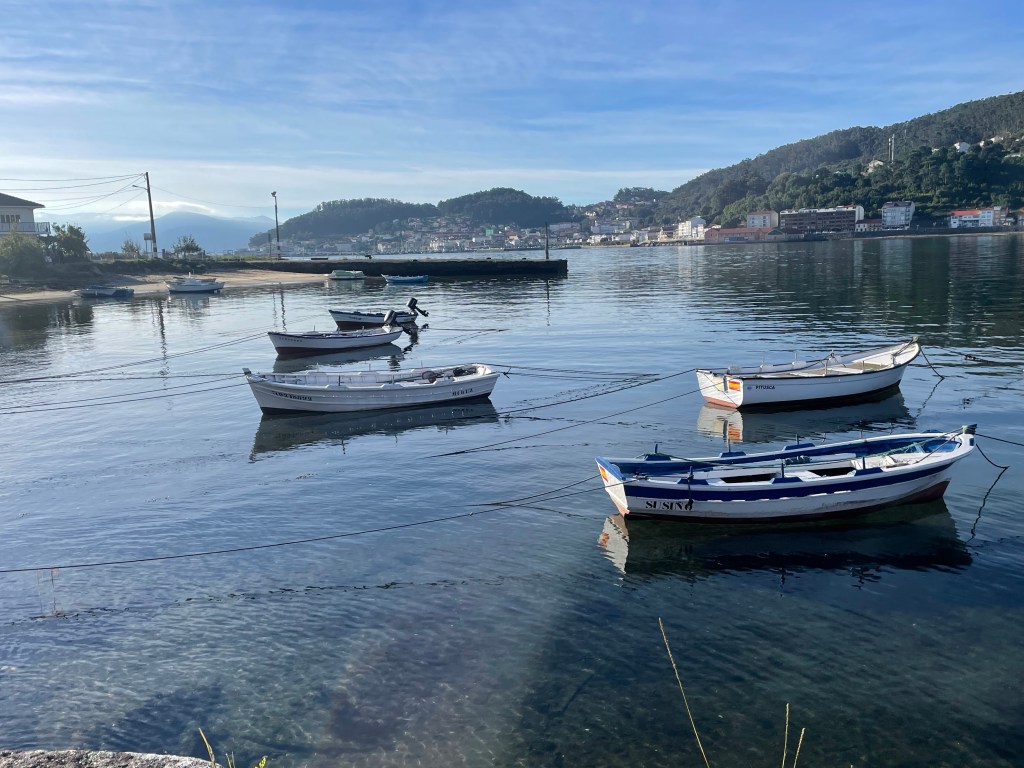
Traditional Galicia fishing vessel
After a few days of walks and shoreside comforts, I sailed on south, visiting familiar anchorages on my way to a boatyard I’d heard of. Henrietta needed repairs and routine maintenance.
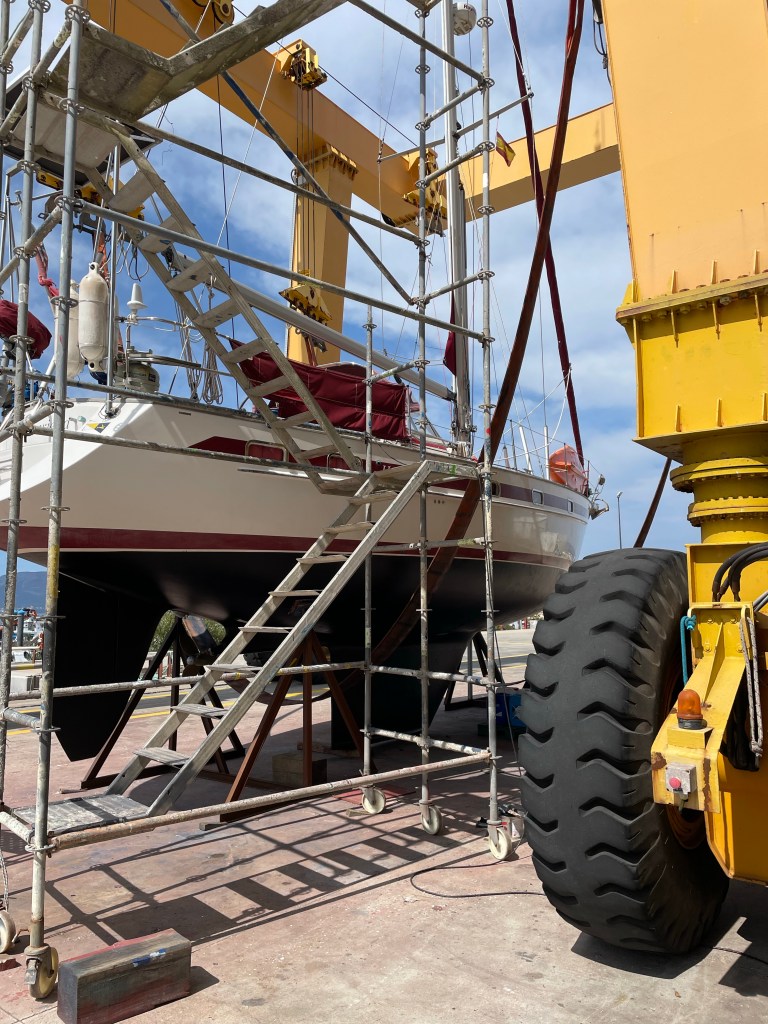
Travel lift can manage 180 tonnes. Henrietta is about 12.
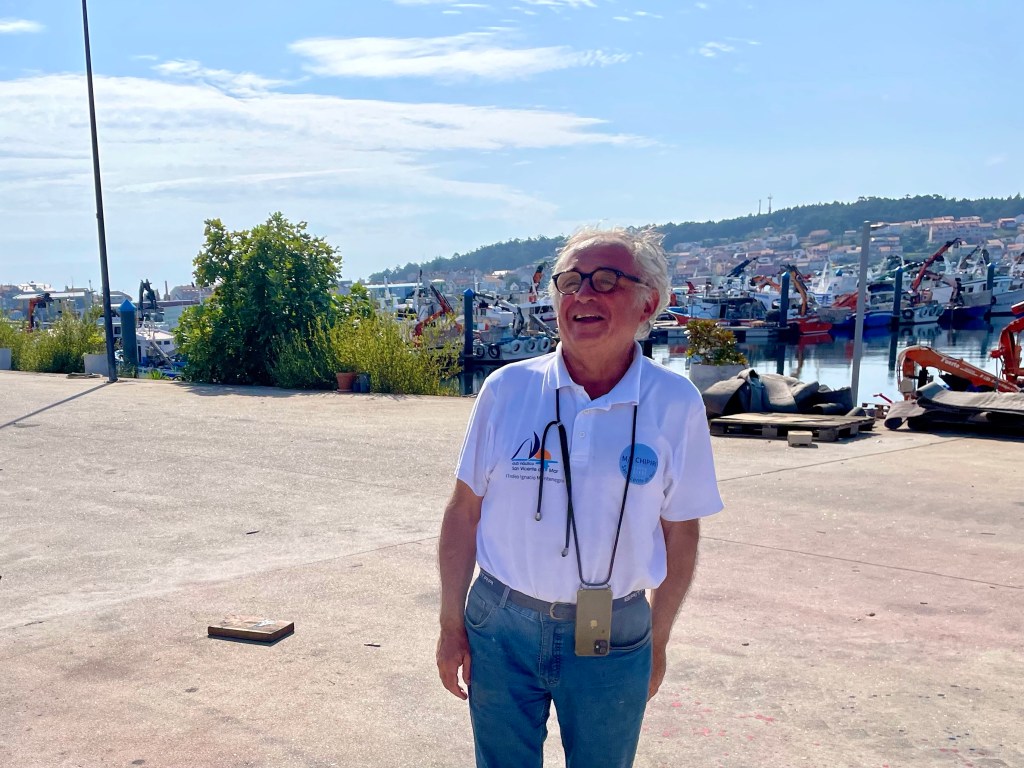
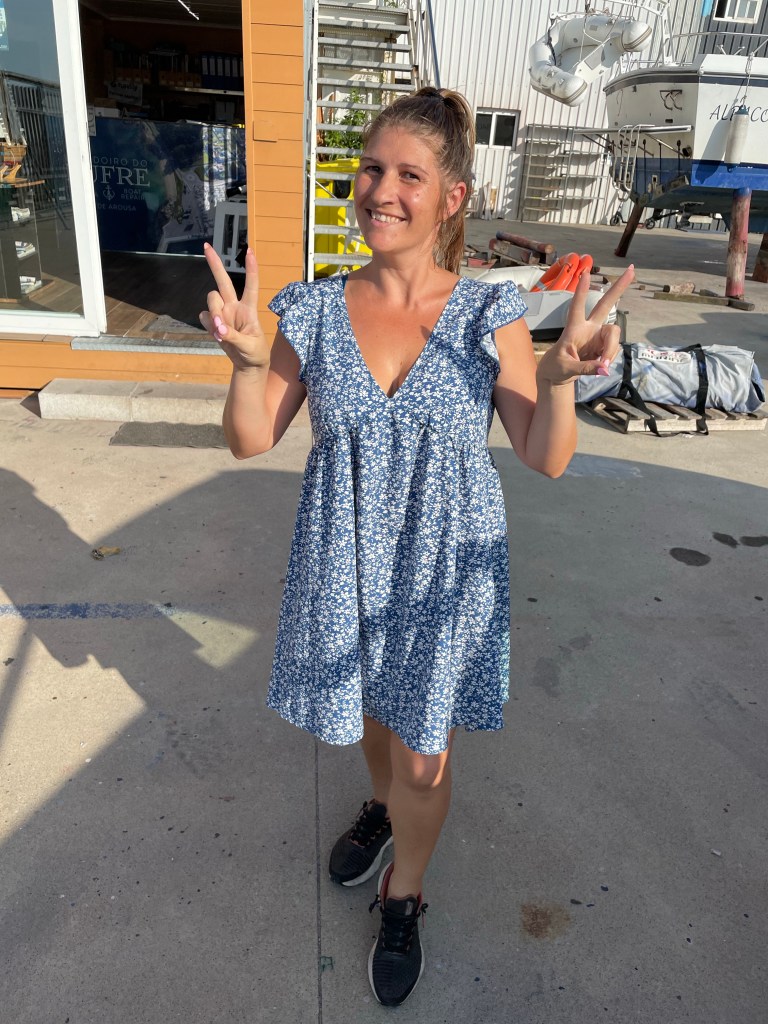
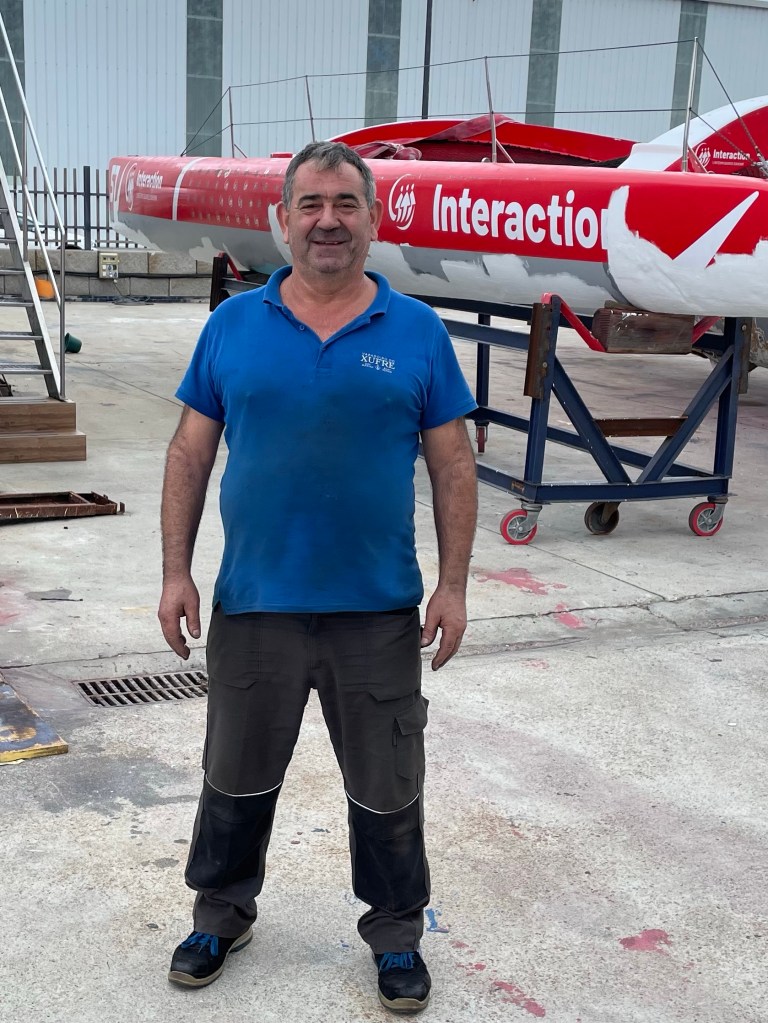
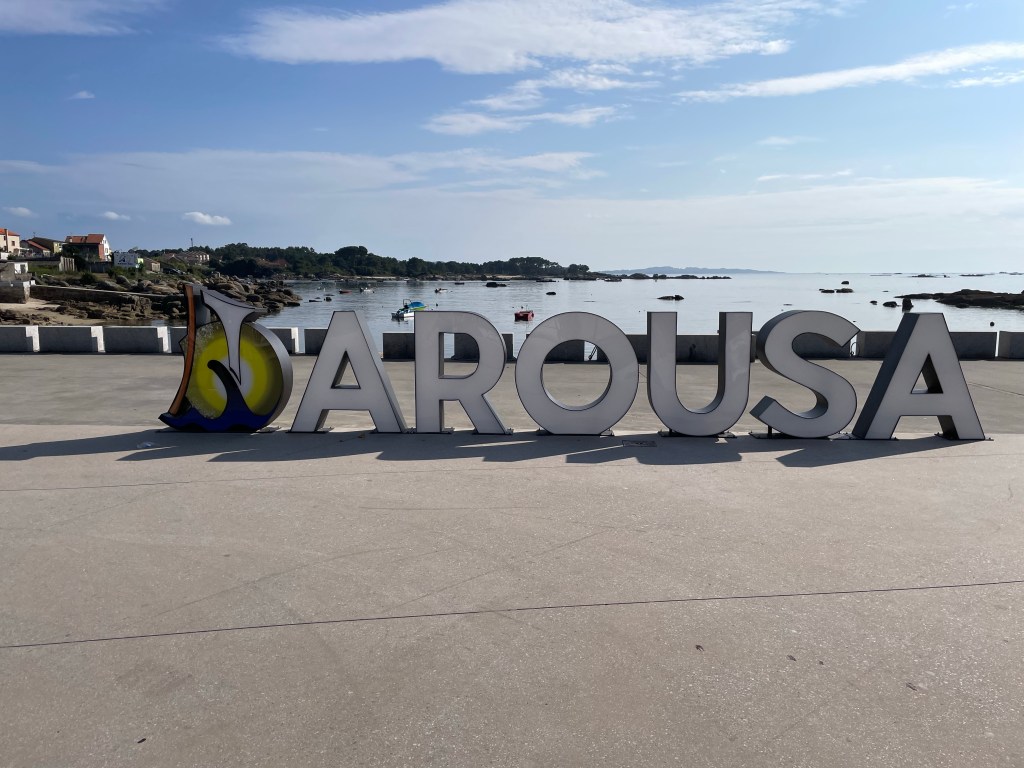
Xufre (the language in Galicia is rather different from Spanish – I think it’s pronounced a bit like Zufre) on the island of Arousa in a Ria of the same name, was delightful. The boatyard was spacious, a huge slab of concrete dominated by a giant travel lift, a tower crane, and shed about 25 metres high, managed by the charming, fascinating, ever-helpful Nito, and his team of happy workers.
NitoNoaRamon
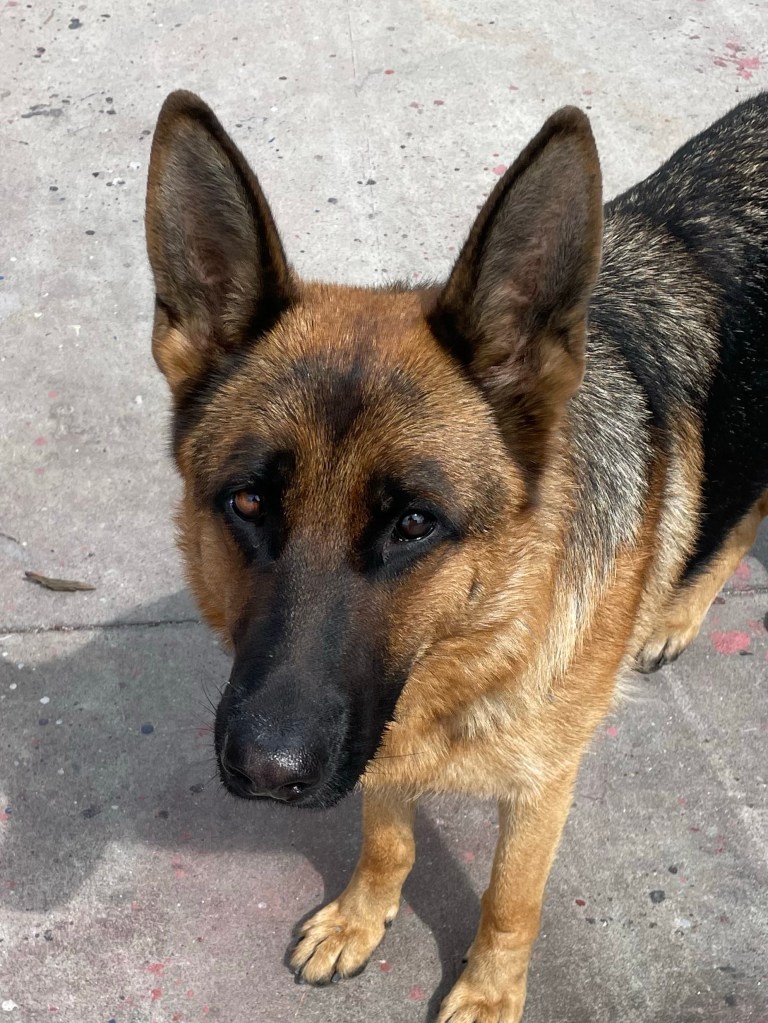
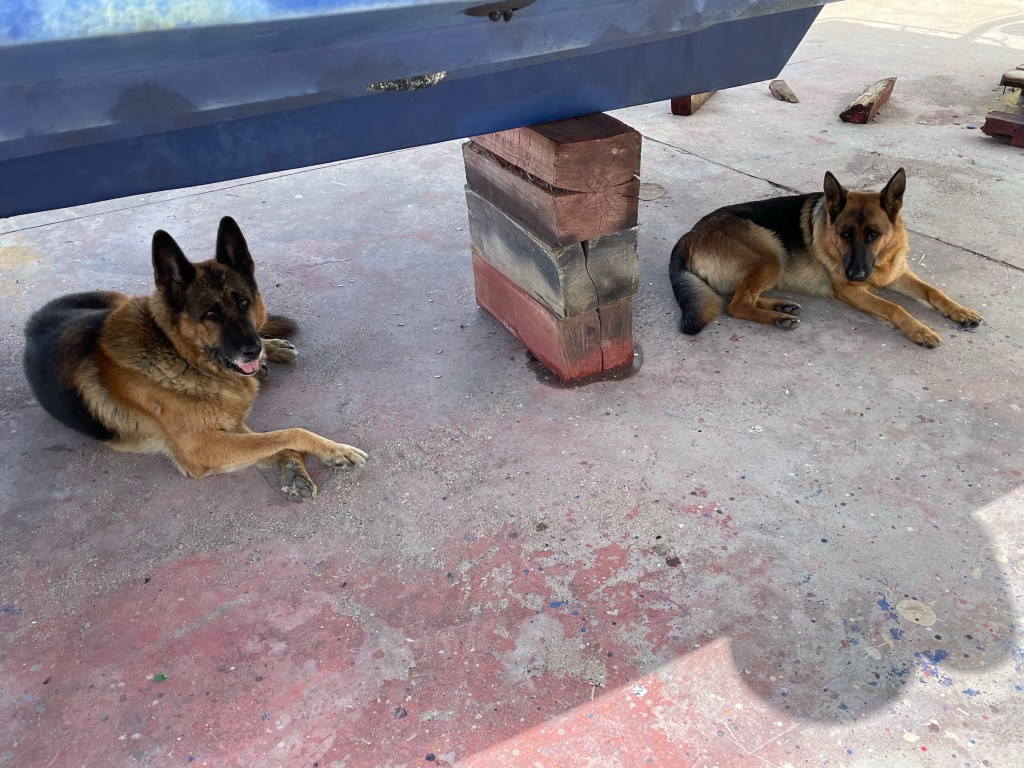
Security is provided by three of these German Shepherds that wander around like wolves, but seem to be the friendliest and most gentle of dogs.
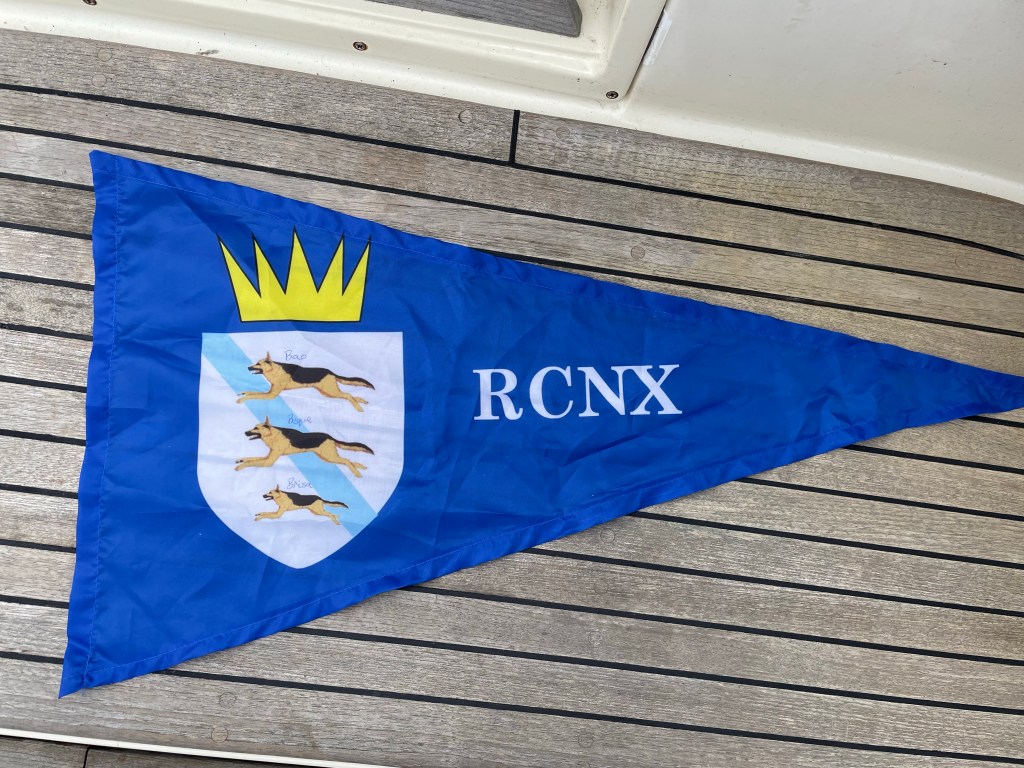
Their names are Bao, Beque and Brisa. They often tell me they feel hungry, and feature on the boatyard’s unusual burgee below!
Boatyard prices were I reckon half those of southern England. Furthermore you could stay on your boat, something now denied in most UK yards.
Xufre Boatyard
(For those with an interest in such things, works included rebuild of diesel injector pump, bypass of leaking holding tank, full engine service, cleaning out contaminated diesel tank, some welding, thorough polish, antifouling, anodes replaced, etc.)
Whilst there, England were playing Spain in the women’s football World Cup final so I went to the local seafront bar to watch, curious to see local people’s attitudes. Not much interest it seemed, though people did start watching near the end when it was clear Spain would win. But I couldn’t help wondering at the contrast with the near hysteria that accompanies such events in any of Britain’s nations.
View from my spot in the yard
After more than three weeks at Xufre it was good to get going again yesterday. Life on a boat in a boatyard is not a good way to live, even with many friendly sailors around and the delight of cheery workers.
I’m happy to bob at anchor again, enjoy swimming and sunshine, and wait for wind to blow us south once more.
Right now, life in England seems pretty good. I know it’s raining, windy and a bit chilly. (July’s been a bit grey after the wonders of a fabulous early summer.)
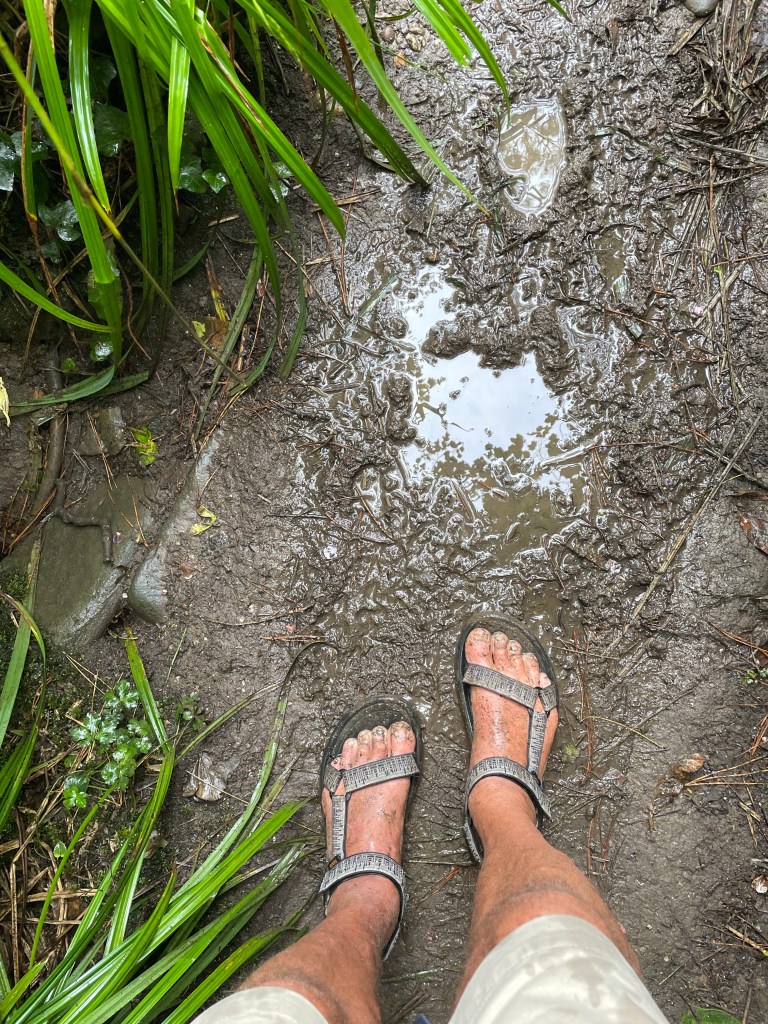
“Raindrops keep falling…”So walks are muddy Helford , pretty in sun or rain
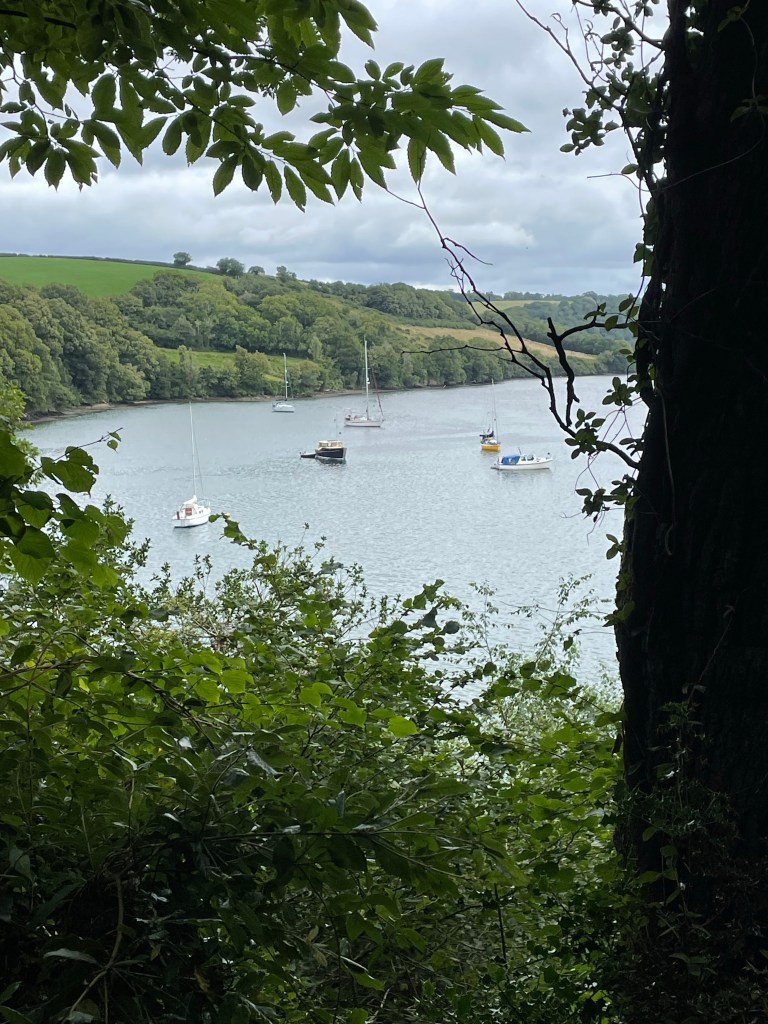
But the alternative to staying here in the rain is a long slog southwards across the Bay of Biscay, beating into rough seas, lots more rain and relentless southwesterlies. So I’m staying put in the calm and exquisitely beautiful, tree lined creeks of Falmouth Harbour and the Helford river.
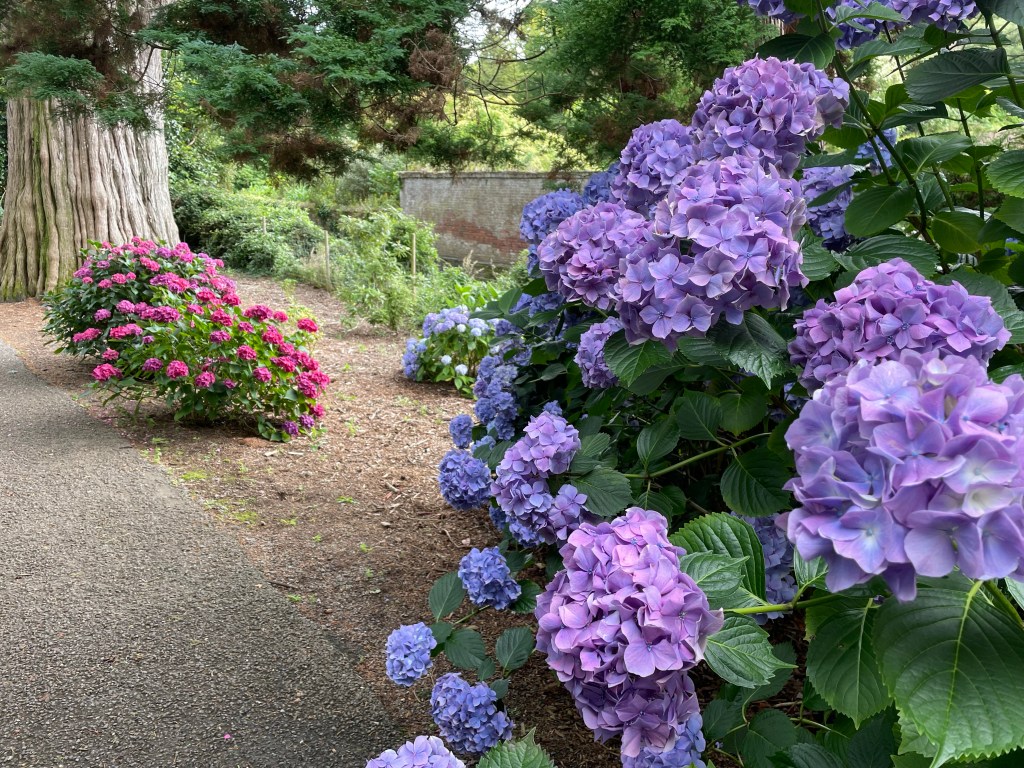
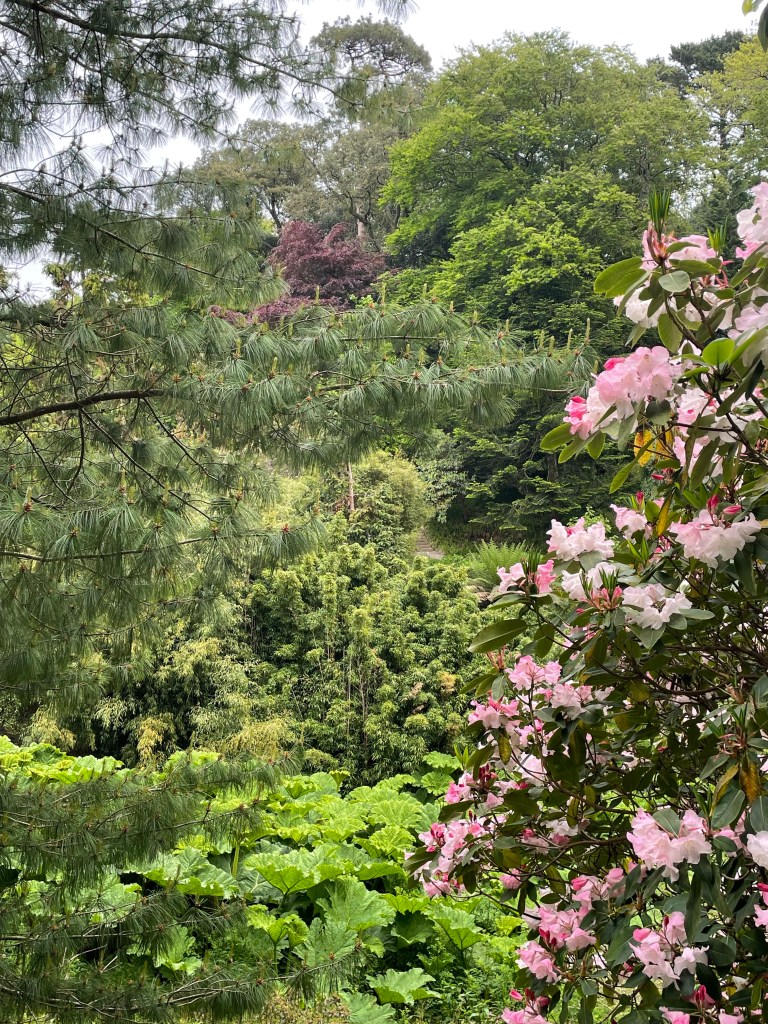
Hydrangeas, Trelissick Gardens
Tempting as it is to head off for warm sunshine, and Spanish and Portuguese hospitality, I’ve grown too soft for the rigours of a hostile Biscay. I’ll wait for better wind forecasts. We are very privileged to have the choice of not only where to go, but also when to sail there. A life without plans, routines or timetable – not many anyway.
Meanwhile I can fill you in on bits and pieces of Henrietta’s English summer, the highs and lows, the joys and perils.
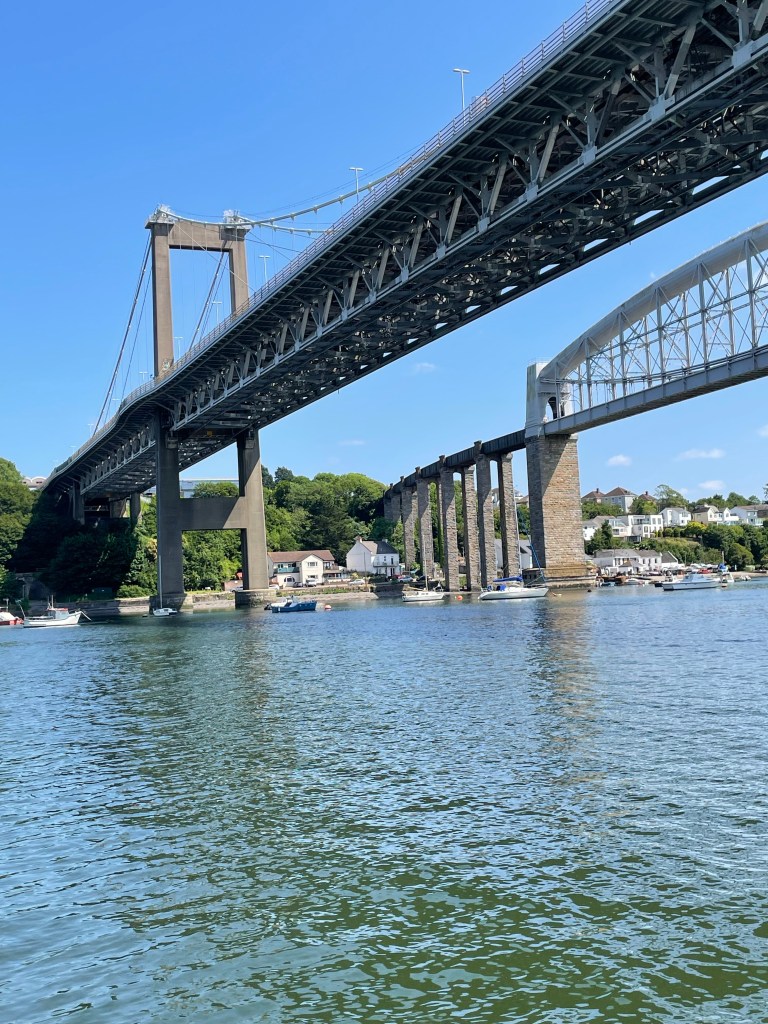
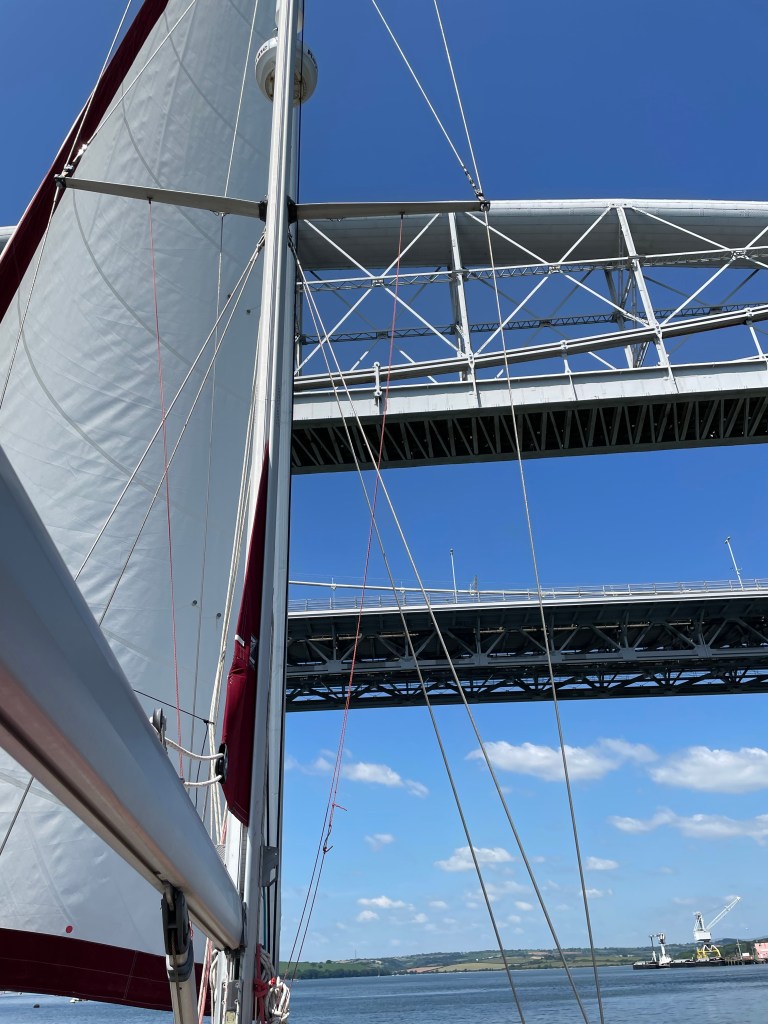
Under the Tamar Bridges, Plymouth
Late May and June were hot, the hottest on record – bliss. Plenty of gentle northerly winds opened anchorages usually too hazardous for overnight stops. I shall never tire of exploring little visited coves and backwaters, where, despite the hoards of yachts that now sail along the coastline, few are happy with rolly nights beneath rocky cliffs. I love these little-visited places with their gulls and cormorants, gannets and terns, with cliff top paths and friendly hikers.
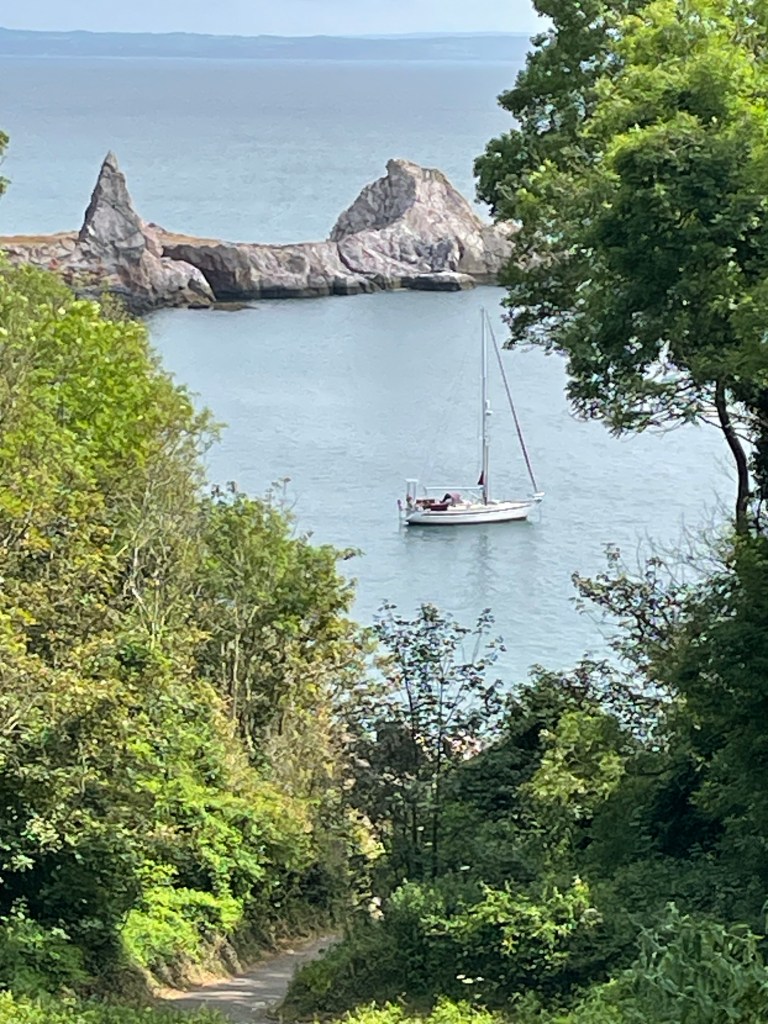
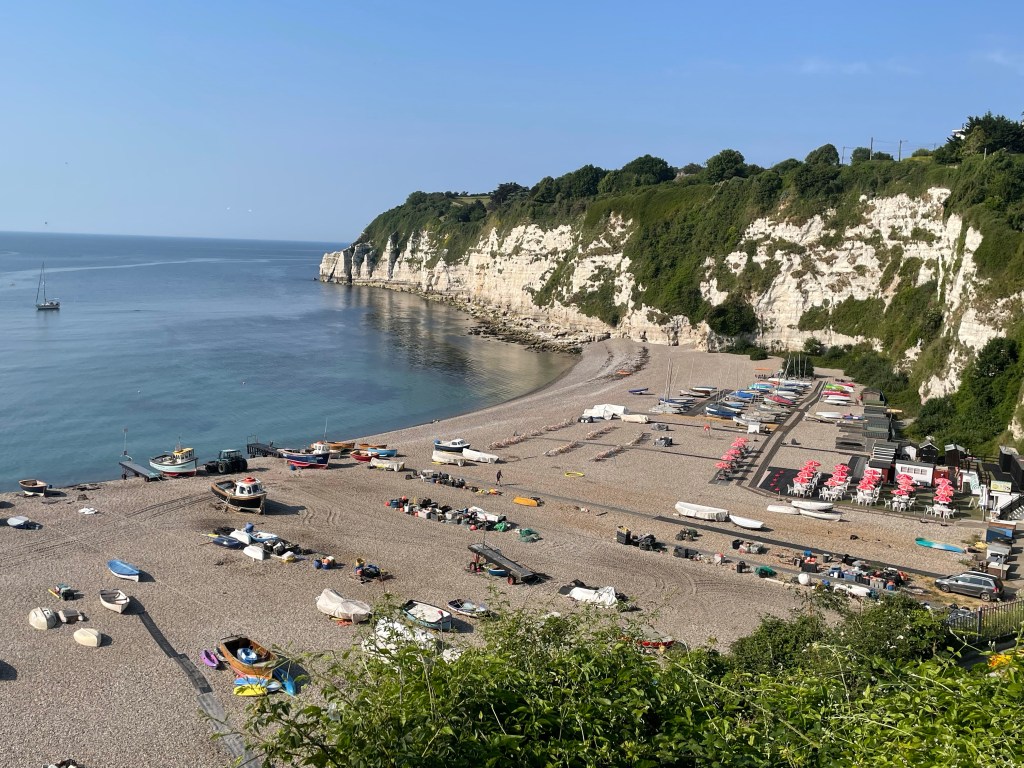
Anstey’s CoveBeer
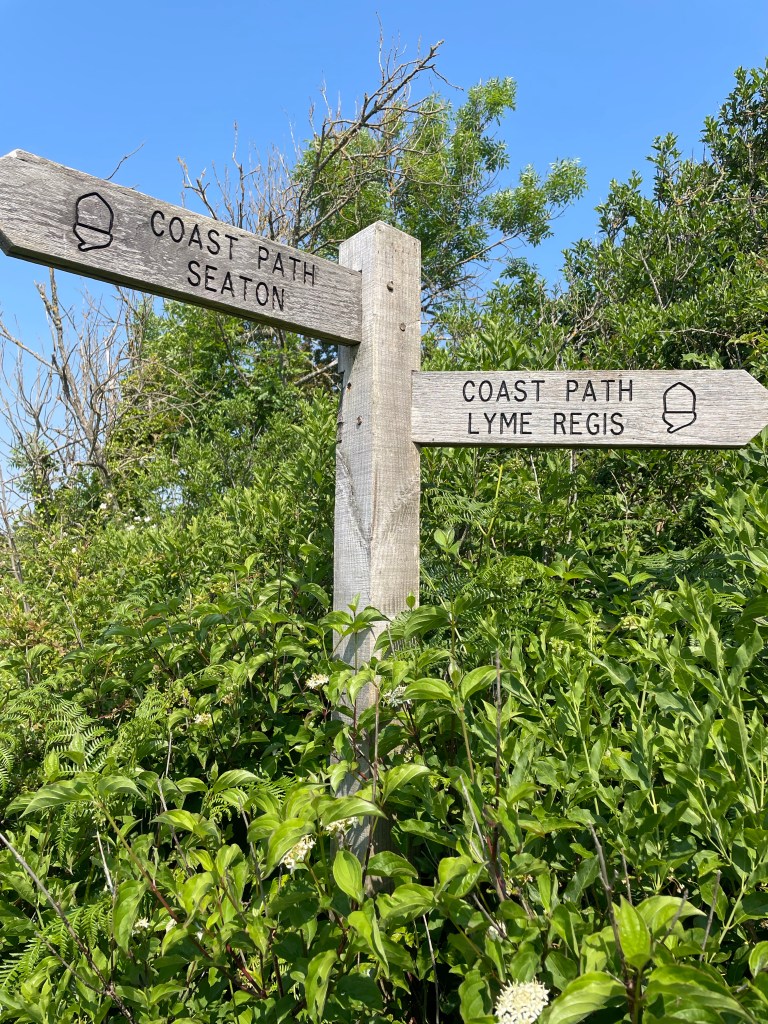
Henrietta never got further east than Lyme Regis. (If you don’t know England’s geography, that’s less than halfway along the south coast.) The well known populous spots along the coasts of Dorset and Hampshire can wait for another day.
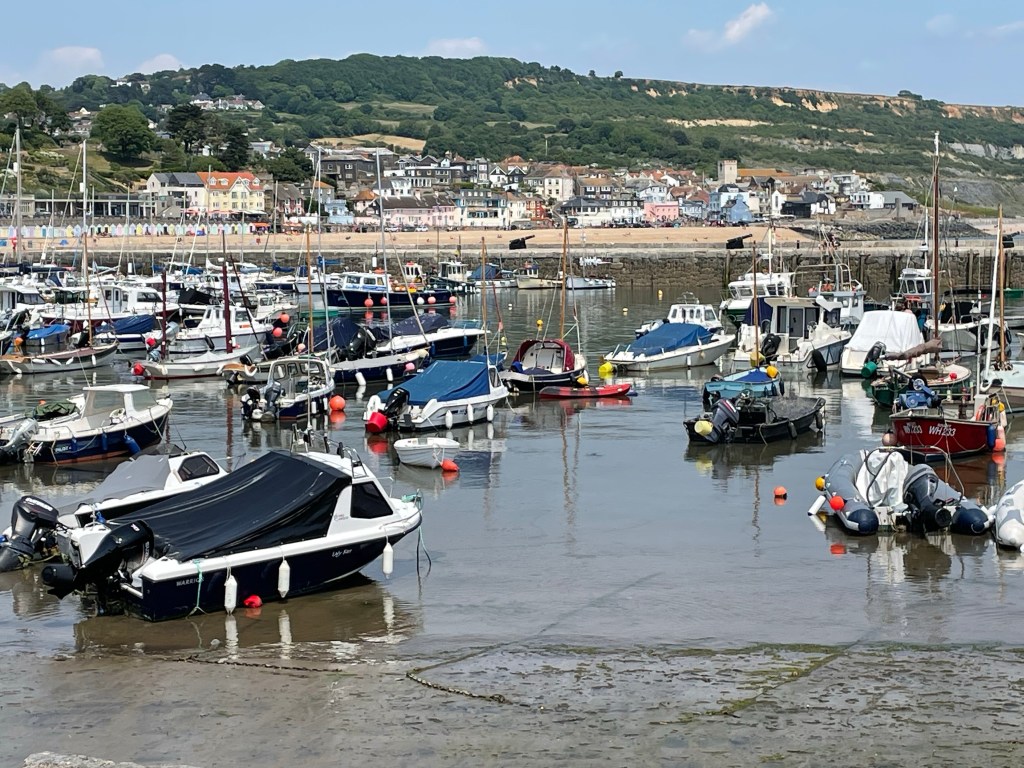
Glendurgan GardensLyme Regis
There was a long list of boaty bits to buy, and repairs to carry out – even longer than usual. And of course I wanted to see family and friends.
Shopping is easy (especially with sister and friend in Exeter as postmistresses), and most repairs are now done. I can fix quite a lot myself. Good reliable professional help is hard to find and very difficult to pin down. Everybody wants the straightforward lucrative jobs, not the tricky stuff. So there seems to be a tendency in the boat trade to give false start dates and empty promises.
To compound the trouble with south coast maintenance and boating in general, marinas are extremely expensive, boatyards burdensome with rules, regulations and high charges, and usually crowded.
All is not lost: everyone remains friendly! Countryside is gorgeous.
Waiting for better weather, Upper Falmouth Harbour
But, alas, my homeland is a land where high costs and ‘mañana’ rule the day. I’ve pulled out nearly all my hair, and will go and find somewhere else in Europe for lift out and more difficult boat maintenance.
With a month moored in Exeter Canal I was able to visit children, siblings and a few friends, and among many other things, enjoy the beer of the Turf Hotel (an excellent pub, its hotel status a relic of history). Given that I’ll not have Henrietta lifted out in England, the canal’s fresh water was an easy way to get rid of the saltwater weeds and bugs that dwelt on Henrietta’s bottom.
Exeter Canal
To close this quickly I’ll just say that I’m fond of England and value its countryside, admire many of its citizens and a few of its institutions (well, the BBC and libraries, and uuuhm…). But I’m embarrassed by, even ashamed of, too much: by its unrepresentative politics, its gossip-laden red top newspapers and its advanced state of self delusion.
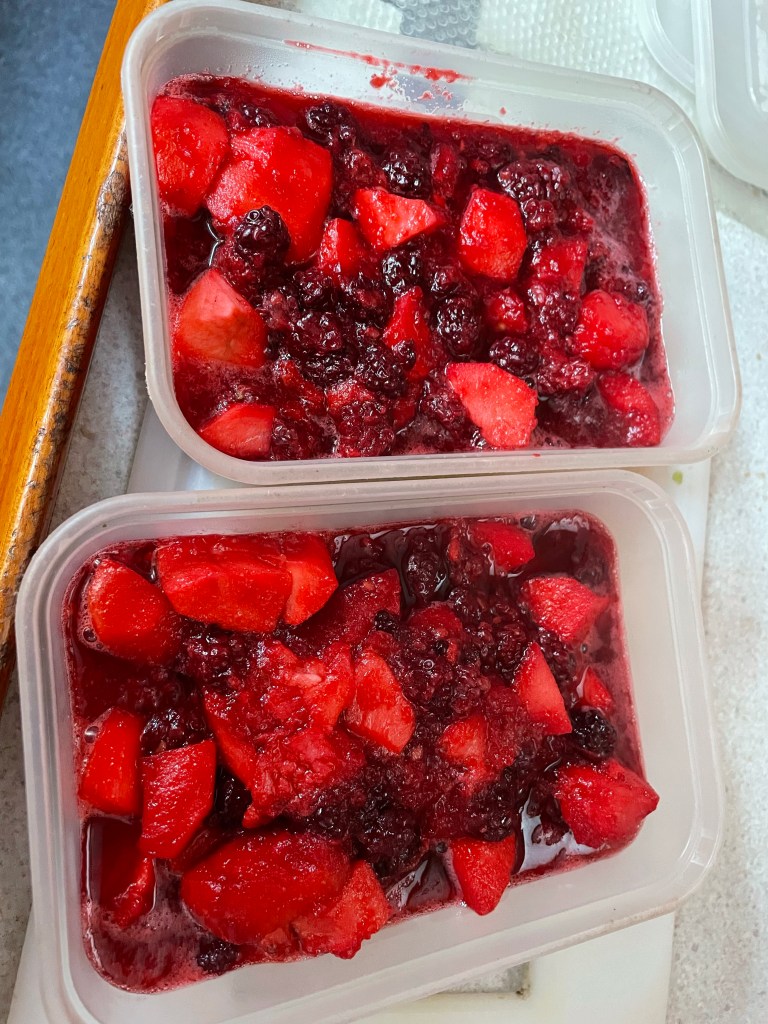
Time to pick early blackberries and scrump a few apples
I’m well aware of how very fortunate we are to live on our sailing boats with opportunities to go almost anywhere we choose. I’m excited now at the prospect of visiting distant and fascinating lands. Roll on some better weather!
Henrietta and I left the Canary Island of La Palma, bound for England, before the end of April. It’s about 1,600 miles, four hours by aeroplane, maybe two weeks or so by Henrietta. I thought perhaps we’d stop in the Azores on the way.
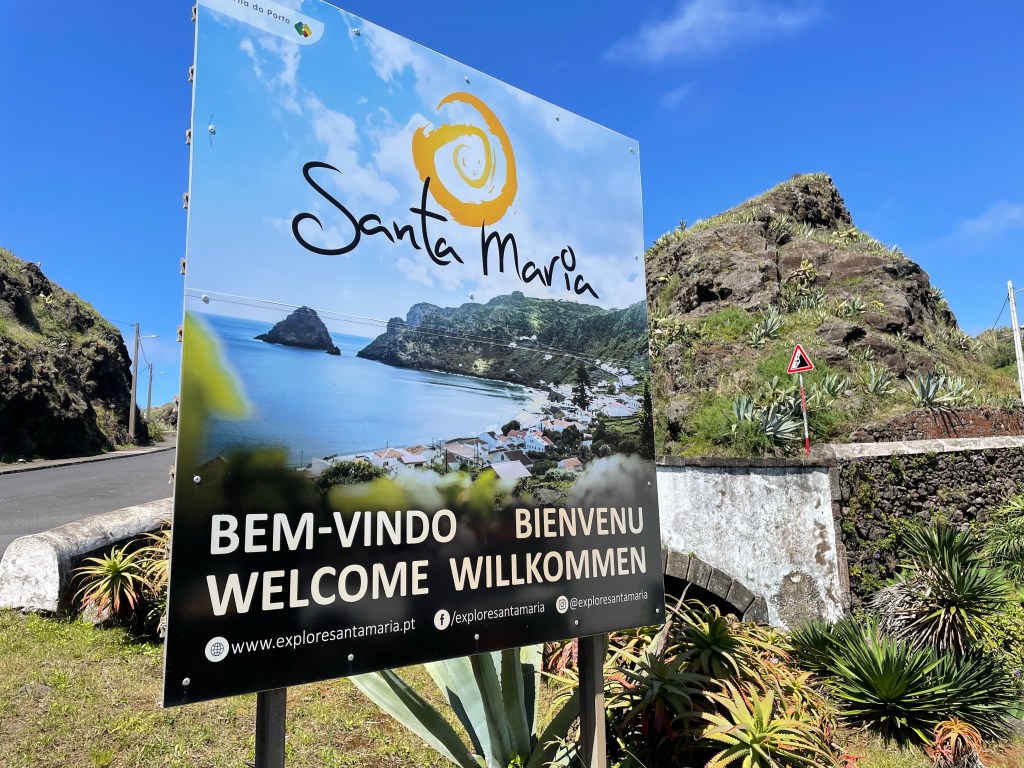
I’d decide later whether to stop, but several sailors had told me of a small island called Santa Maria, one of the Azores archipelago that I’d never visited, so it was tempting. (In the end I did stop, see later.)
There’s little wind to start with but we slop along northwards at about two knots basking in hot sunshine. I’m always loathe to start the engine – dirty, smelly, brutish beast.
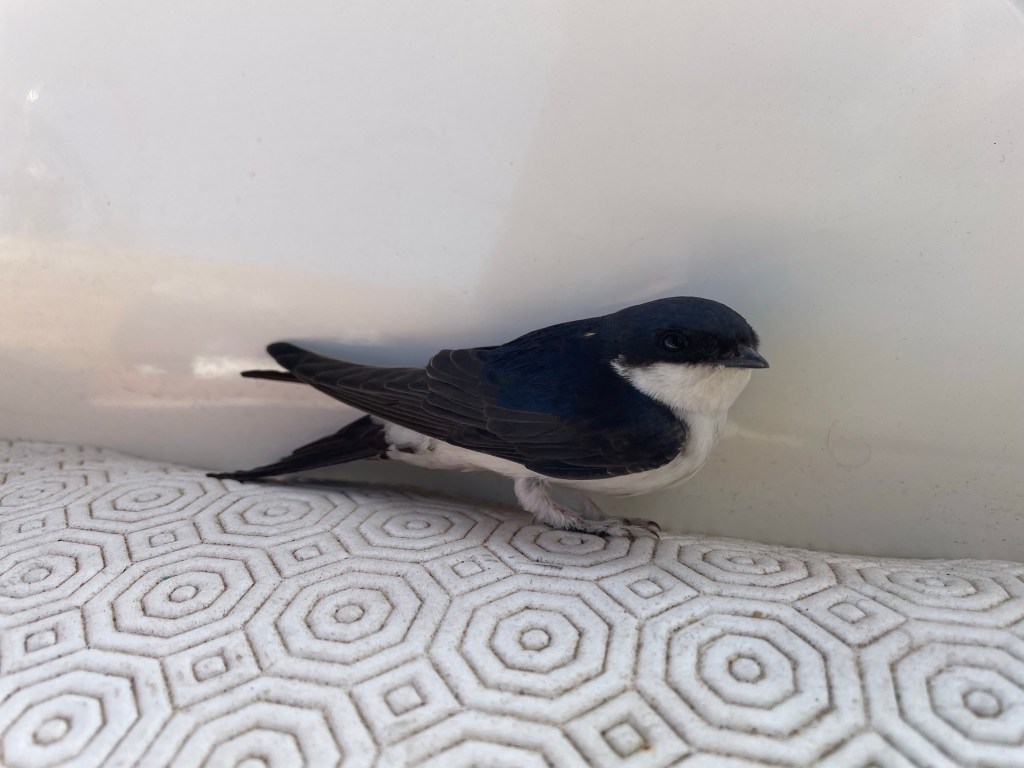
A few days out and a flying hitchhiker joins us. He’s a fragile and exhausted looking little fellow. As a bird spotter of limited talent, I can’t identify it. He’s probably blown far from his home and friends, and seems a bit lost. Surely not, do birds ever get lost I wonder?
After a few hours he grows accustomed to life on board and joins me in the cabin, resting quietly as I cook an evening meal. He’s not interested in the food I offer: crumbs of bread, finely chopped grape, boiled rice and vegetables. I name him Blip, not sure why.
Blip – a lost House Martin
Blip stays the night, sleeping over the bunk next to me, head lying peacefully over his back. The next morning he seems stronger, more alert, and when I look up from my book an hour later, he’s gone. We’re over 200 miles from the nearest land and he doesn’t seem very sure of himself, so I’m a bit concerned. Sure enough, like one of Noah’s doves, he flies back after half an hour, aware that there’s no land or friend within range. He seems stronger than a day ago and goes for a few short flights.
Another day and night passes, but Blip doesn’t seem to have an appetite, whatever I offer. So I’ve decided to take him to the Azores where he’ll perhaps find a new family and food he can enjoy. It seems a good reason to go to the Azores.
But the next morning, despite everything, he lies awkwardly on his side on the saloon berth. He’s dead. Not even a twitch of life. I feel very sad, he was an easy companion.
(Today, writing a fortnight later, bird watchers in St Agnes tell me Blip was a House Martin. He’d have been migrating from sub-Sahara Africa to Northern Europe. Blown off course or with poorly navigation he would have been hungry and tired, and as an insect eater, no wonder he didn’t fancy the food I offered.)
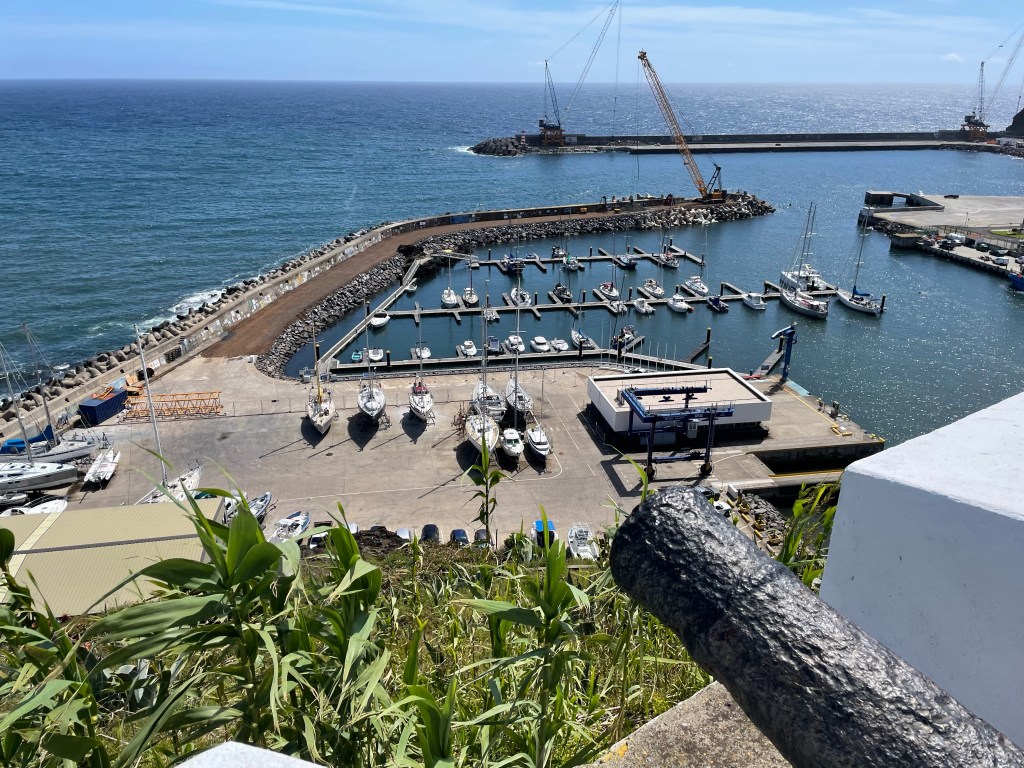
A couple of days later (and after more rain than I’ve seen in the past four months) I reach Santa Maria, the southernmost of the Azores islands, described as “The Sunshine Island of the Azores”. On arrival the sun does indeed shine once more. Formalities are soon done; the marina at this early stage of the season is pretty empty.
Charming half empty marina and port
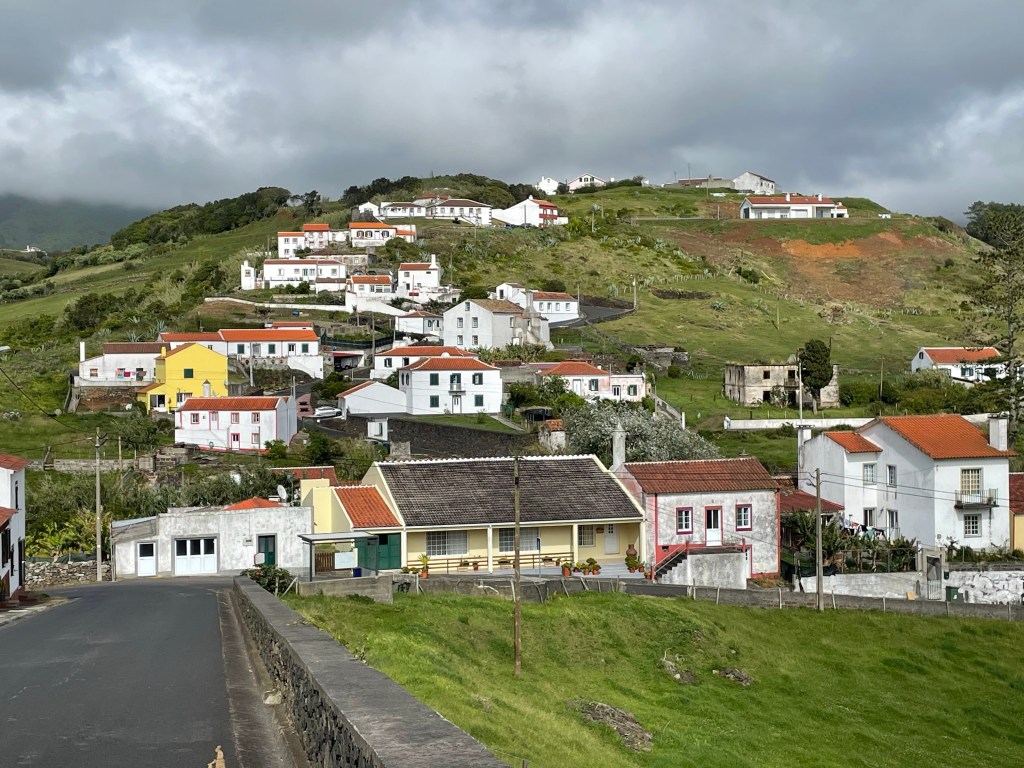
The Azores (Portuguese) are a mere 500 miles north of the Canary Islands (Spanish). That much latitude makes a big difference to climate. High season in the Canaries is winter; in the Azores it’s summer. Before May few visitors are around. It is delightful. Streets are clean and fresh, countryside green and fertile, flowers bright with colour. Portuguese people are almost invariably calm, friendly, helpful and generous; here even more so.
I enjoy a few coastal walks. A deserted museum with chatty curator. Lots of coffee, beer and usual boaty anecdotes with fellow sailors. The whole island is less than ten miles long, scattered with small hamlets of freshly painted houses and pots of flowers. Total population 6,000.
After a week it’s time to move on. With a deadline for getting to England I’m not inclined to re-visit the other islands of the Azores, not this time.
From Santa Maria it’s another 1,200 miles to southwest England, perhaps ten days or so. And, since forecasts that far ahead are unreliable in the North Atlantic, I just left, reasoning that there was bound to be a bit of bad weather somewhere along the way. Just go. Otherwise you sit around for ages waiting for that perfect moment – which never arrives – especially in early May.
In the event, weather gods were pretty amenable; my luck held, and it was a good brisk sail. Though it was hard to adjust to chilly weather, too much strong wind, big swell and two days of steady grey relentless rain, we reached the Scilly Isles in eight days.
Another choppy day in the Atlantic
Now I’m anchored at the little Scilly island of St Agnes. In a month or two it’ll be chockablock with anchored yachts, but now Henrietta is alone. This morning I find a fine cold day made fabulous with a rainbow and the screeching of overexcited oystercatchers. There are busy shag and excited guillemots diving for their breakfast too.
Peaceful empty anchorage- bliss!Scenes from St AgnesEver popular Turks Head
After over four months in the Canary Islands, mostly on my favourite island of La Gomera, it really is time to move on. I’ll probably leave from here, the island of La Palma, in a day or two.
Final bits of shopping from Tazacorte, La Palma
Four months is the longest time I have ever stopped anywhere in the world in the past eight years on Henrietta. (Even covid restrictions didn’t hold me back for so long.) It has for the most part been joyful, interesting, restorative and rewarding to settle for a while. I’ll summarise these months of relative stagnation and peace below.
Now though the nomadic instinct has resurfaced. The urge to move has come back. Ants in the pants can never stay quiet for long. Before moving on I thought I’d quickly write this update.
For the ever-indecisive sailor, choices of where to go after the Canaries are very tricky. The trouble is, you see, you can go north, south, east or west.
From the Canaries you can sail anywhere
Whichever direction you choose, there are wonderful delights and boundless possibilities. North to Azores, Mediterranean, Portugal, and Northern Europe; South to Cape Verde islands, then Brazil and South America; East to Senegal, Gambia and West Africa; or West, the most popular choice for sailors, to the Caribbean and then perhaps Panama Canal or North America.
The winds, predominantly northeast Trade Winds, favour voyaging south and west. Hence the huge annual winter yacht migration from here to the Caribbean. However, I’ve decided to go north. Winds are in the hands of the weather gods.
After many hours of consideration and talking with others of all the possibilities, I’ll probably go to England. It is my homeland and there are several matters to deal with, and the lure of Brussels sprouts.
Then, before the end of the summer, hopefully, I shall leave British waters again, once I’ve sorted out a few odds and ends, getting myself and Henrietta polished and strong. That, for Henrietta, is long-term planning: Wow! Plans devised for about six months into the future.
But, in case you’re interested, here’s how I’ve filled the past few months in warm winter sunshine.
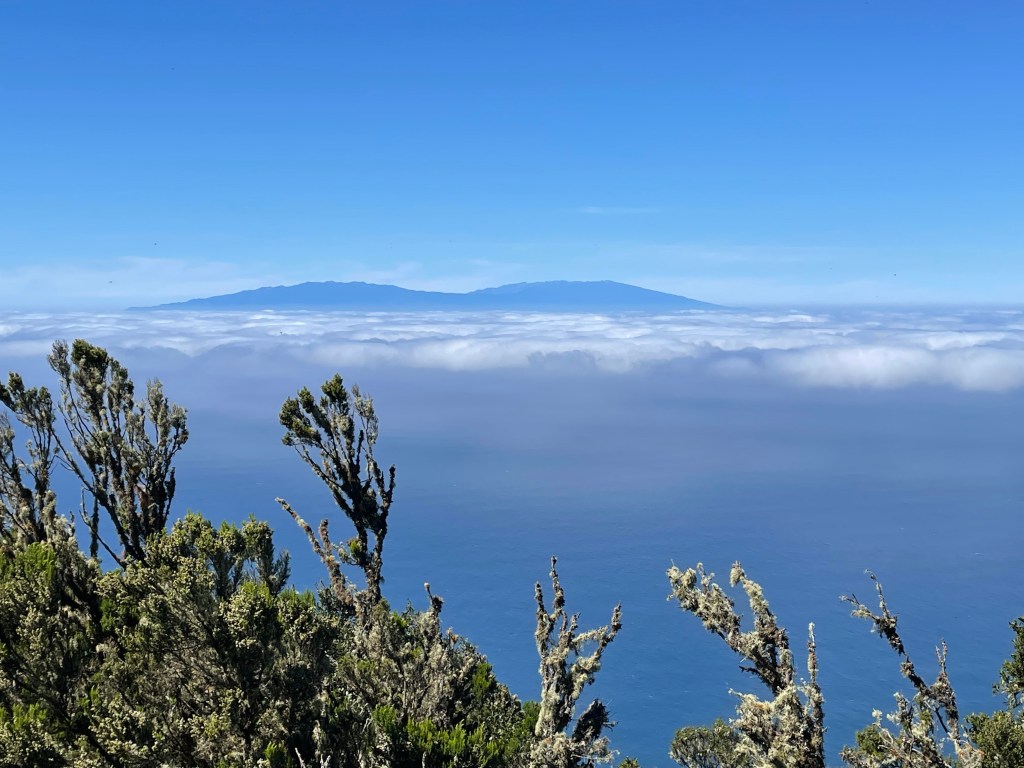
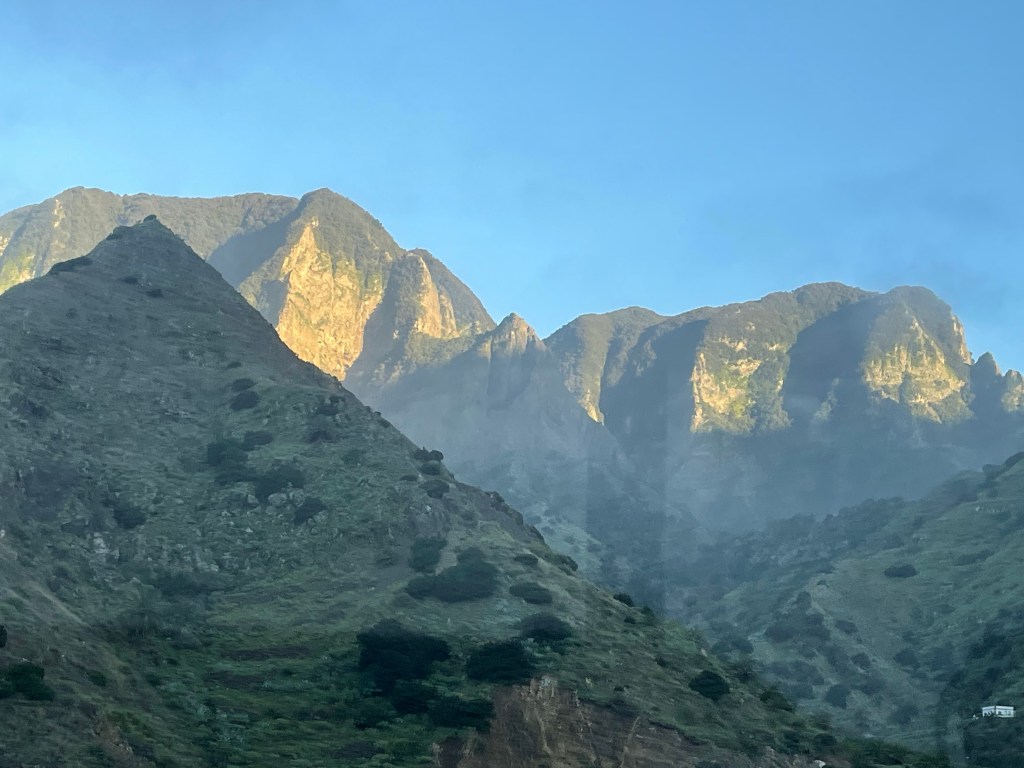
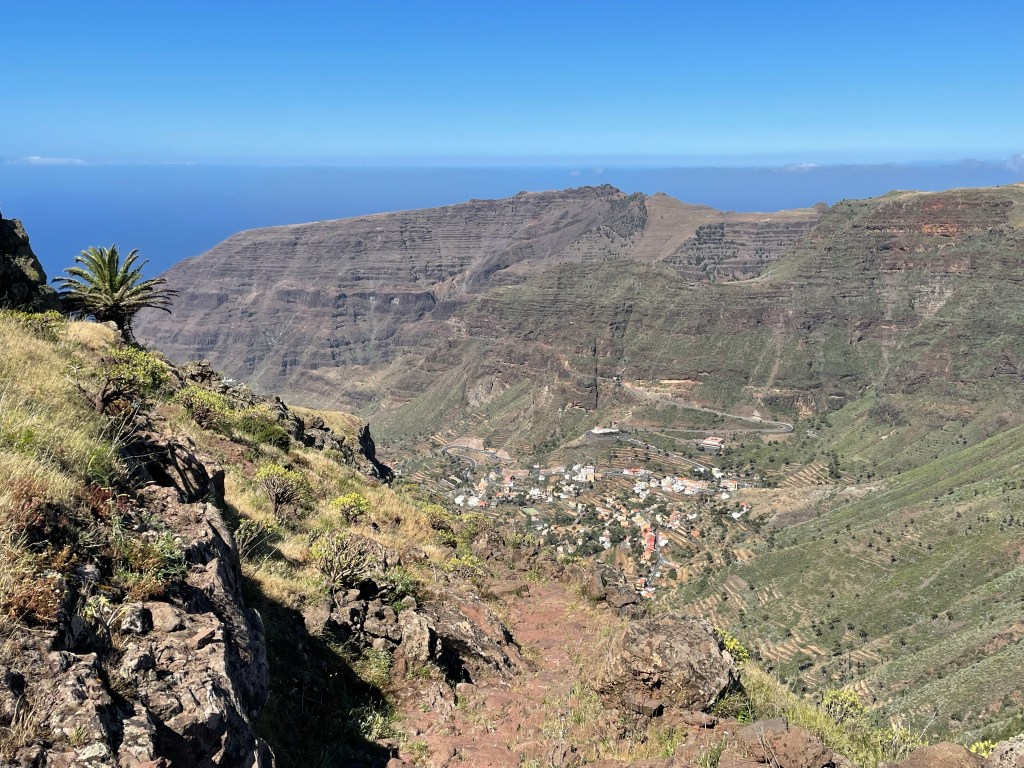
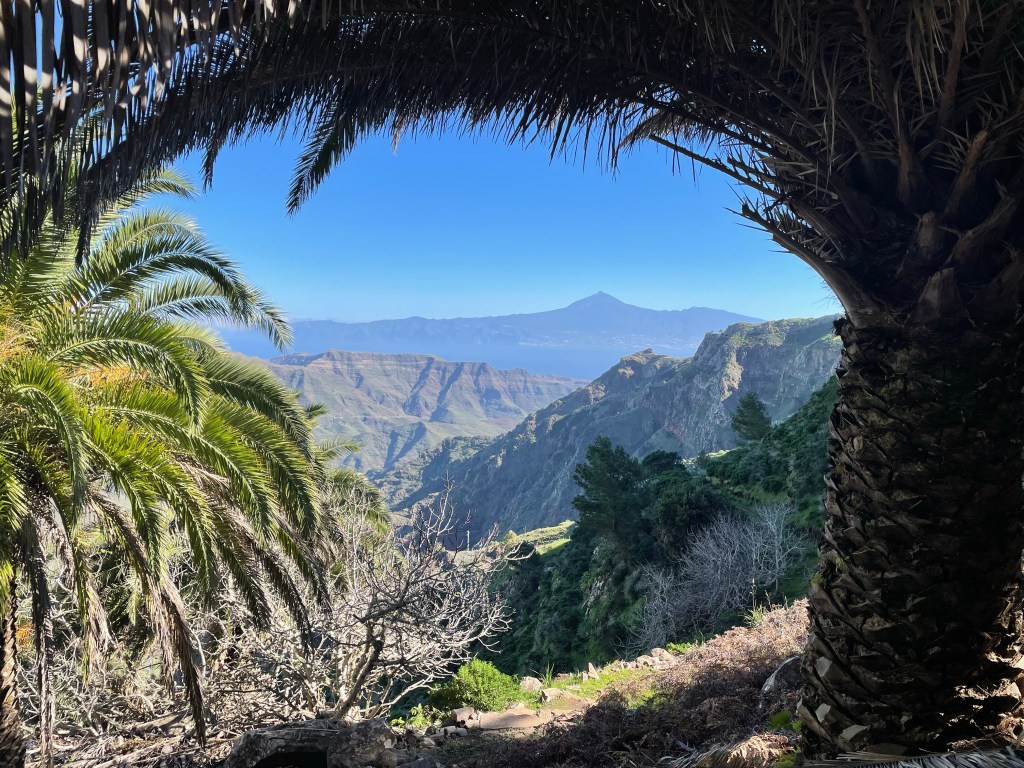
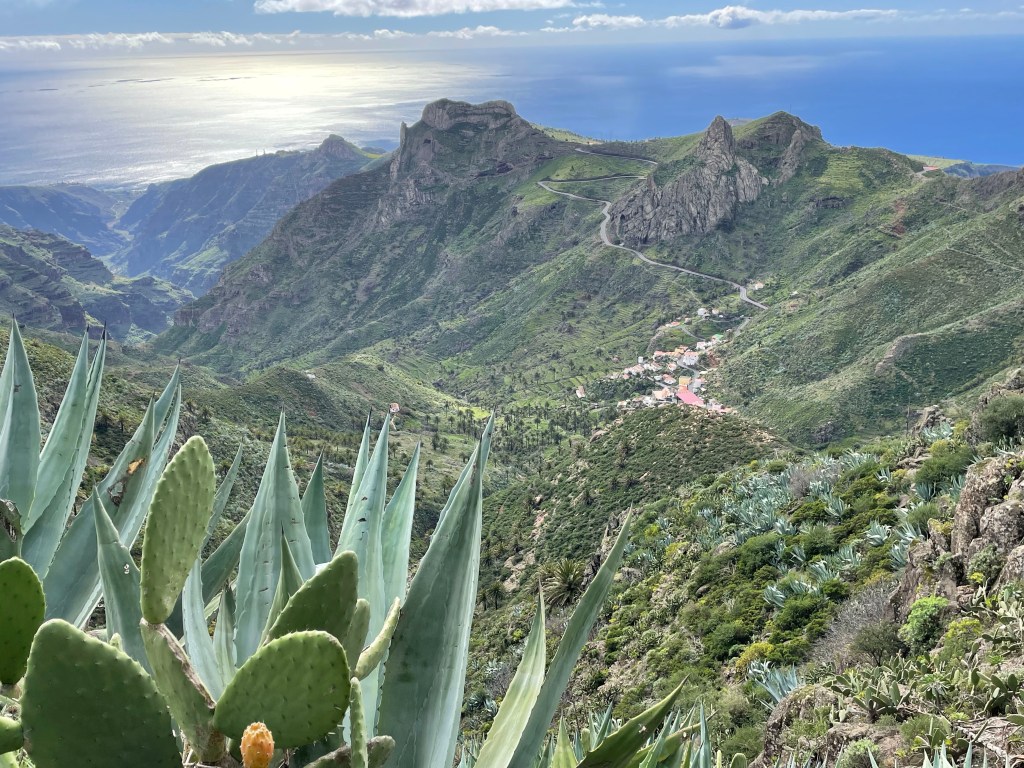
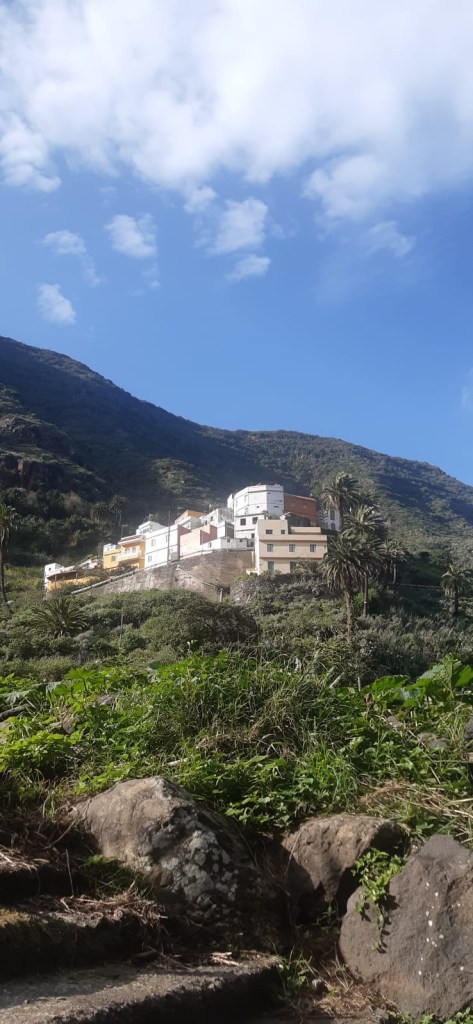
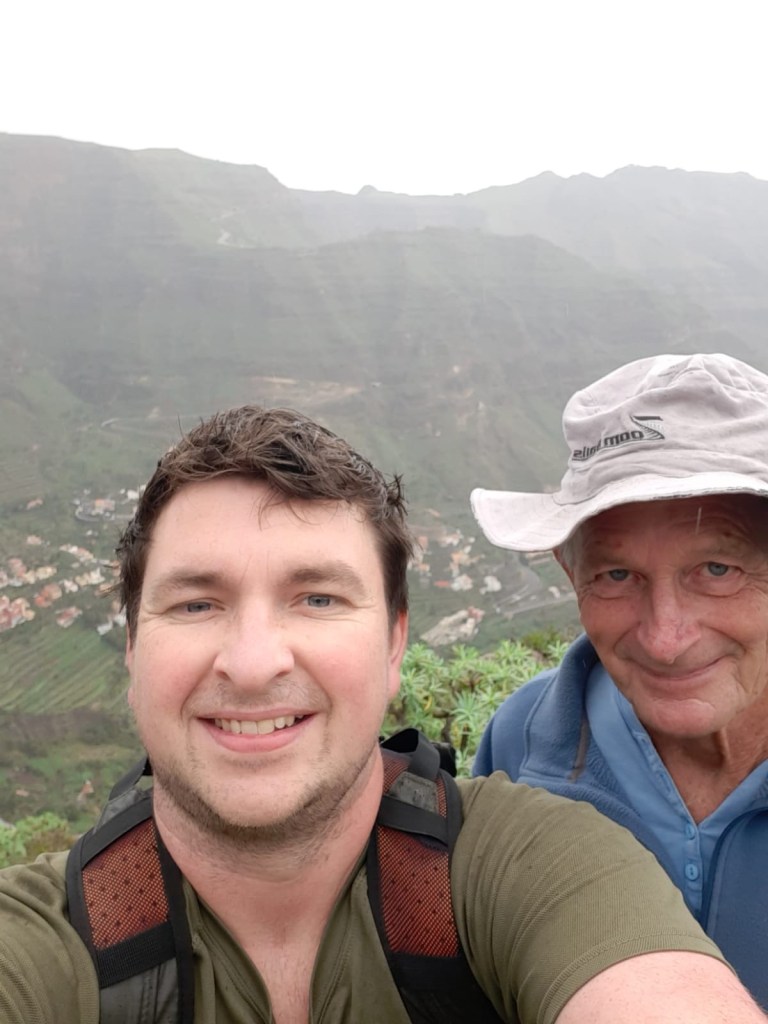
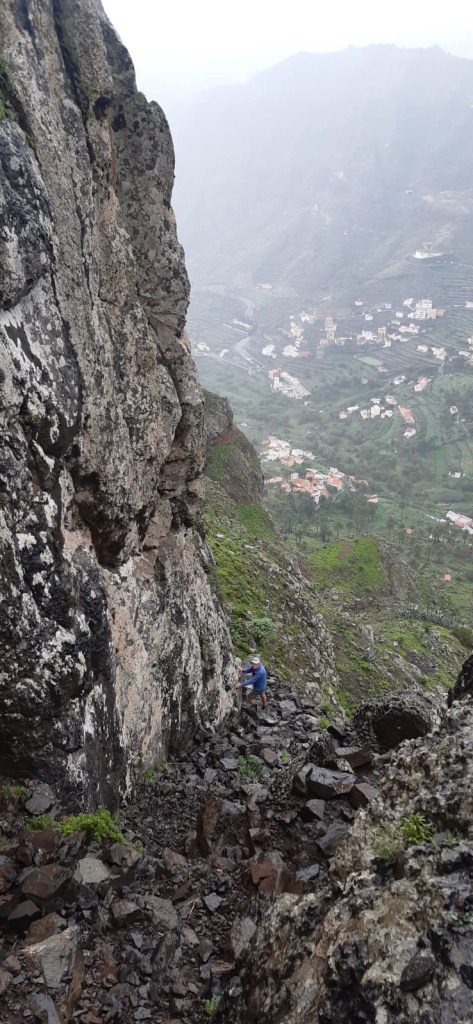
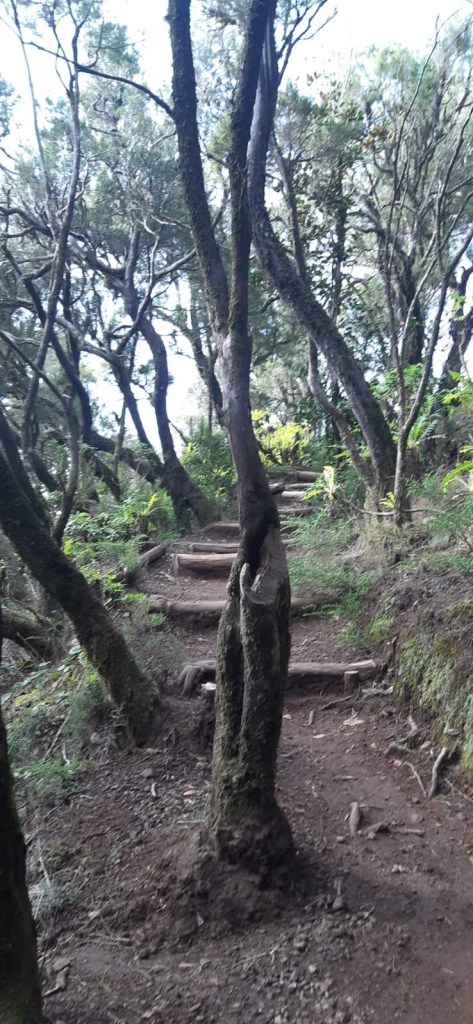
Ever varied scenes from La Gomera walksLooking down on upper Valle Gran Rey
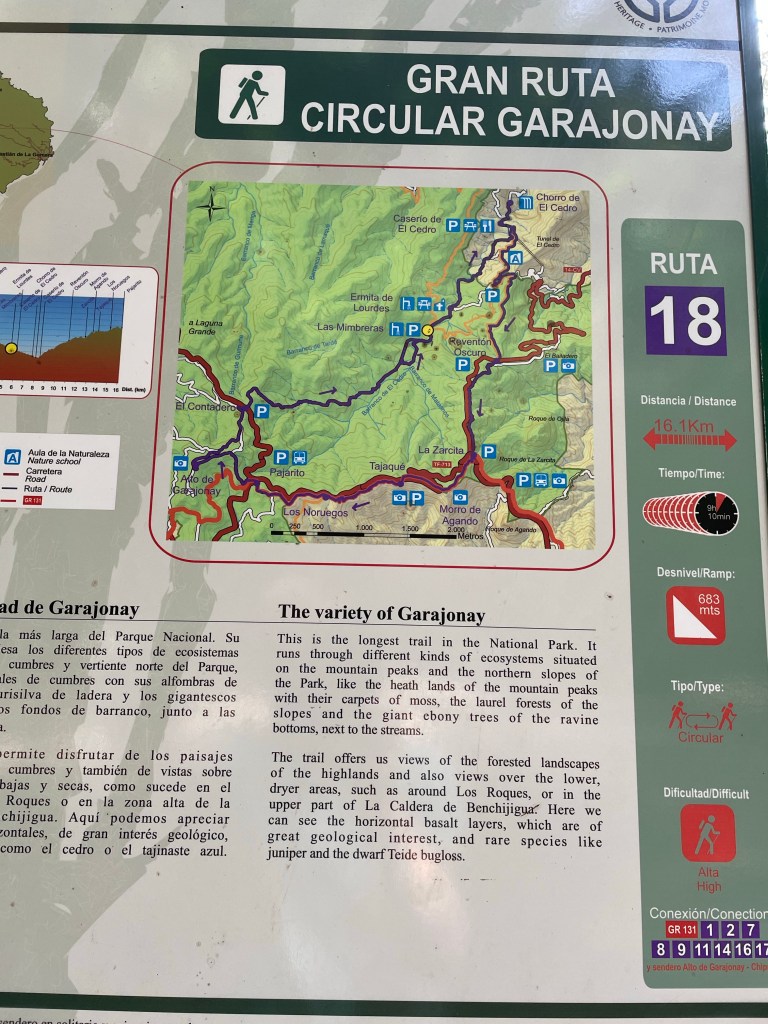
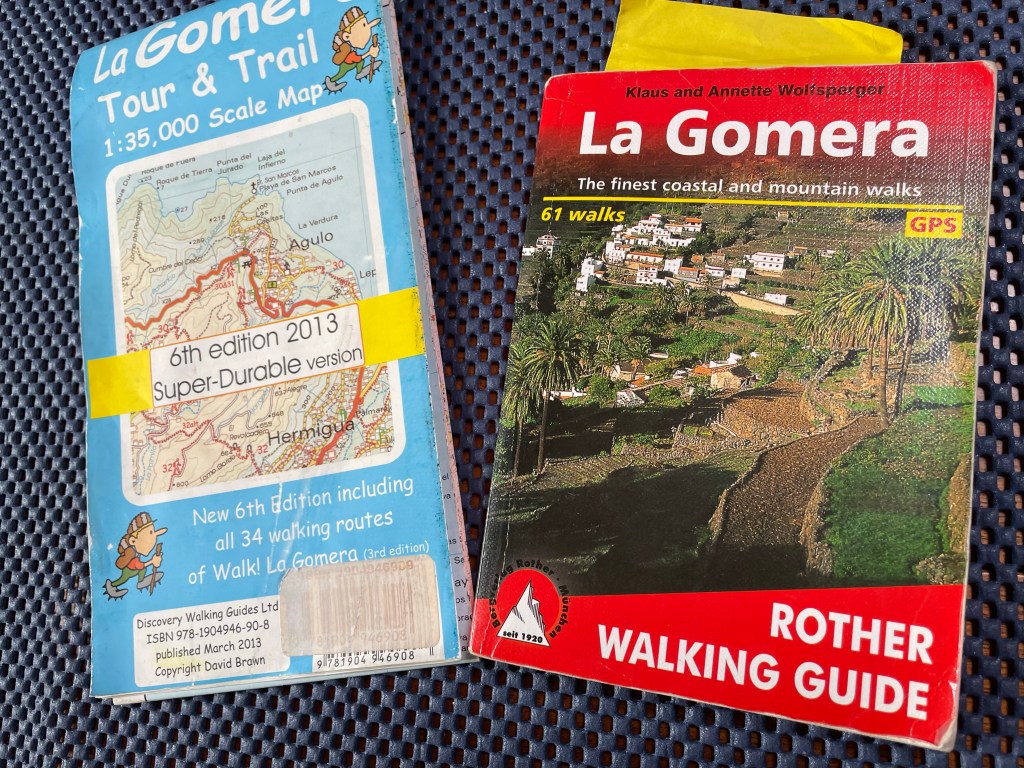
Walking the hills and mountains of La Gomera with longish hikes every two or three days, it could be that I’ve walked nearly every single metre of the hundreds of kilometres of path and track that crisscross this charming island, and clambered up and down many thousands of metres. (Could I even become a guide for trekking on the island? I initially thought ‘yes that’s a good idea’ but alas the answer has to be ‘‘No, definitely not’. Trouble is, I get lost rather too often.)
Many paths are well signed, many not….
Few activities other than sailing over oceans give me the uplifting and humbling delight of mountain walks. You’d be an impervious sort of brute not to love the birdsong, the butterflies, the flowers and trees, the rocky ravines and volcanic landscapes, forests and lush green valleys, the peace and timeless clear skies of an island such as this. To feel so close and connected to beautiful unblemished parts of the planet is a real privilege.
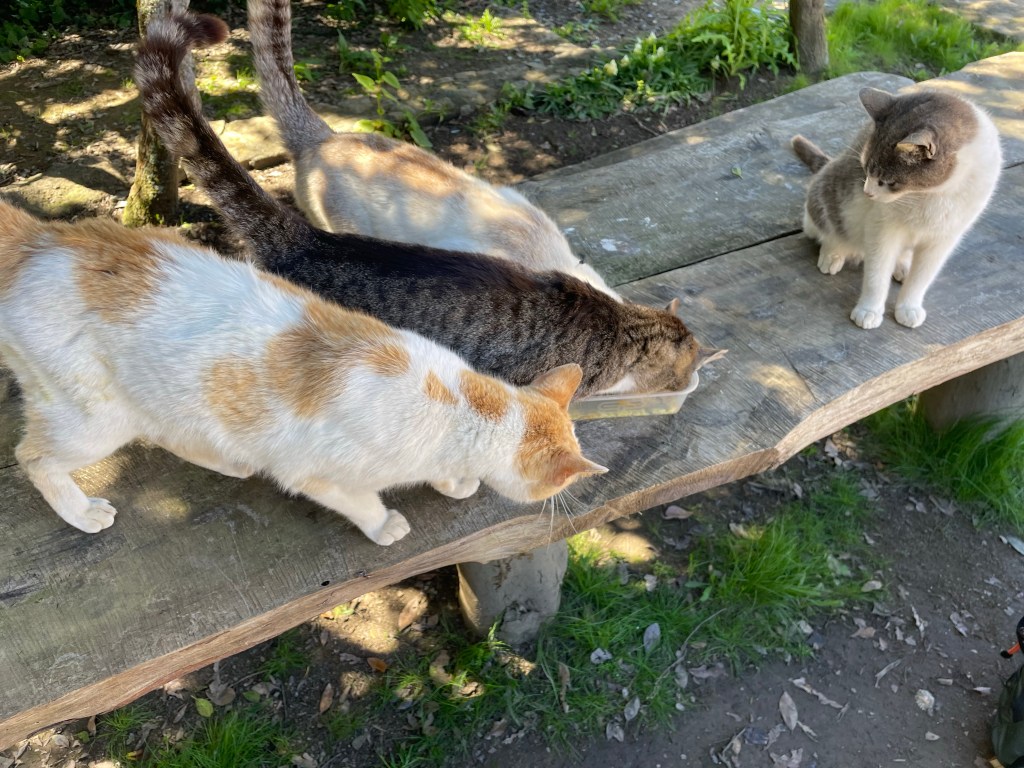
Hungry cats share my lunch
Apart from visits of friends and family from England, I’ve enjoyed meeting dozens of local and visiting folk from most corners of Europe, plus a handful from North America; together with the small number of resident or semi-resident sailors.
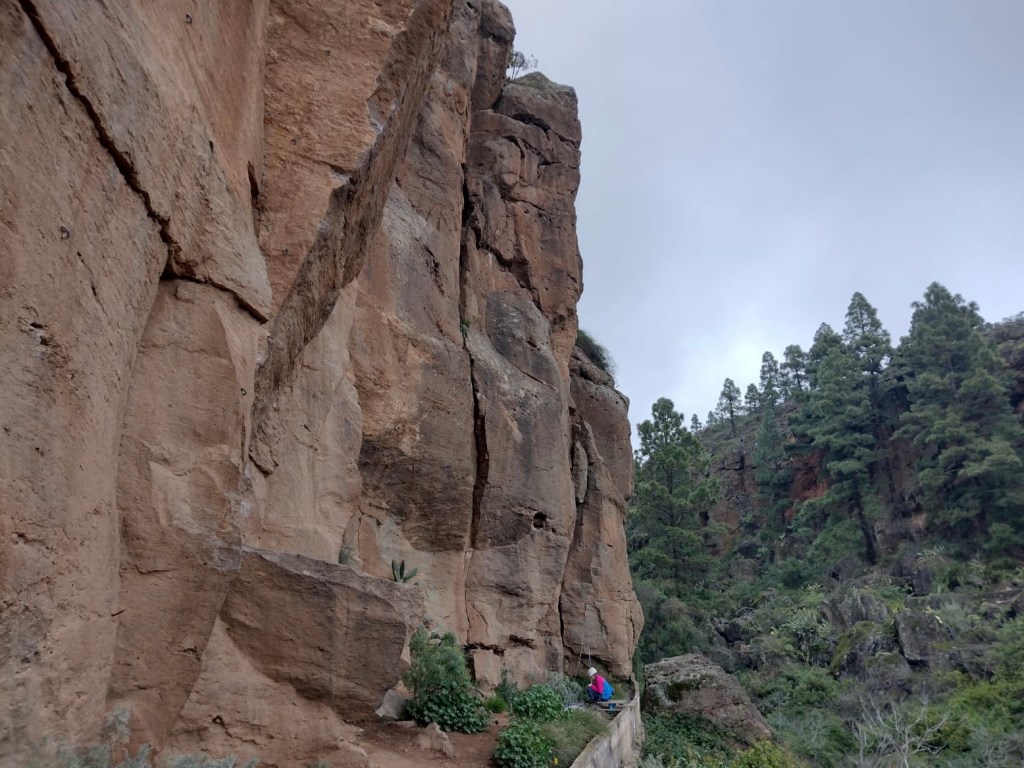
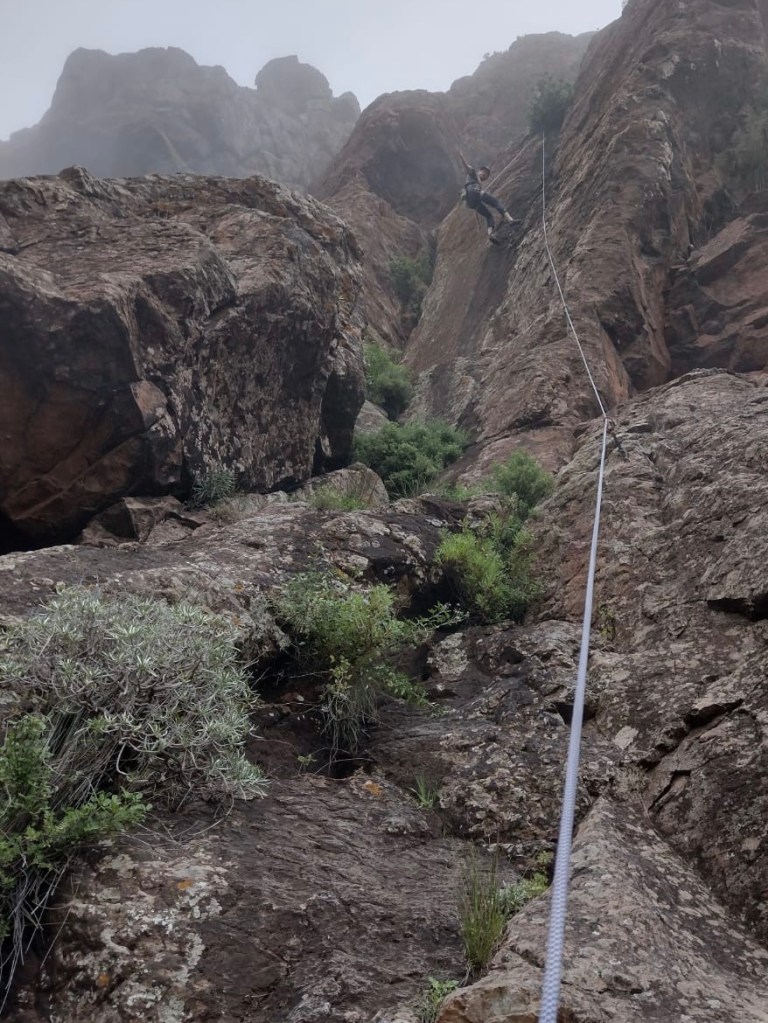
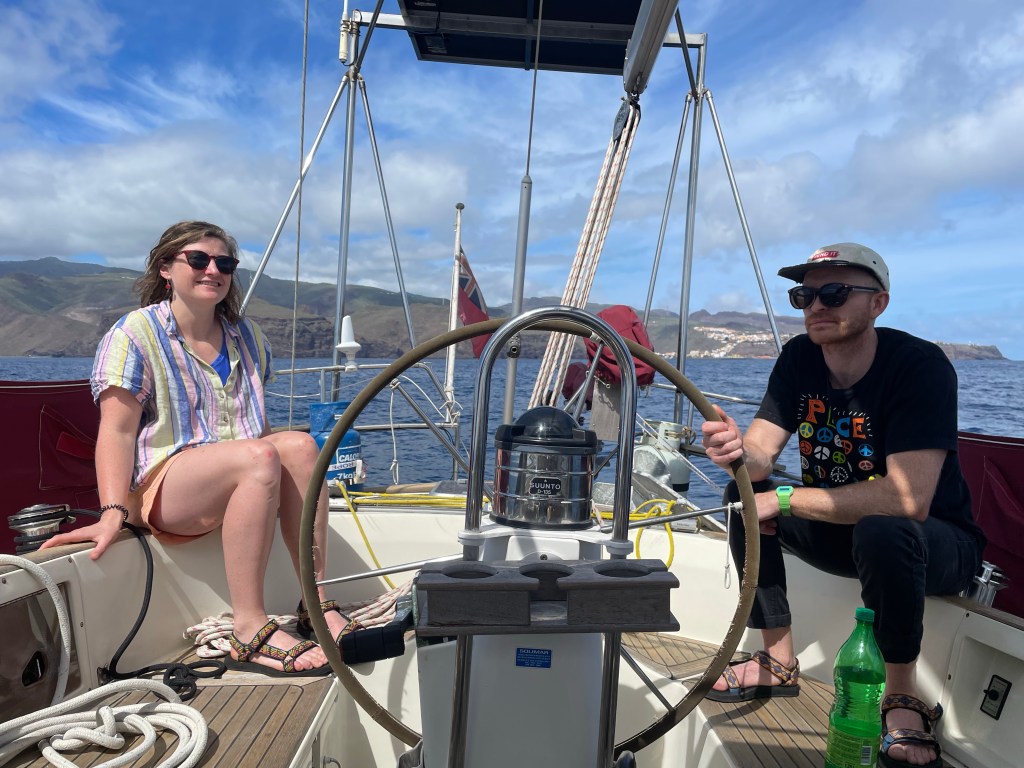
Roz and Johnny (eldest son) find a bit of local climbingAnd some gentle sailing
There have been Christmas and New Year festivities with lots of singing and dancing and fireworks, a Carnival fortnight and, yes, more singing and dancing and fireworks. (N.B. I like fireworks and I can’t dance)
Then there are local beaches for regular swimming, plus I learn Spanish, try to keep abreast of world events, and there’s reading and lots of excellent podcasts to challenge, inform and amuse…..and of course there are the chores that go along with life anywhere. I wouldn’t say I’ve been wildly busy, but I have seldom stopped.
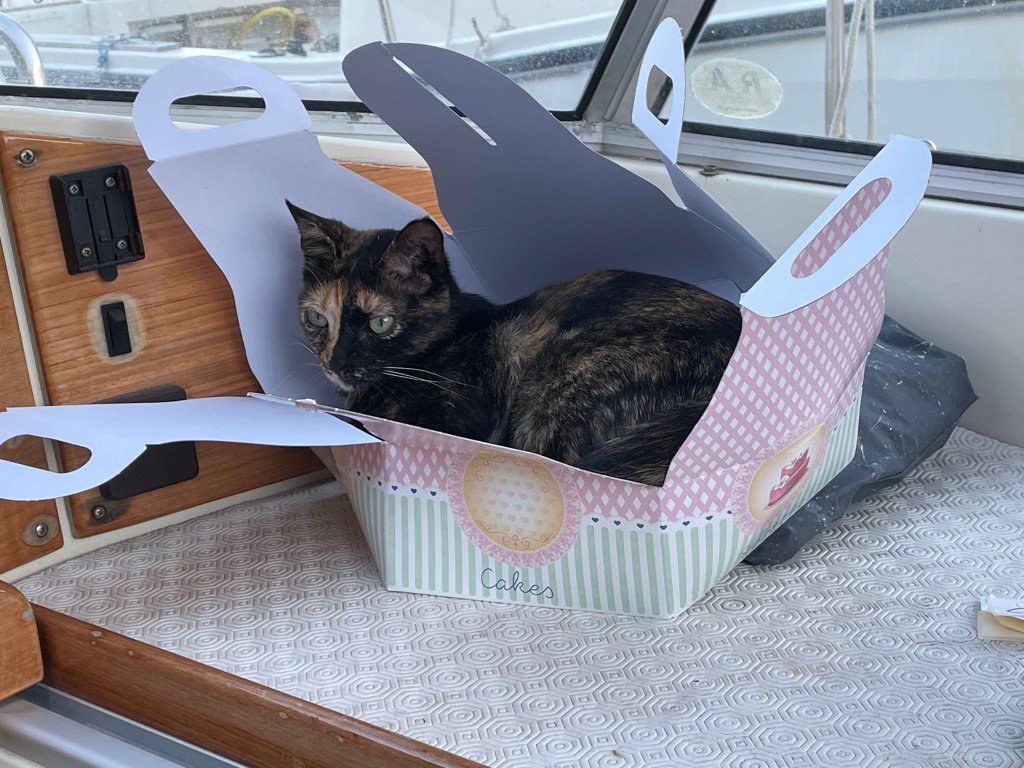
French/Portuguese kitten, name ‘Epoxy’, (not mine) settles in Roz’s birthday cake box
People sometimes ask, and I ask myself, what it is that I miss about England. I’ve thought about it occasionally and yet, despite trying hard, can only come up with a rather limp and pitiful looking list.
Apart from the handful of friends and family in Britain who mean a lot to me, there really is not much. Perhaps BBC (though nowadays fairly accessible anywhere), varied lush green countryside (especially rural Devon), good drinking water, public libraries, familiar pleasing architecture, homemade marmalade and fresh Brussels sprouts. And, as I pay UK taxes I feel I earn a right to criticise and praise, where possible, my country’s virtues and priorities; (with other countries I’m more circumspect).
Thank you Canary Islands (and the coffee shops, bars, bus drivers and especially marina marineros) for giving me such a comfortable, secure and welcoming winter stay!
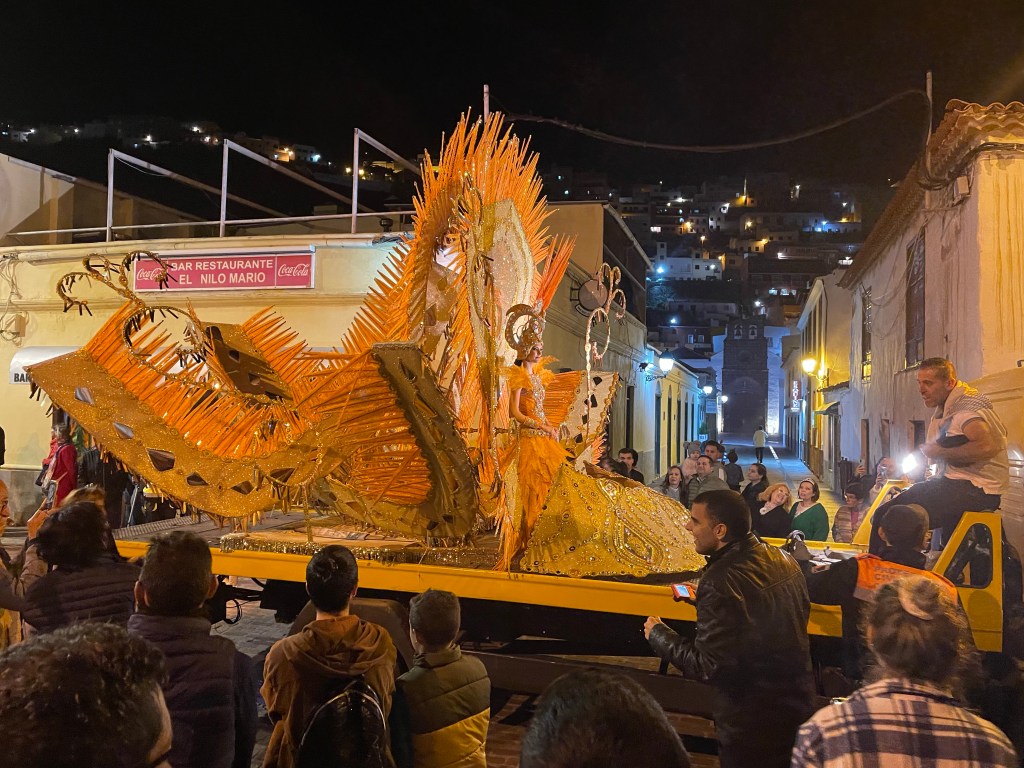
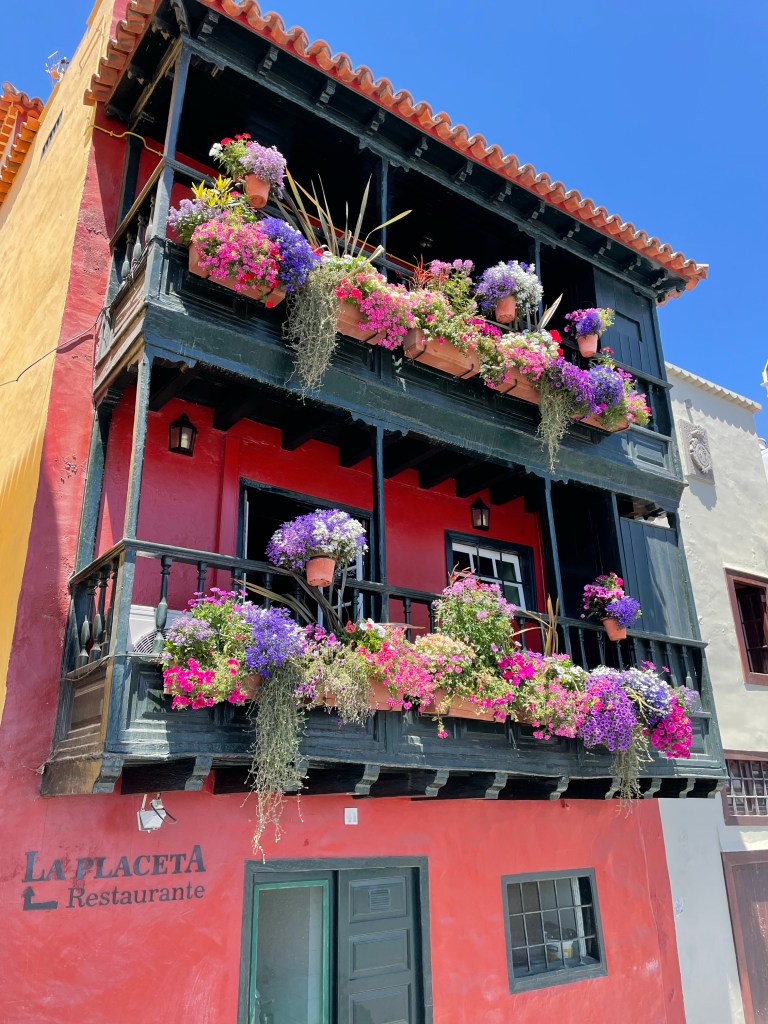
Carnival queen, San Sebastián de La GomeraA much photographed house in Santa Cruz de La PalmaFarewell La Gomera
Porto Santo-Madeira-Porto Santo-Tenerife-La Gomera
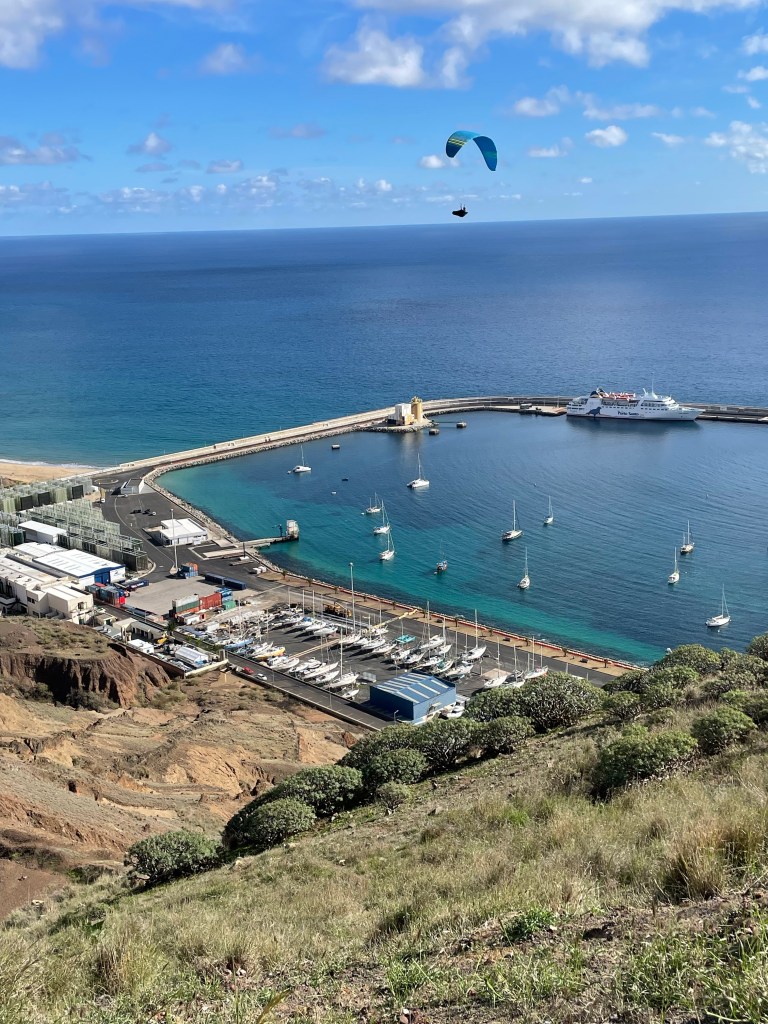
Harbour and boatyard and paraglider, Porto Santo
Henrietta hasn’t sailed far in the past two months. Most of the time she has rested in comfortable anchorages and calm marinas. She may not have chosen it, and it won’t necessarily have suited her temperament. She would I suspect have preferred more time on the ocean swell, sails billowing in wholesome fresh breezes; surging over oceans wide, a dazzling white rush of water at her bow. Instead she has suffered marina blues, with the indignity of fish nibbling at her bottom.
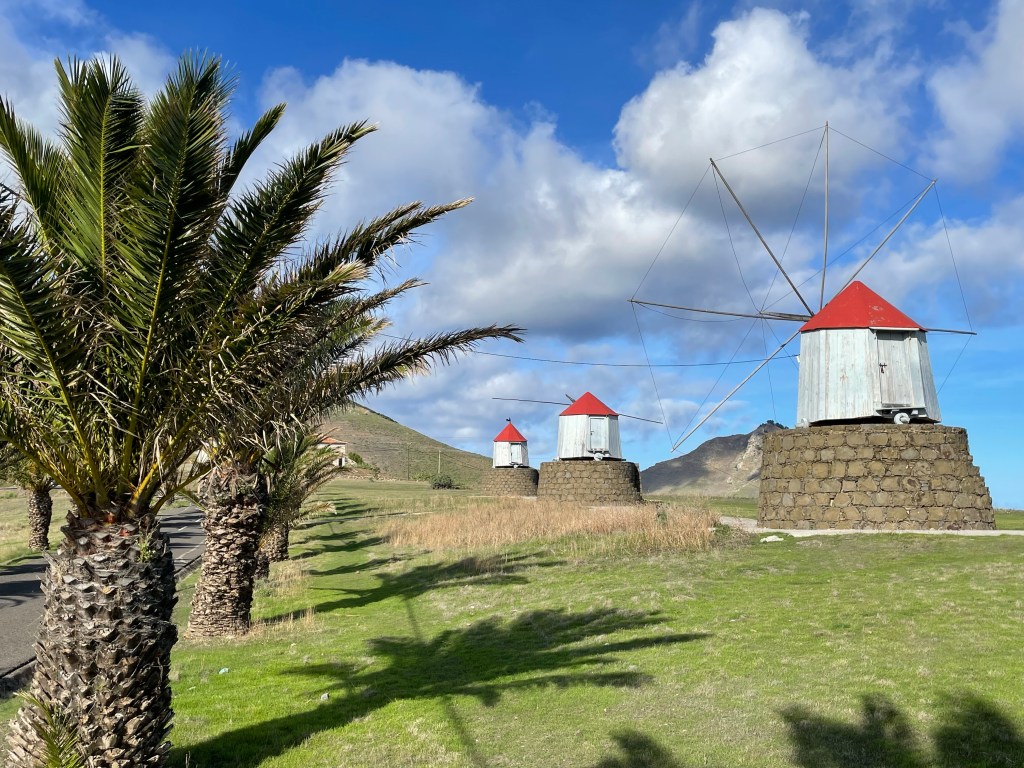
Old windmills, Porto Santo
In contrast, I have been pretty busy, fixing bits of her and me, talking, walking. I’m weary. Henrietta can write this update. So, it’s over to her………………………
Ok, if that’s what he wants. The skipper is always boss. But it has been a long time since I last put pen to paper, and I can’t remember much of what has happened. Even boats suffer from lapses of memory. This is a little bit of what I recall.
After a spell in the confines of Porto Santo harbour, I had a quick rolly return trip to Madeira. It was an easy sort of excursion, a 100 mile round trip, anchoring a few nights, so Michael could meet up with some lovely lively old friends from Bristol, eat ice creams and walk through the very upmarket suburbs of Funchal. (Neither of us is very upmarket and I was embarrassed by his scruffy worn out t-shirts and disgraceful sun hat, when the good folk of Madeira often have clean chinos, polo shirts and eye-catching straw on their heads.)
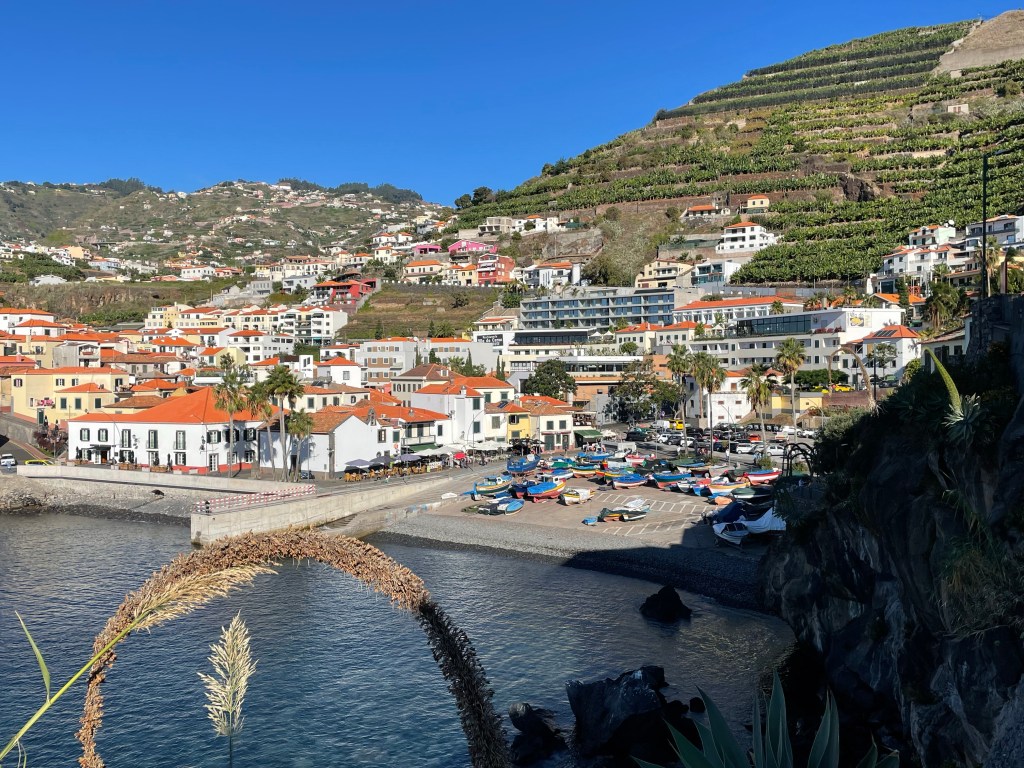
Pretty and popular Camara de Lobos, Madeira
After that outing to Madeira we enjoyed another week in Porto Santo, before finally leaving at the end of November, once the boss had serviced my engine. (Although neither he nor I like engines, it is a great joy to have clean oil and new filters in my works; it’s a sort of colonic irrigation coupled with detox and high quality blood transfusion. Marine engines highly recommend it. I feel a lot better.)
Next stop Tenerife. I was anchored in a gorgeous spot, no houses, peace and the grandeur of majestic cliffs. Unsullied breathtaking nature. It was a shame that anchor chain got snarled on some old discarded mooring blocks. The boss dived down, couldn’t budge it, and had to cut the chain. Dived down again with rope to retrieve the anchor, returned with damaged ear and bleeding nose – all over my deck. (Think he’s forgotten he’s a pensioner). But I have my anchor back.
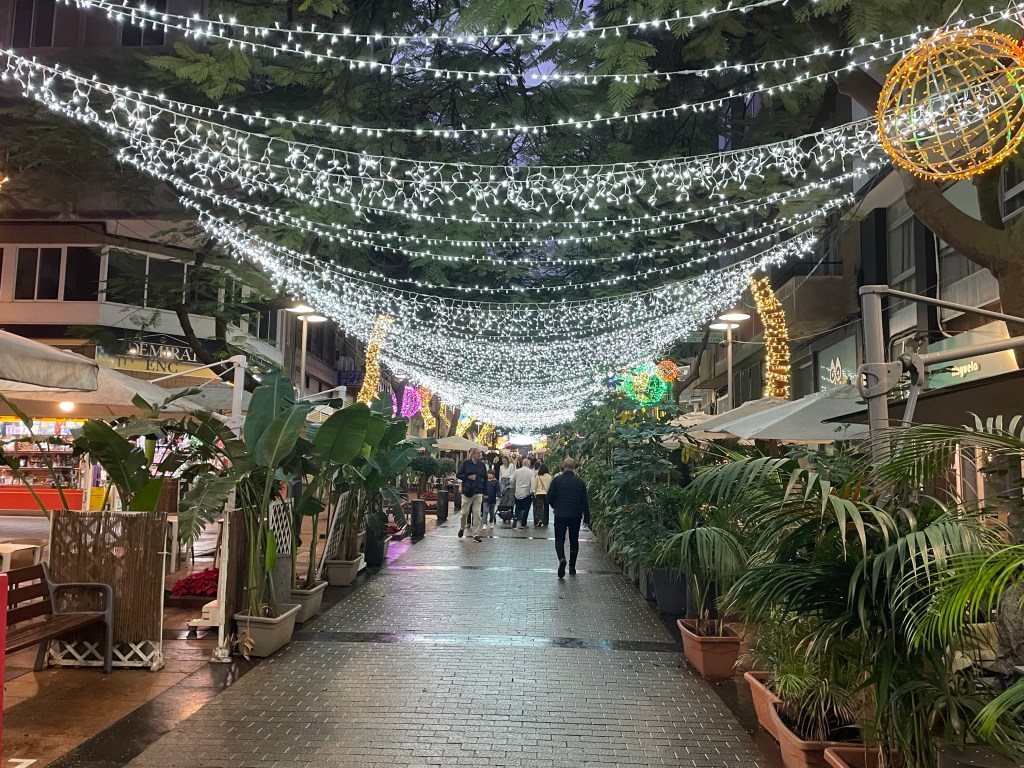
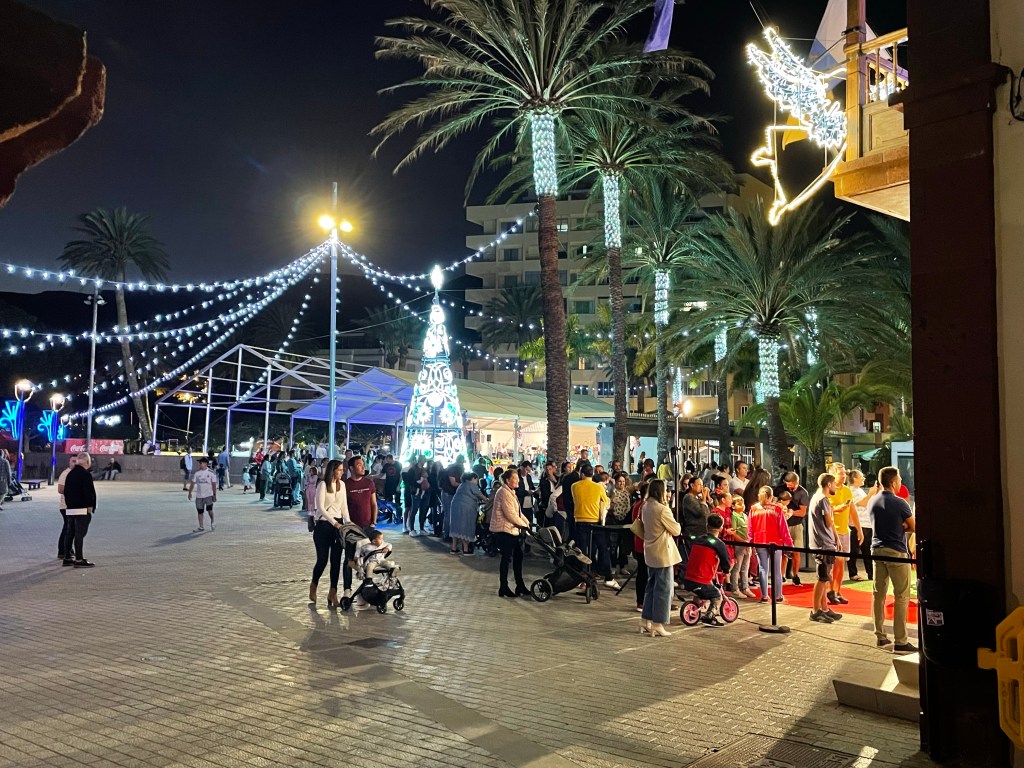
Onwards then to the city of Santa Cruz, which is the capital of Tenerife. Very fine it was too, tastefully lit and shining with Christmas lights. Pretty sociable for me with the constant goings-on of yachts joining the early winter rush to the Caribbean.
Christmas lights, Santa Cruz, Tenerife
In Santa Cruz there are also lots of those huge grotesque boats called cruise ships, like ugly Soviet era housing blocks many storeys high, with cruising human beans doing their thing. They come to Tenerife in a steady stream of winter escape, stop a day, then disappear over the horizon. Very peculiar. But the beans take lots of photos and look as if they like it.
She’s grotesque!
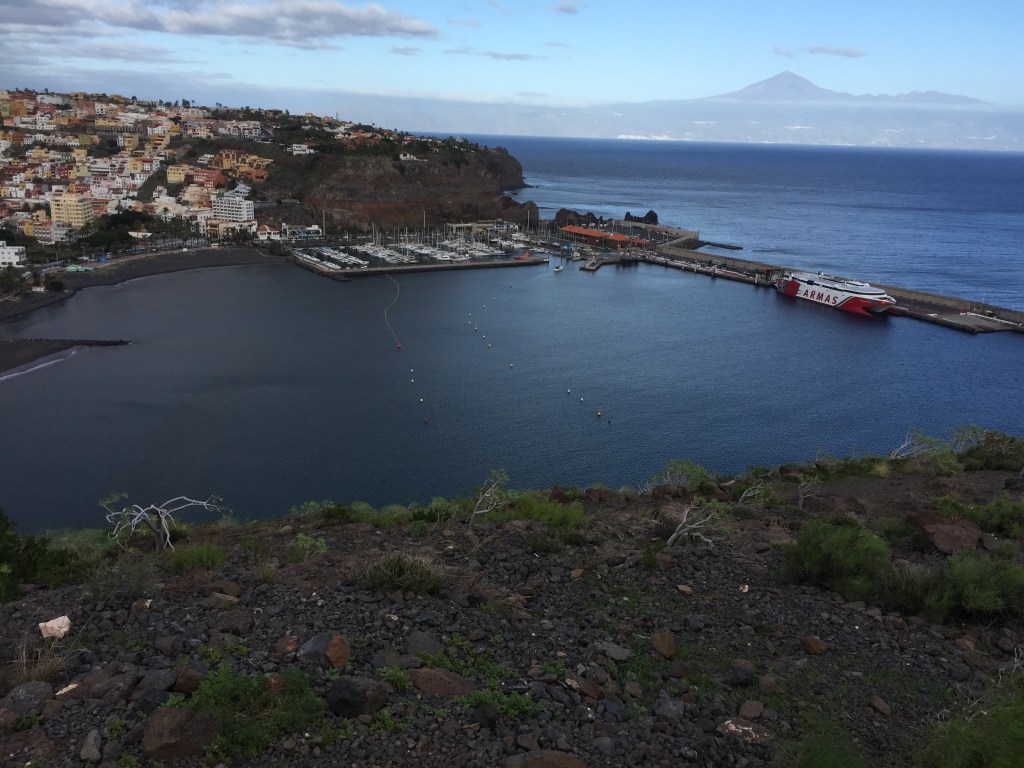
From the bustle of city life, the skipper takes me to the tiny island of La Gomera. He loves it here. I’m happy enough too. Don’t really mind fish nibbling my bottom; it helps keep it clean. With lots of fellow yachts and yachties, it has been a happy sociable spell.
Harbour, San Sebastian de La Gomera. My Teide, Tenerife, Spain’s highest mountain in background.
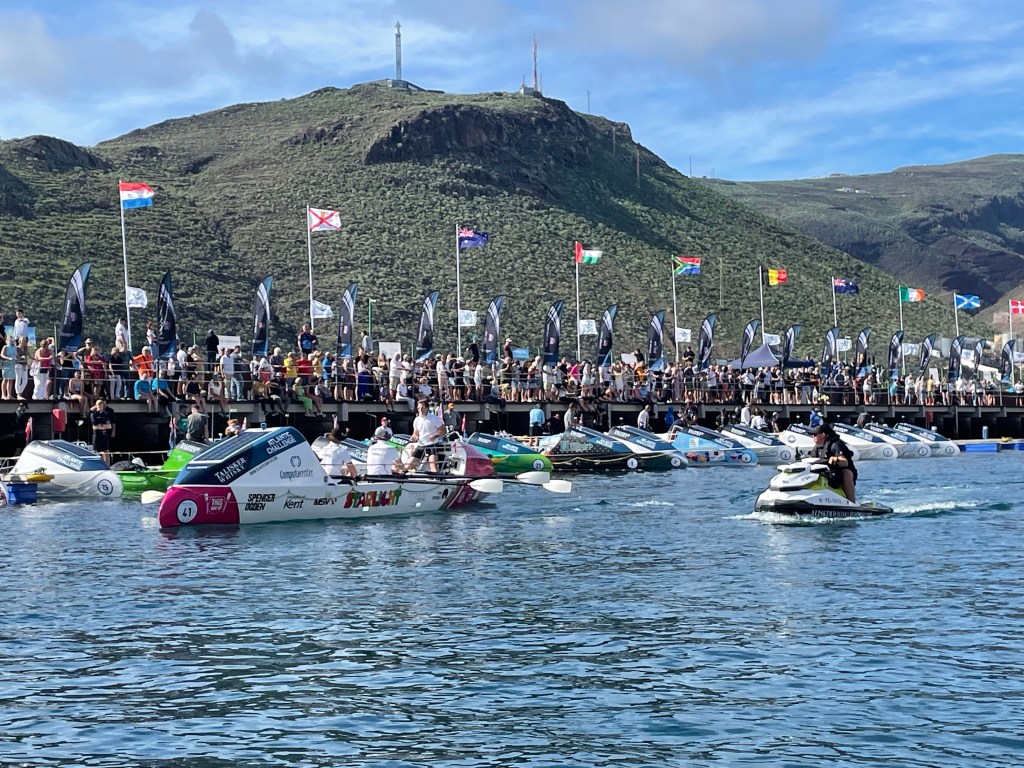
We’ve had the excitement of watching the start of the Transatlantic Rowing Race.
Start of Transatlantic Rowing Race
As a yacht with sails, I can scarcely imagine what it must be like to rely on oars and human muscles, stamina and mind-boggling determination to get one across that massive ocean. There were over forty rowing boats that set off. After more than a month, the fastest are soon to arrive in Antigua. The slower ones, with just one person aboard may take three months or more.
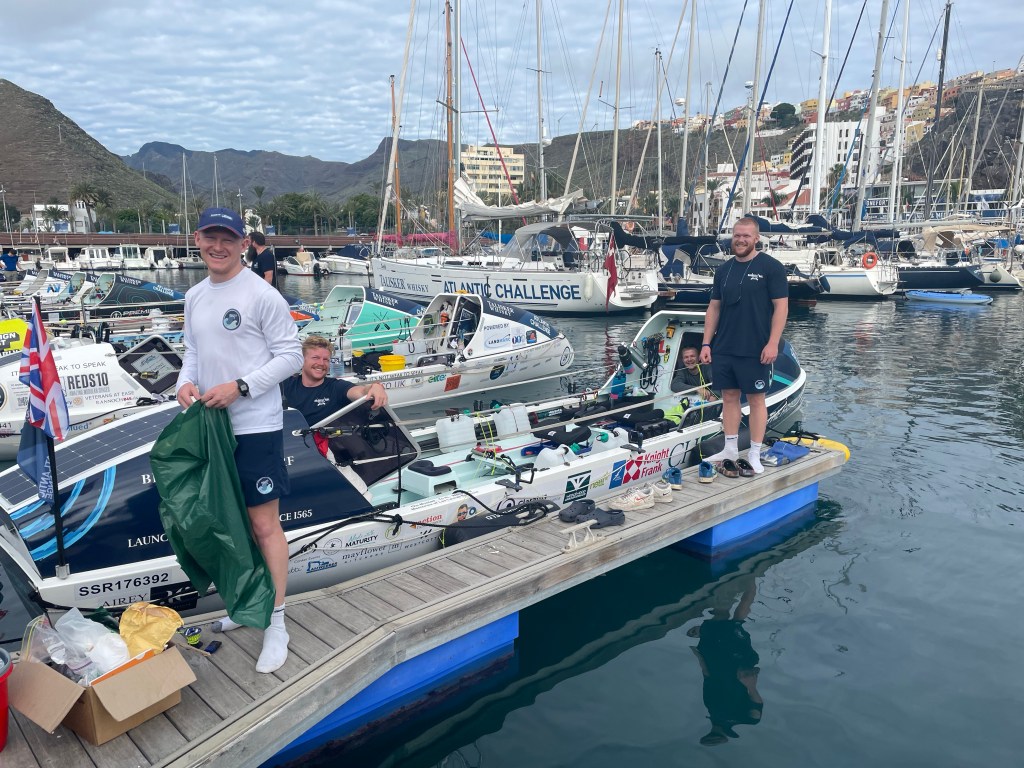
I know my skipper, is full of admiration for those rowers. He felt privileged to have a tenuous link with one of the rowing boats and had a happy evening as their supporting family came for a drink in my cockpit. You can read more about the rowing race here.
And you can support the Friendship brothers (pictured before the start, below) here.
The four Friend brothers rowing Friendship
There’s then been a visit from one of the boss’s sons, called George, and they’ve left me alone as they’ve gone walking and swimming. The walks here are fantastic for their variety, interest and challenge. I float here in the marina’s clear water; they take buses to explore the island’s trails, returning at dusk with weary tingling limbs and strong thirst for beer.
Not a good route to go down
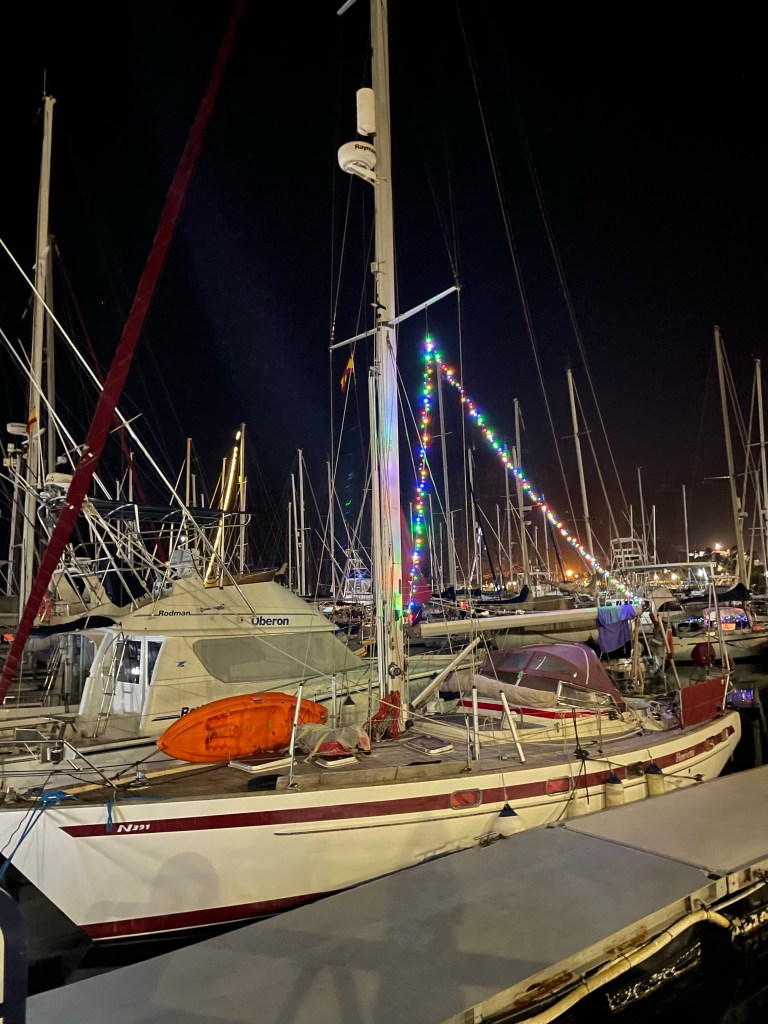
Oh! There’s also been the joy and fun and absurdity of human Christmas and New Year festivities, and here also the Three Kings festival; a wondrous series of local song, music and dance, excited bean children, bopping bean youngsters and more, plus New Year fireworks. All this on an island just twelve miles across. I have been wearing my Christmas lights too!
Children are queuing to meet Father Christmas, who I’m told really did visit La GomeraI’m dressed for Christmas
Enough for now. Skipper is planning to take me back to Santa Cruz on Tenerife to sort himself out.
I’ve not been feeling inclined to write for a while. Haven’t felt inspired. There didn’t seem to be much to say.
But, in case you have wondered what happened to Henrietta, here’s a brief update. Plus, it’s a good thing if I pause awhile and think of what has happened. It’s not as if life has been totally empty and on hold.
Henrietta left Exeter Canal (SW England) mid-September, accompanied by me and a more-or-less lovely lady, Kimberly, from Florida (the wonders of crew by internet).
It would be nice to tell you that I simply jumped on board, cast off mooring lines and my bad shorebound lifestyle and picked up the wholesome life of a liveaboard sailor. I might have said that I used to do pretty much nothing on land except moan about the state of British decay and behave like a fully-fledged old grumpy whereas now I’m a new man bursting with good humour and fresh salty air. Not true.
In truth it hasn’t been like that at all. Apart from the fact that I didn’t do nothing on land its really been a case of swapping one set of pretty bad habits (the things I do as a landlubber) for another set of pretty bad habits (the things I do as a live aboard sailor).
Bad habits in a house include watching rubbish on telly, eating excessive loads of cheese, drinking a long way over the limit, biting my fingernails and sleepless nights pondering the nature of Britain’s woes. At sea, bad habits include chronic idleness, daydreaming, looking at waves, singing to dolphins and gannets, listening to Spotify, cursing Brexit and eating sweets, and continuing the sleepless nights but with a different set of preoccupations.
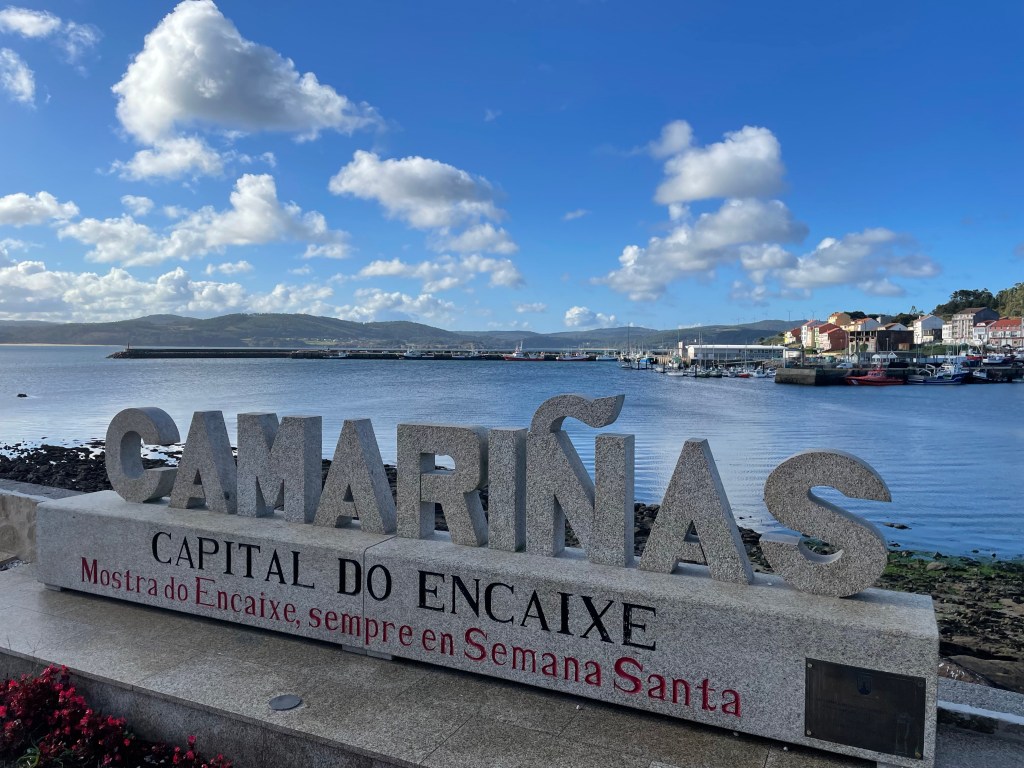
First stop, Camarinas, Spainand walks nearby
Adjusting from one set of bad habits to another takes a few weeks or months. I’m still in the uncomfortable transition zone, a mild maritime purgatory, where I’m a bit lost, don’t know what I’m doing on a boat, make lots of mistakes (couldn’t even get out of a windy marina without cocking it up and being ignominiously towed out backwards!), injure bits of my body I’d forgotten about and adjust to sleep deprivation, queasiness and ceaseless movement.
To get back to the sailing, after leaving Exeter, we popped in to nearby Dartmouth for final bits of new rigging (NB anything to do with sailing boats costs a bomb in Britain, with reliability and quality optional extras – avoid if you can), then sailed over to Northern Spain.
It was the nicest of several Biscay Bay crossings I’ve done: four days of sunshine, moonshine and good winds, stronger near the end, but altogether joyful.
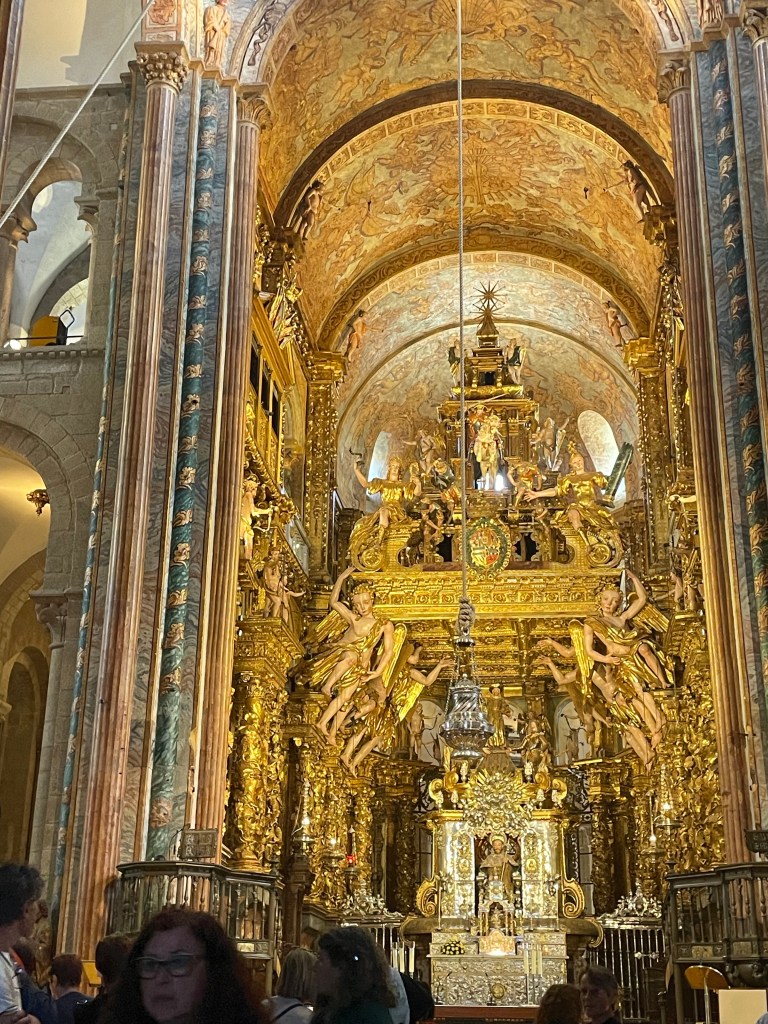
We dabbled in and out of the Spanish Rias, anchored off scenic little islands, took a bus from the pretty village of Muros and milled around with the billions of latter day ‘tourist pilgrims’ who nowadays flock to Santiago de Compostela, feeling happily dwarfed and soothed by the magnificent architecture (and not in the least bit spiritual).
Anchored in Ria de Muros
and took a bus to Santiago
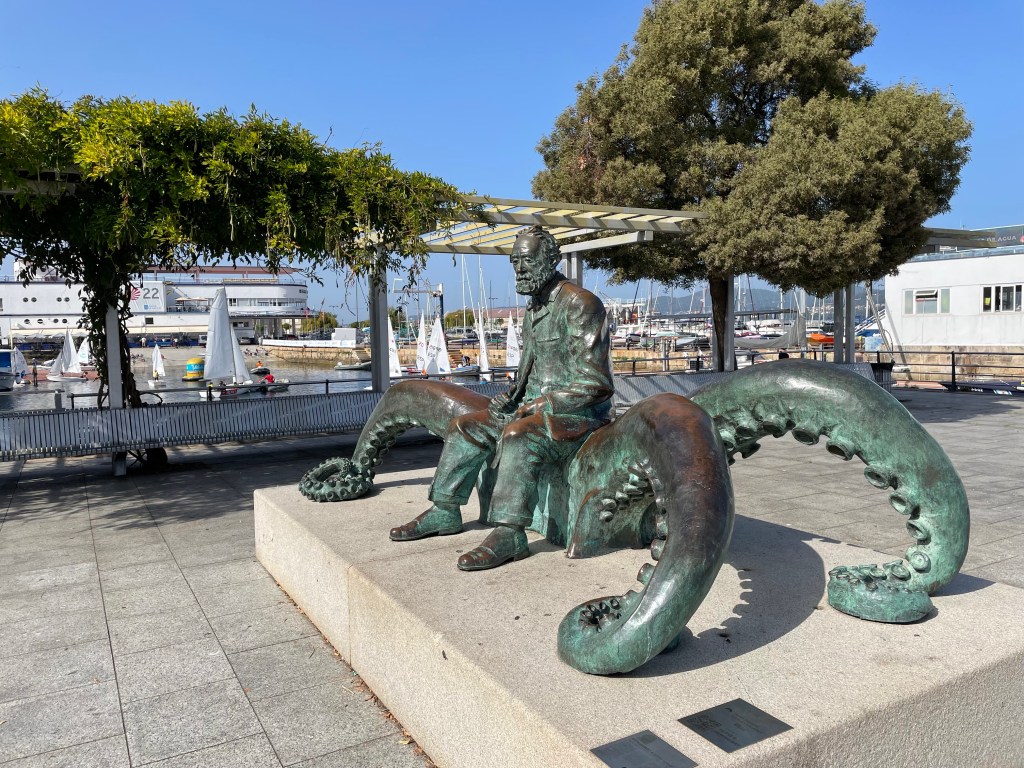
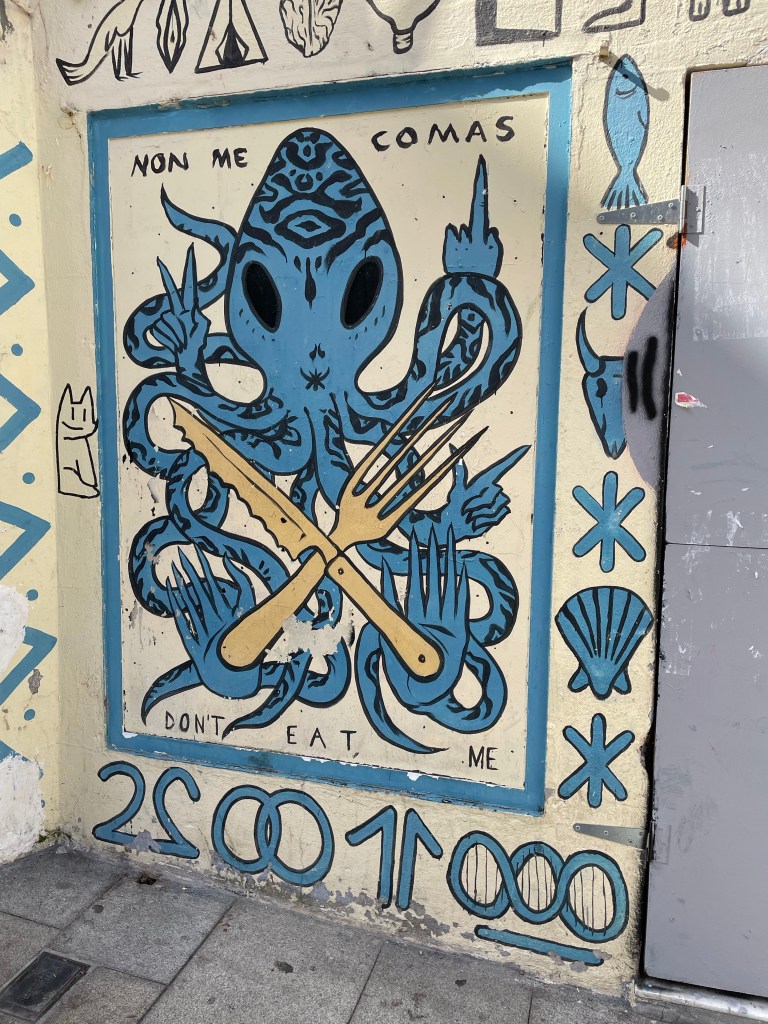
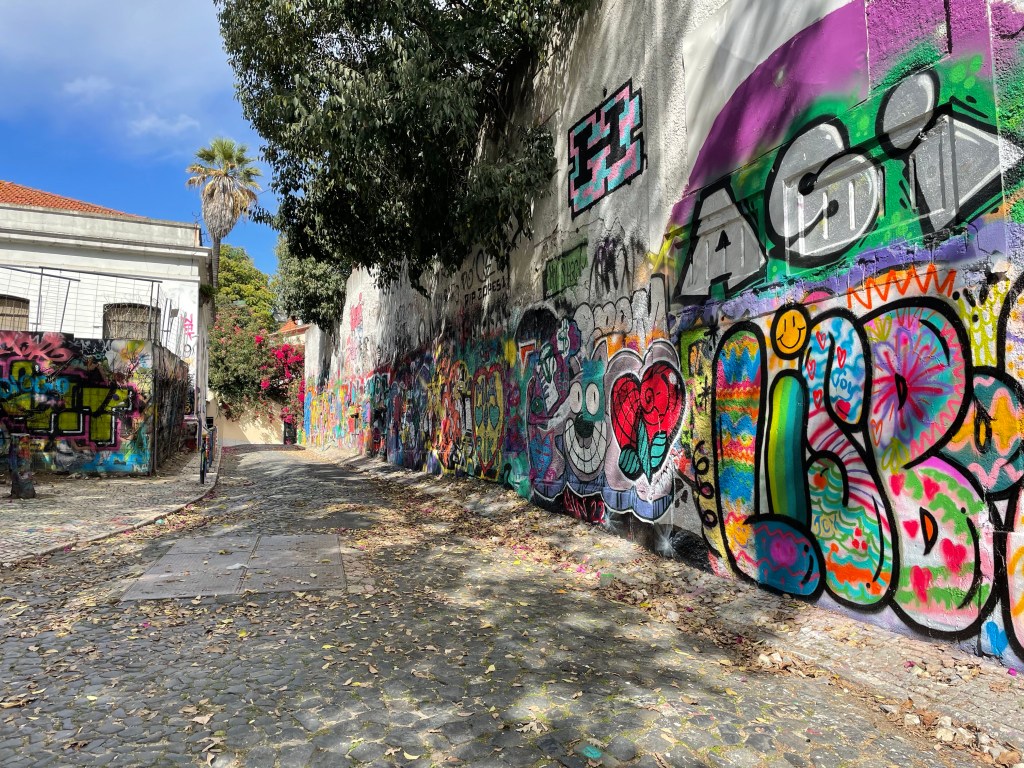
SantiagoOn to Vigo and pretty islands offshoreWhere they love octopus on a plateand graffiti is overlooked
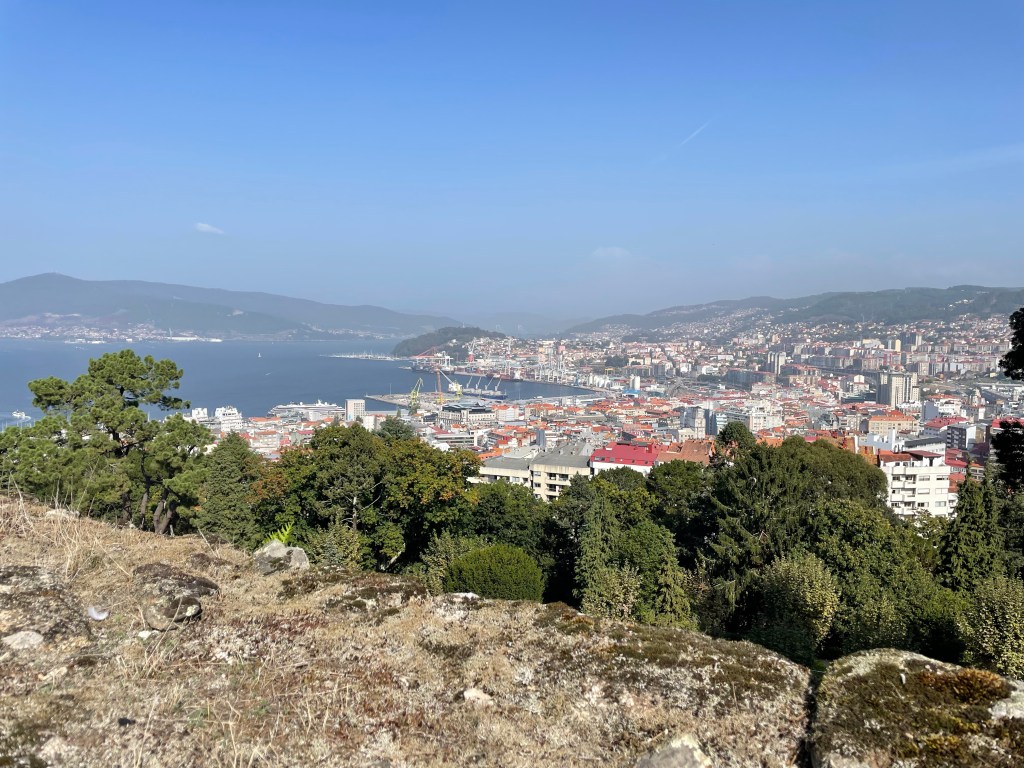
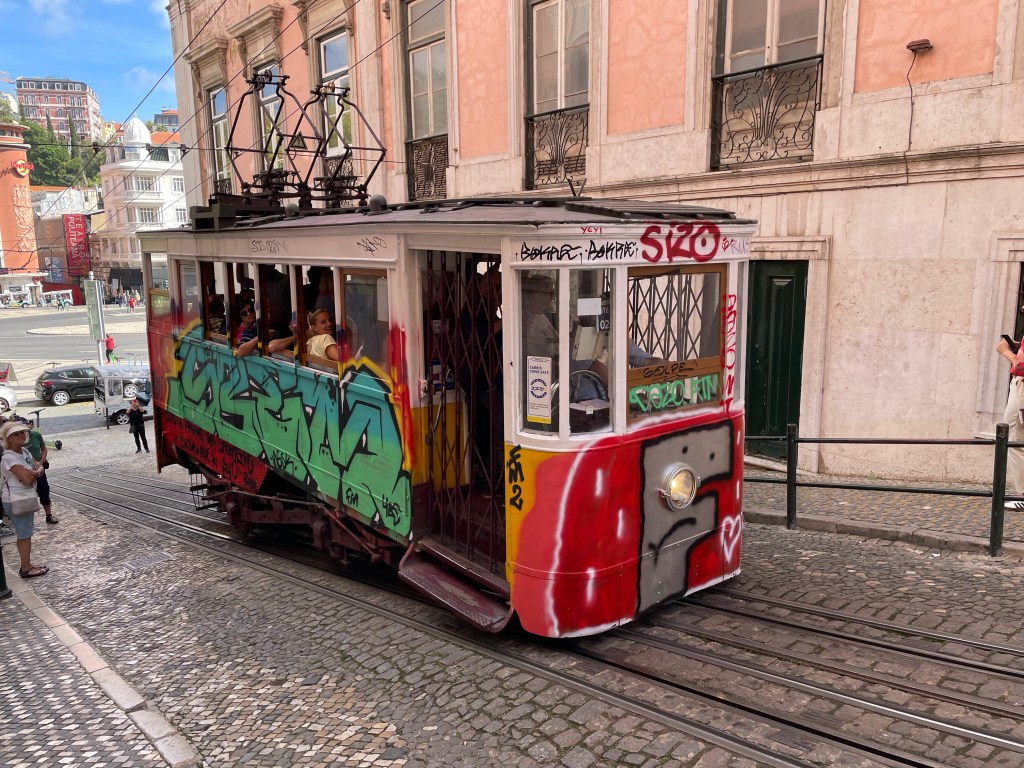
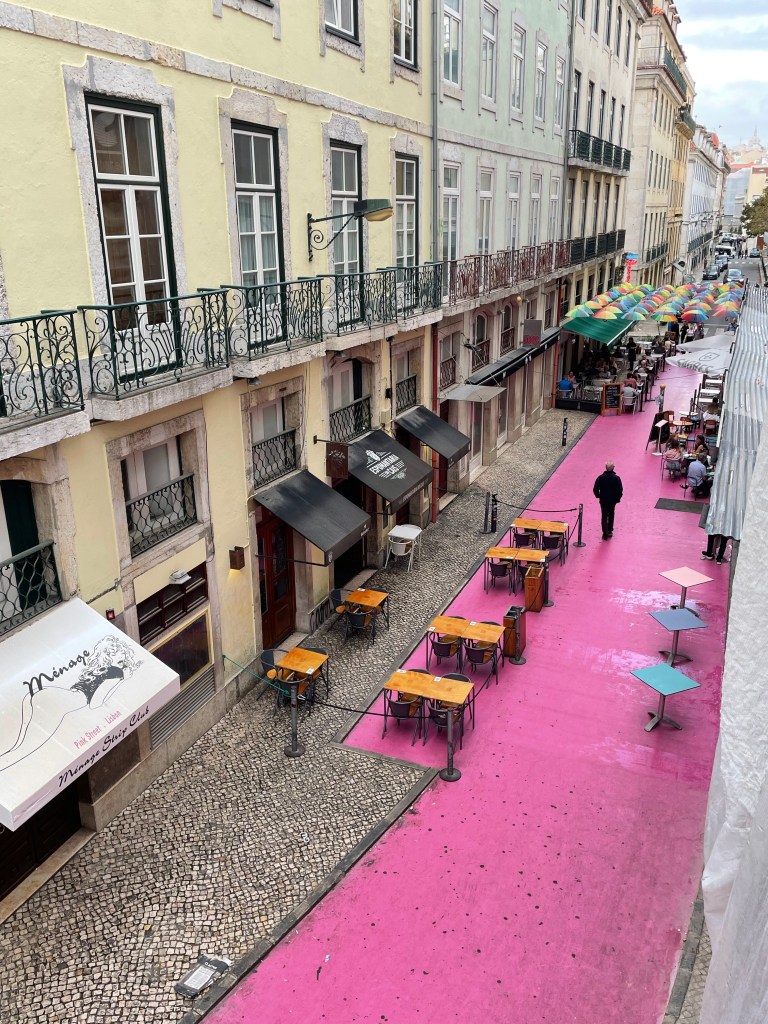
Then, on to Vigo, and thence down the Portuguese coast to Viana do Castelo from where I enjoy a day trip to Porto, ticking off yet more of the tourist checklist. And a few days later, from the coastal town of Cascais, enjoy another trip to fascinating, historic and hilly Lisbon – an easy train ride from super swanky Cascais (where, sign of the times, anything a sailor needs such as chandlery or sailmaker has been displaced by worthless shops selling Rolex watches, high-end fashion and perfume).
PortoAnother fine vegan meal with Merle in Cascais …and day trip to Lisbon
This coastline now has some orcas who’ve taken to ramming small sailing boats, in several cases destroying rudders, even, I’ve been told, sinking one unlucky boat.
Down the coast to SinesAn example of orca damage to a rudder
Why orcas do this is for now a marine mystery, but it does add to the anxieties of coastal sailing trips. Orcas are beautiful, highly intelligent and deservedly protected, but whether for play or war, they have been causing troubles for many sailors. No one really knows what to do. I just crossed my fingers and whispered nice things into the night sky, and all was fine.
By this stage the lady Kimberly from Florida (who works) had been exchanged for a delightful damsel, Merle from Hamburg (who doesn’t, for now). The former introduces me to the trials of internet working on a little boat. The latter is a gorgeous treat who introduces me, among many other things, to the fine cuisine of a dedicated vegan – sadly she was with me just two weeks.
And so once more I’ve found myself in charge of only my own destiny. I’m happy – most of the time.
Today, I wobble gently in the twinkling waters of Porto Santo’s little harbour. Porto Santo, in case you haven’t been here, is Madeira’s minuscule neighbour, some 40 miles away. It suits me with its friendly, polite and gentle residents, small mountain peaks and very low key tourism. There are fine sandy beaches and lots of hilly walks; warm winter sunshine too.
Final approach to Porto Santo
I meet a good assortment of friendly fellow sailors, am more gregarious than ever on land, and slowly, very slowly, get a bit stronger, more barmy, and more wrinkly and happier. It’s a good sort of lifestyle for incurable nomads, people like me, who don’t much care for camels or campervans, and love being close to Mother Nature.
Anchored in Porto Santo
As is often the case, I haven’t a clue where I’m going next, but I guess will gradually move on to the Canary Islands. (I’ve not been spending all those weeks with Duolingo Spanish for nothing.)
……. ………….. …………..
And now for something completely different.
Here’s something that’s been on my mind for a long while: Brexit. Don’t groan, don’t look the other way, don’t have a heart attack, and don’t do anything silly.
And if you are sick and tired of all things Brexit, read no further. Stop right now.
I bring it up, not because it’s a big event in global affairs. Compared to wars, climate change, poverty and such horrors Brexit seems irrelevant. I bring it up because blue water sailing is an international pastime – at least international among most affluent maritime nations, and now I’m in Europe my sailor friends are predominantly from EU countries. I’m asked why Britain left – as if we were all mad. Our decision is seen as equivalent to that of America electing Trump. And as holders of UK passports we are liable to time limits on how long we stay.
I know “the British People” voted to leave the EU. (We’re reminded of the British People’s wishes ad nauseam. [In fact it was well under one third of the population who voted to leave].)
BUT, big BUT, please can someone in the know remind me of the benefits of Brexit. All you folk who voted ‘leave’, many I dare say with daily experiences of EU cost and harm, or with current experiences of the ‘huge benefits’ promised, or buying and cherishing the Telegraph, the Daily Express or other such organs of selective wisdom and halfhearted truth, remind me. I can pass it on whenever I’m asked.
What are or will be or might be the benefits? (And before you mention abstract notions of freedom, sovereignty, independence, opportunity, please think hard and explain precisely what you mean.)
And if your considered response is that it’s ‘early days’ or ‘it may take a while’, please, oh please, tell me how long I must wait. Or must my children wait? (And of course I do not deny the EU has troubles.)
And if you are of a more serious-minded disposition and want to drag me through the reasoned beliefs and your convictions that elevate or benefit an independent little Britain in a globe of giants, please educate me.
I am desperately sad and often pretty angry at being a non-EU European. Now’s your chance to tell me why it’s such a good thing to have self-expelled Britain, why I got it wrong, why you’re right, and why I must open my eyes or be patient for the benefits.
OR please may you have the good grace or humility to consider you might, you just might have got it wrong.
After a spell on land – eight months in fact – it’s hard to decide whether to sail again or stay ashore. To sail or not to sail?
Winter berth
It is not so much a question of whether to sail again (I have done and certainly shall do more) as whether to be a normal and proper part-time sailor, like most folk (with smaller boat for local trips) or an improper full-time liveaboard sailor (with beloved Henrietta for longer overseas travels). I am lucky I suppose to have a choice.
Life on land through the past winter and spring has been pretty good to me: a home in a fine English city, wonderful family, a few good friends, an unchallenging routine, and an expanding waistline – all this in a country that’s free of major conflict, starvation, and serious oppression – albeit with a government that embarrasses me, policies that offend me and national self-image that seems woefully and extraordinarily misguided. (Wouldn’t blogs be dull without the odd opinion?)
But such matters are of little interest to others.
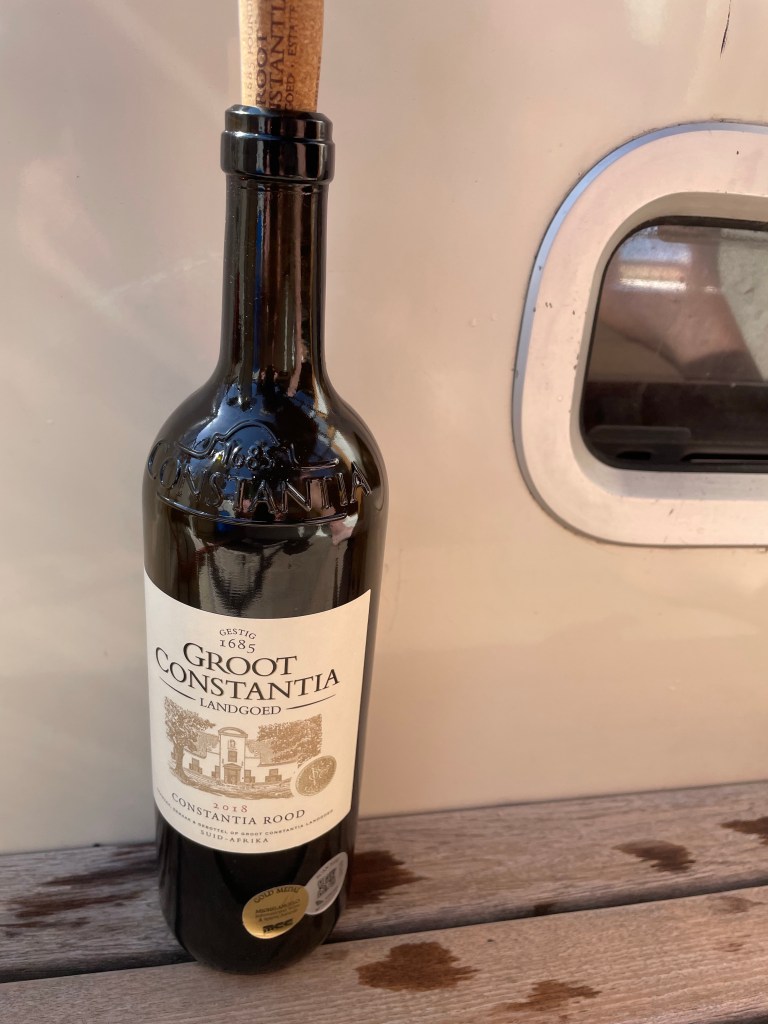
Joy! I find a forgotten bottle, well traveled from South Africa
So I’ll move on to another trivial question.
Whether to continue writing this blog once more or simply keep my rambles to myself?
On the one hand blogs are self-indulgent, often a tedious rambling account of where I go, whom I meet and what I eat plus some ill-conceived opinionated drivel, and they’re rather time-consuming for both you and me.
On the other hand they may be informative, interesting and emotive. I guess it’s for the reader to judge. If you want to read, then do (and my tiny group of ‘followers’ does seem to want to); or, if you don’t want to read, then don’t (unless you really have nothing better to do).
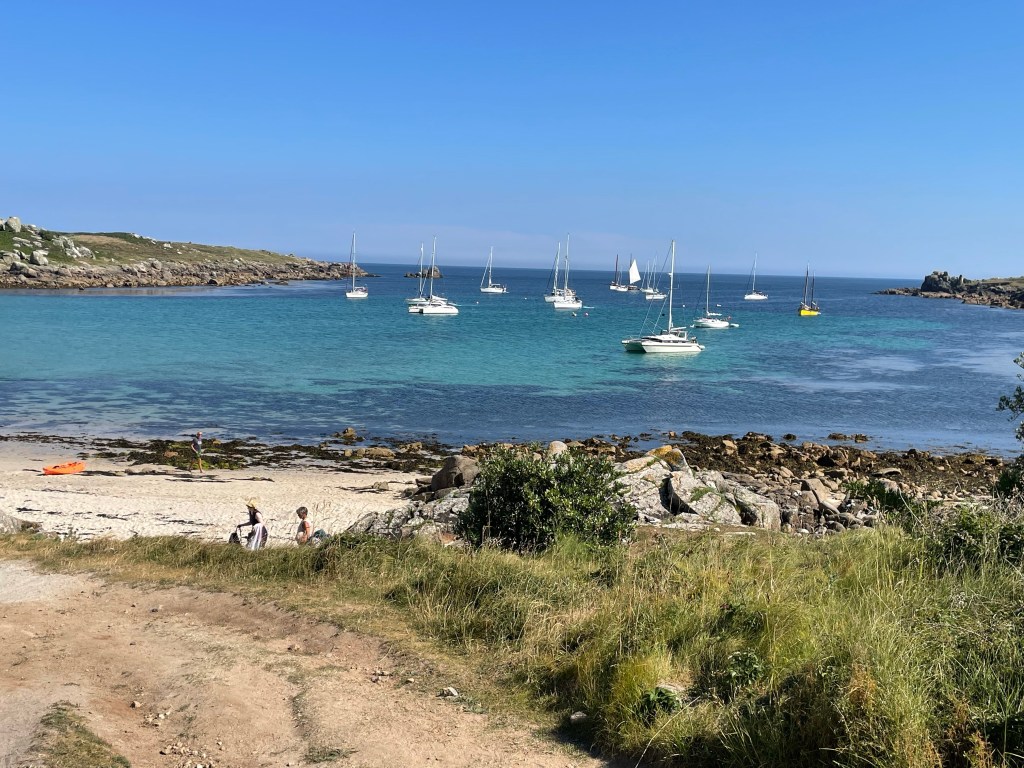
So here we are, Henrietta and I together once more, bobbing at anchor in the Isles of Scilly – one of my favourite local destinations. I’m just back from the pub, in a good and tipsy mood, receptive to the delights of gulls and cormorants, enjoying the sounds of wind in rigging, clear blue sea and a setting sun.
St Agnes, Scilly IslandsEver popular, Turk’s Head
It’s been a trial run from her winter berth on Exeter Canal, to see if boat and I still work ok. I reckon we both work all right, although nothing seems to be going very smoothly! I’d forgotten how uncomfortable and tricky sailing can be.
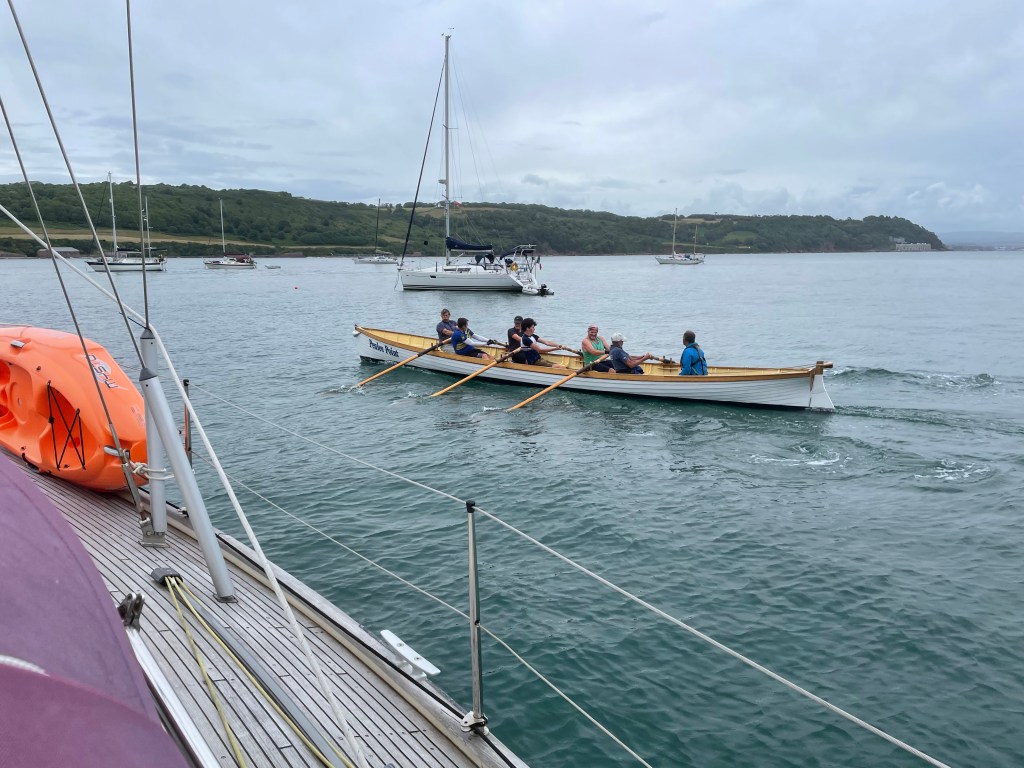
Gig-rowing more popular than ever
Boat (dear Henrietta) has Electrical Problems. They, the electrics, are, as they say, up the spout, with alarms going off as bits fail and instruments go wonky, sending an assortment of beeps and squeaks to tell me what I don’t want to know. This electric stuff was one thing that our sailing forebears didn’t have to trouble with (though the downside was they never knew exactly where they were and they had to ‘swing the lead’ to see how deep it was). On reflection I can see there were a few advantages in the sailing days before chartplotters and AIS and radar and echo sounder and GPS, and radio. Not many though.
I have muscle problems, balance irregularities and gastrointestinal woes. I.e. muscles seem to have disappeared under the winter delights of good cheese and chocolate biscuits and mashed potato. And sea legs have transposed into grade A flab and queasiness. Heaven forbid, I’ve almost been sick.
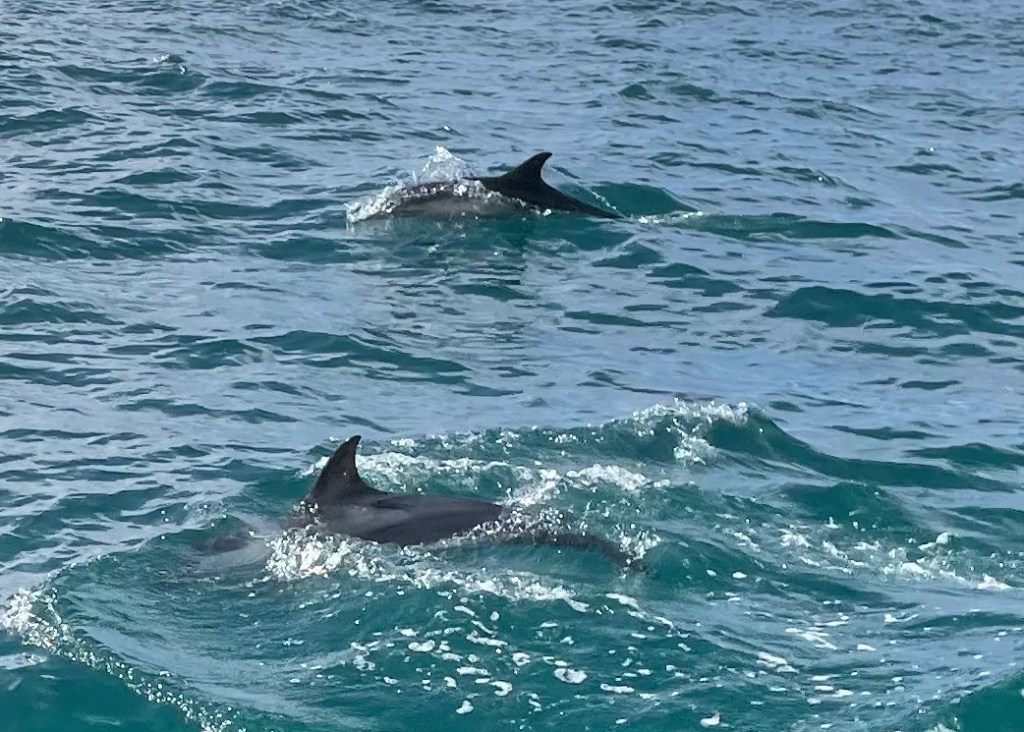
Ever-delightful companions
The bright point was setting forth and frolicking about on some of England’s hottest days ever. I didn’t need my thermal underwear.
Mupe Bay (used to be an empty anchorage)
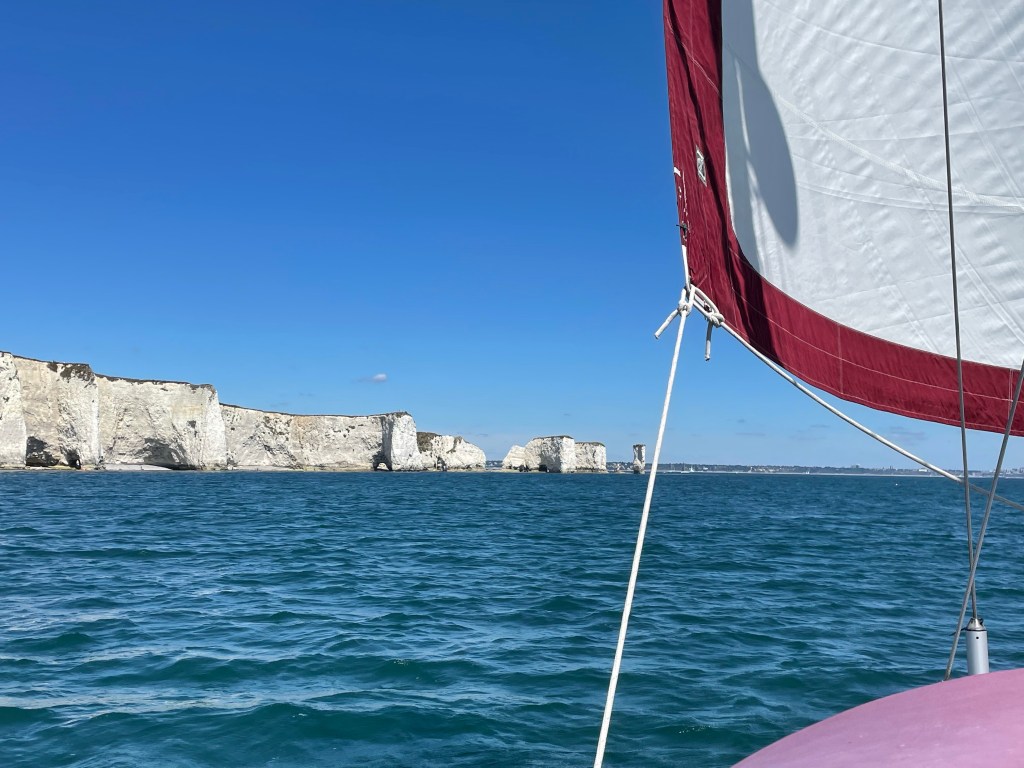
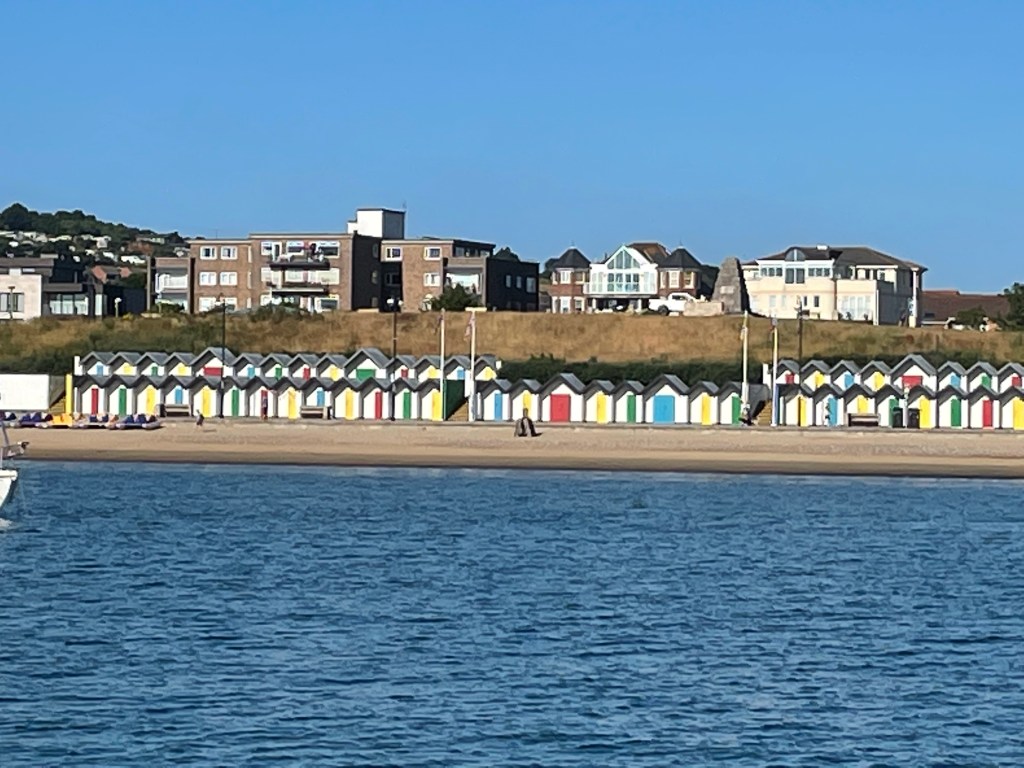
And to finish this briefly (a few weeks later), I sailed for a few weeks along England’s gorgeous southwestern coastlines of Cornwall, Devon, Dorset and Hampshire (Isles of Scilly to Solent) fixing Henrietta’s delicate bits and redeveloping muscles and sea legs, meeting old friends, and finding new ones, and remembering how demanding and how rewarding life at sea can be. I’ve managed to avoid marinas on the south coast. (Nowadays you have to win the lottery or rob banks if you want to stay overnight in them.)
Henrietta has just been lifted out of the water so we can fix more bits. The mast has to come down too. Rigger has made suggestions tantamount to a death sentence. I have yet to decide where or when to go next. Will let you know – probably.
Henrietta and I reached England a few days ago. We had a mostly gentle sail from the Azores, often too gentle. We wallowed quite a lot of the 1,300 mile way in a heaving ocean with too few breaths of wind. But the wind picked up later. And then it was very strong, much too strong, with heavy rain and on the nose. Horrible and uncomfortable, and I decided to heave-to for only the second time in six years. Perhaps the weather gods were telling me firmly not to come home.
Approaching the Lizard
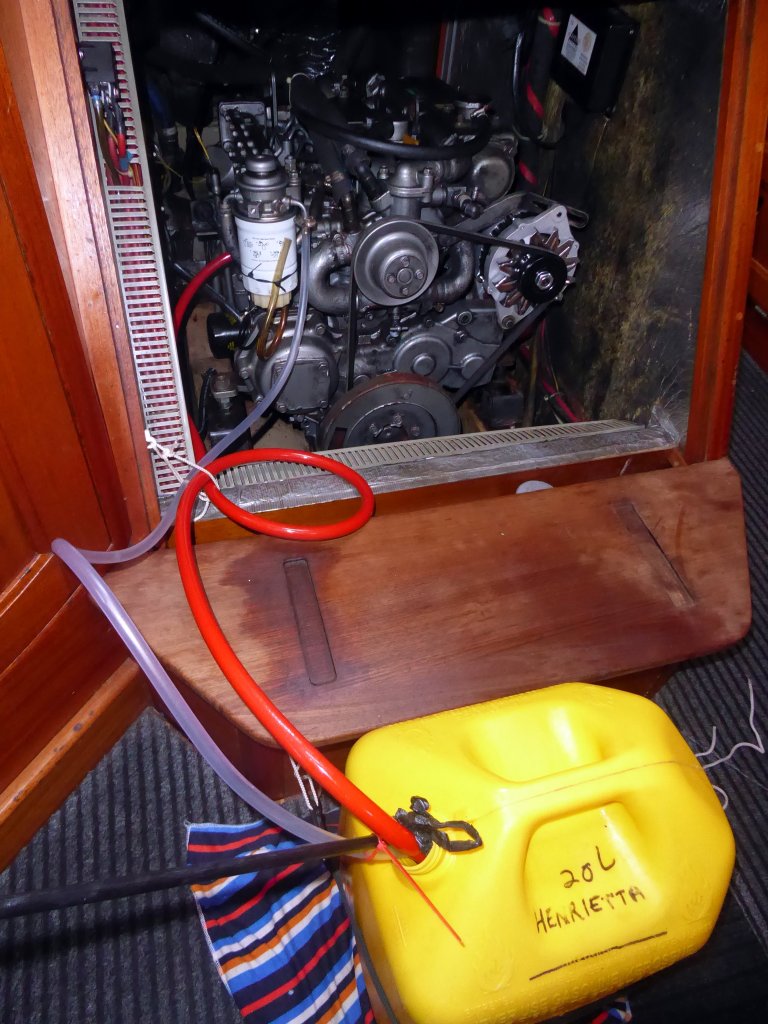
Wind died and tide turned as I reached the Lizard, England’s most southerly point – high cliffs with rocks (and wrecks) strewn nearby. I started the engine. It faltered and died soon after, fuel intake pipe blocked with gunge, doubtless disturbed in rough Atlantic seas.
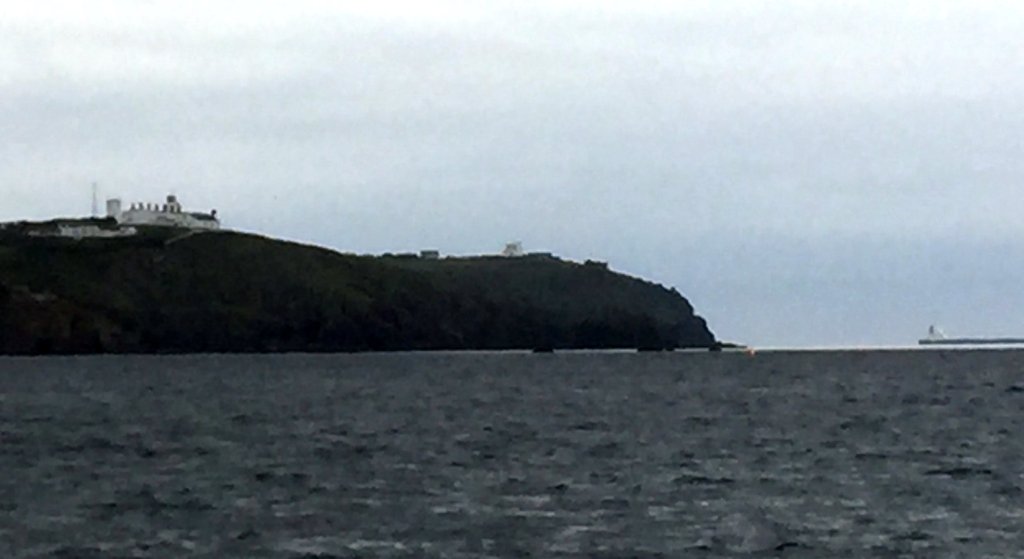
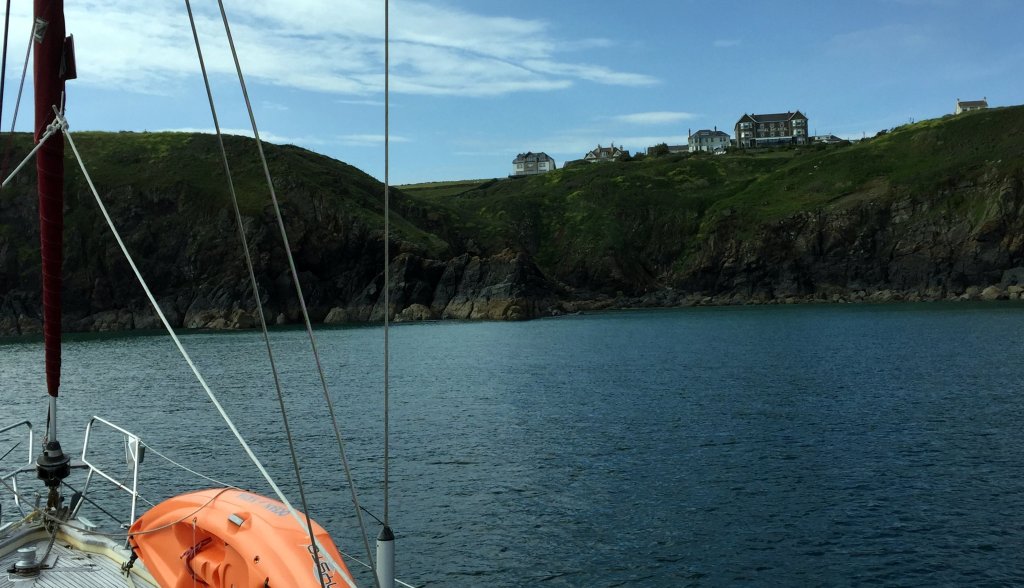
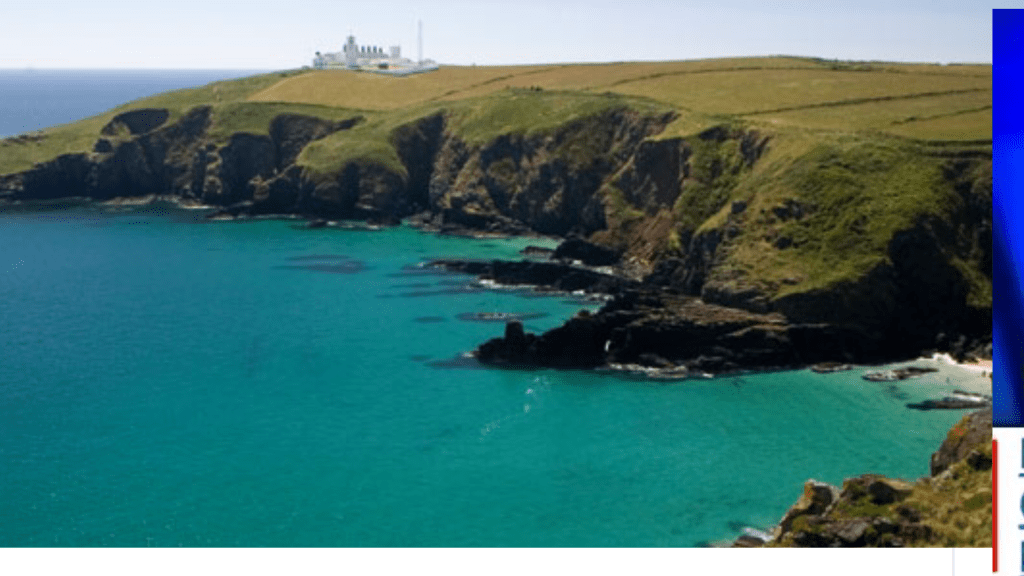
There followed an anxious hour as I sailed in fickle fluky whisps of wind, stemming the tide, to anchor in a tiny cove under the Lizard lighthouse. (Don’t try and do this if you’re of a nervous disposition.)
Peace in Housel BayAnchorage at Housel BayTemporary fuel supply!
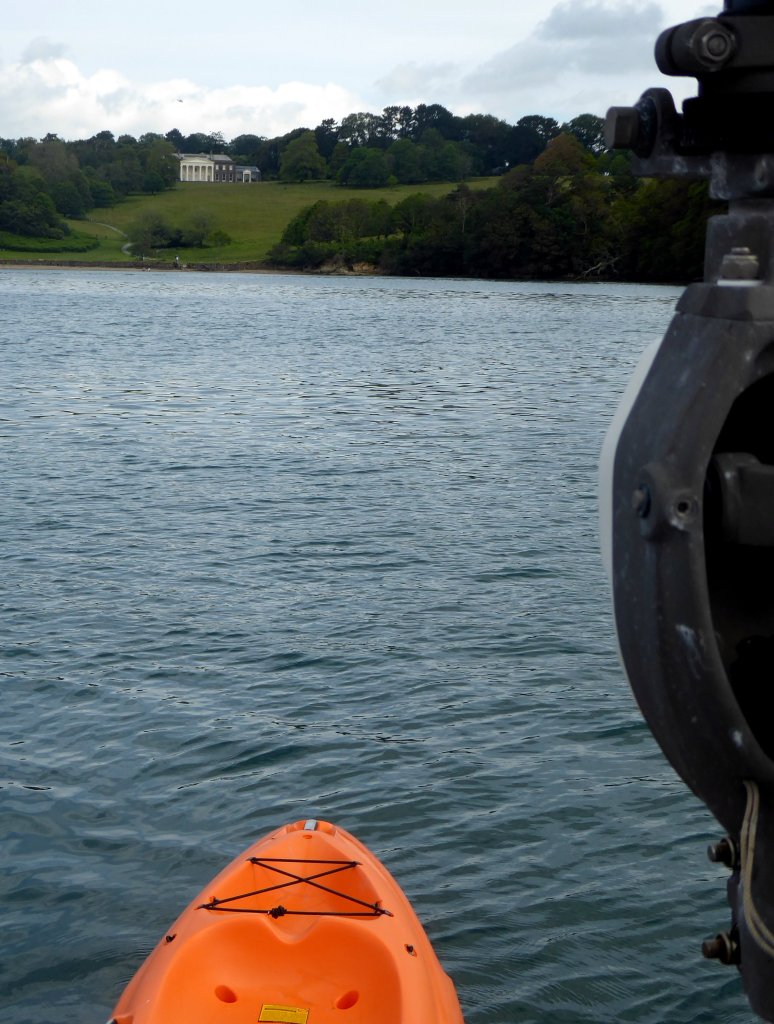
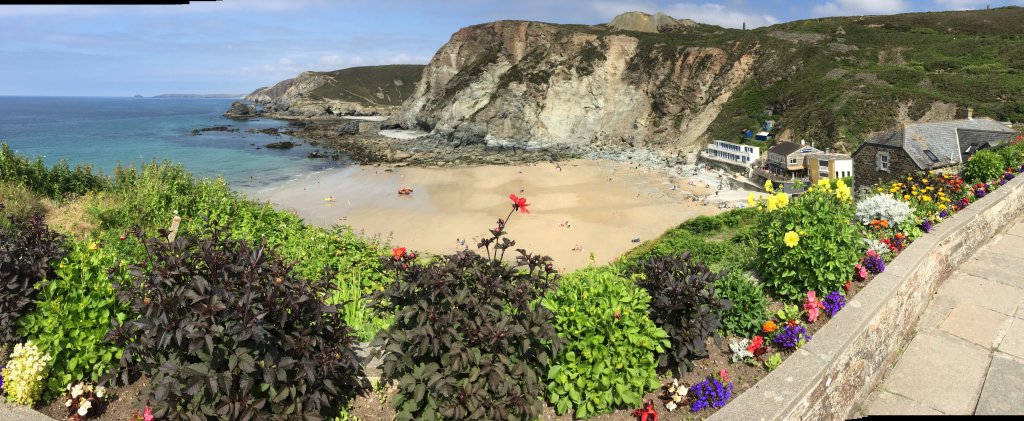
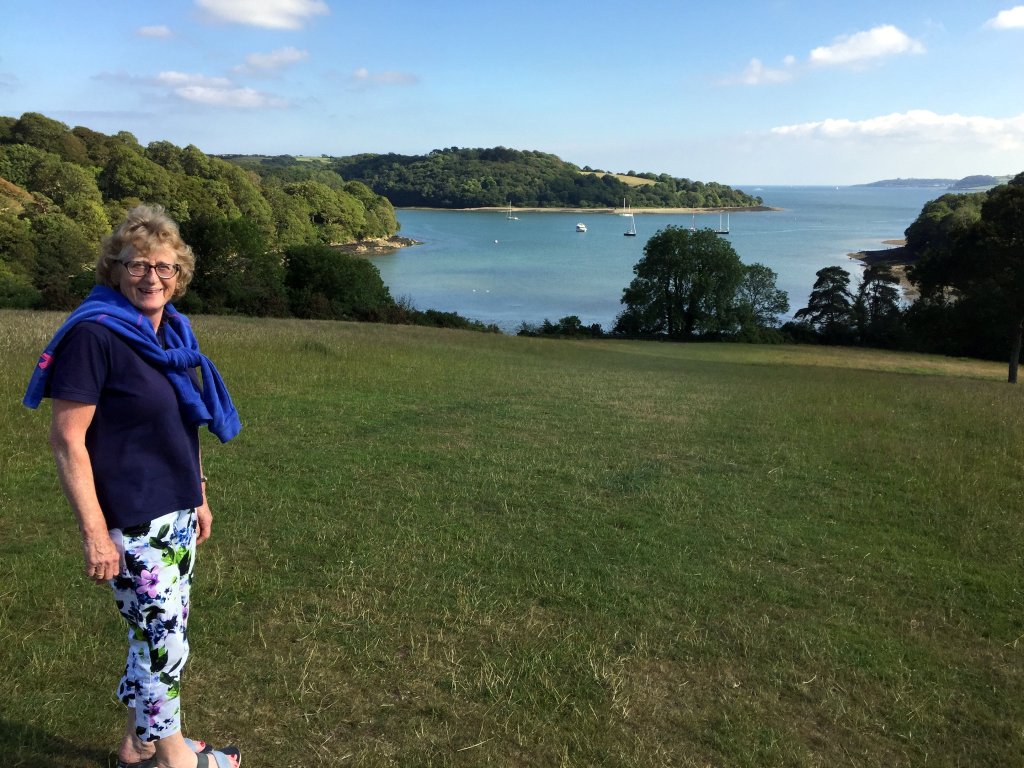
Fixed a temporary fuel supply and motored on to Falmouth in calm sunshine next day, to anchor in one of my favourite spots beneath the imposing sight of the National Trust’s Trelissick House. I’d been here just over five years ago. Next day my dear sister meets me for a car trip to Truro and lunch on the north Cornish coast. (In case you’re wondering about quarantine, I’d done 14 days isolation by that stage).
Anchored beneath Trelissik House, near Truro
Somewhere along the way from Azores to England it got cold. I fished out long trousers, fleece and a pair of socks, a tog 13 duvet, even a woolly hat. A mug of hot soup was good at lunch time. The lavatory seat felt cold. Yes, you may say it’s the middle of summer, but my feet felt chilly.
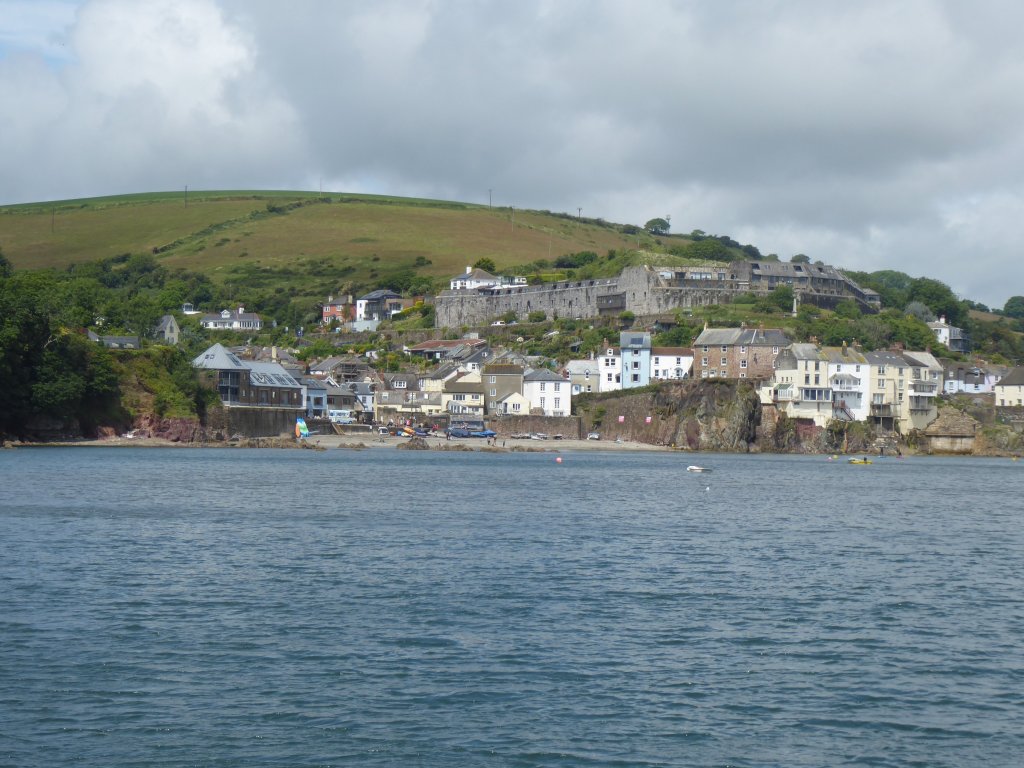
Then I sailed east towards Plymouth and anchored off the charming little Cornish villages of Cawsand and Kingsand. It’s wet and windy now so Henrietta’s the only boat still at anchor, and I stay aboard and write this update. Yesterday was fine and I took these photos.
Cawsand
Even though I wasn’t born in England it is my home country. As far as I know there’s no hint of Scottish, Welsh or Irish in me (even though those countries seem to have more exciting and romantic associations than English – I’m not sure why).
So, as a more or less pure and steady Englishman, let me give a few first impressions of my homeland.
The air is cool and fresh, food is superb and cheap, people are for the most part friendly and helpful (even if they are reserved and don’t smile much), buildings are a rich mix of age and style, streets clean, public transport works well, shops are well-stocked and hugely varied, countryside and coastline are exquisite, BBC radio is the world’s best. Those are a few of the good things.
The less good? The country has always been obsessed with the weather (with good reason) but is now also obsessed with health in general and Covid in particular (with bad reason). Beer and wine, those staples of advanced civilisation, are absurdly taxed and hence ridiculously expensive. Rules, regulations and paperwork are out of control (and if you thought it came from Brussels, you may have been wrong. It mostly comes out of our very own Civil Service – and always has done).
For the very first time in my long life and having sailed in and out of the country on countless occasions, this is the first time ever that I’ve been told to complete paperwork. (You, and this includes several good friends, may believe that one day Britain will be a better place without its union with fellow European countries but, thus far and in my experience around the world, it has been profoundly bad and expensive news ever since that fateful day in June 2016. …Phew! got that off my chest. I can of course discuss this with you at great length – but not here.)
I feel something of a misfit in England. But then I always did. Perhaps everyone sometimes feels the same. It will be hard I suppose to reintegrate. Was I ever ‘integrated’? Do I even want to be? Things to think about in the weeks ahead.
It’s good to know though that the world, both in and a long way outside Britain, is packed with people who are overwhelmingly friendly, kind, generous, colourful, honest, interesting and long suffering. I feel I could live in many places (if younger and if they’d let me). But of course, outside your home country, you cannot be too critical of the things you don’t care for. That would be rude and ignorant, even dangerous. So for now and for a little while I’ll stay here in Britain – and be as critical as I want.
Perhaps I’ll write another post for this blog once I’ve looked at a few log books to find some facts and figures, and summarise a five-year sail. And I’d like to get back to my starting place, Lymington.
Henrietta needs a month out of the water. I’m on my way to Totnes for lift-out. It’s a little town in Devon, a few miles upriver from Dartmouth. After 18 months and over 17,000 miles sailing since she was last hauled out, there are lots of things to deal with.
It was a long slow sail most of the way from Martinique to the Azores, not at all a straight line, trying to skirt high pressure areas of little wind and then with head winds. With a broken alternator as well and Hydrovane working loose, I was happy after 25 days to reach Horta Harbour.
Views – mid AtlanticApproach to Horta with cool rain and cloud
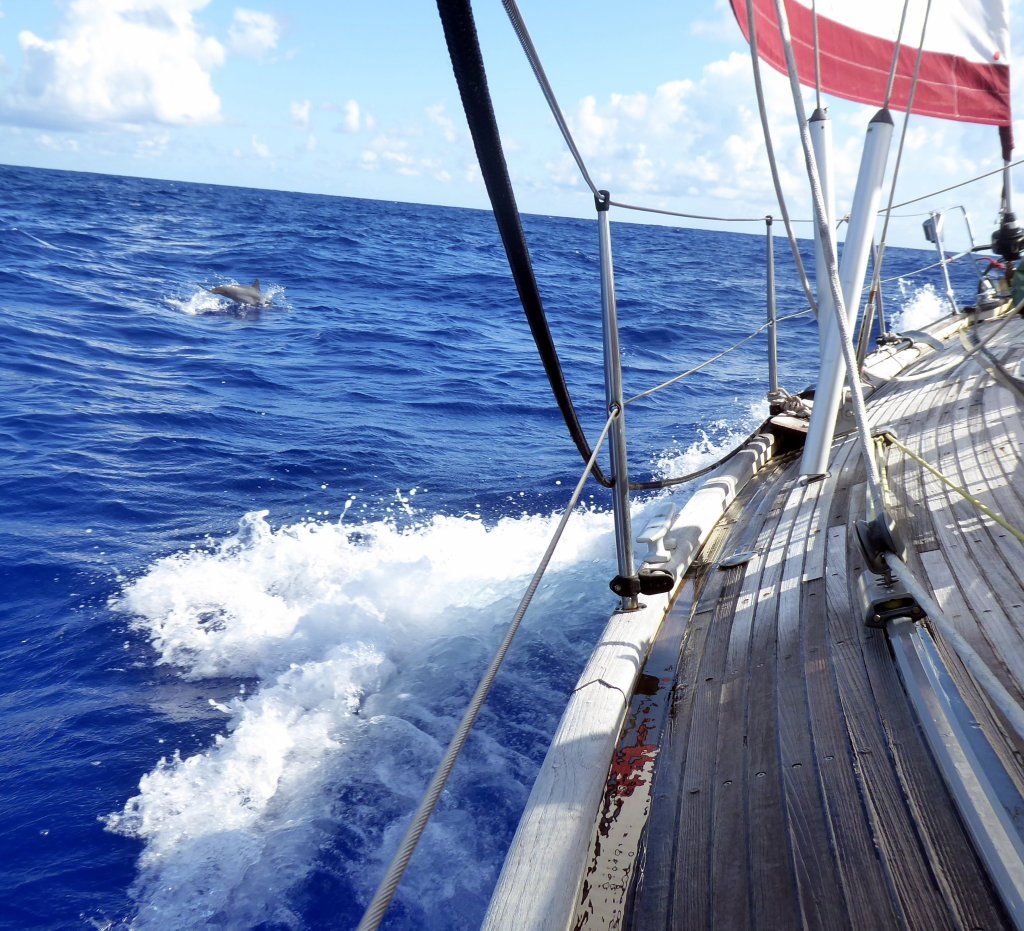
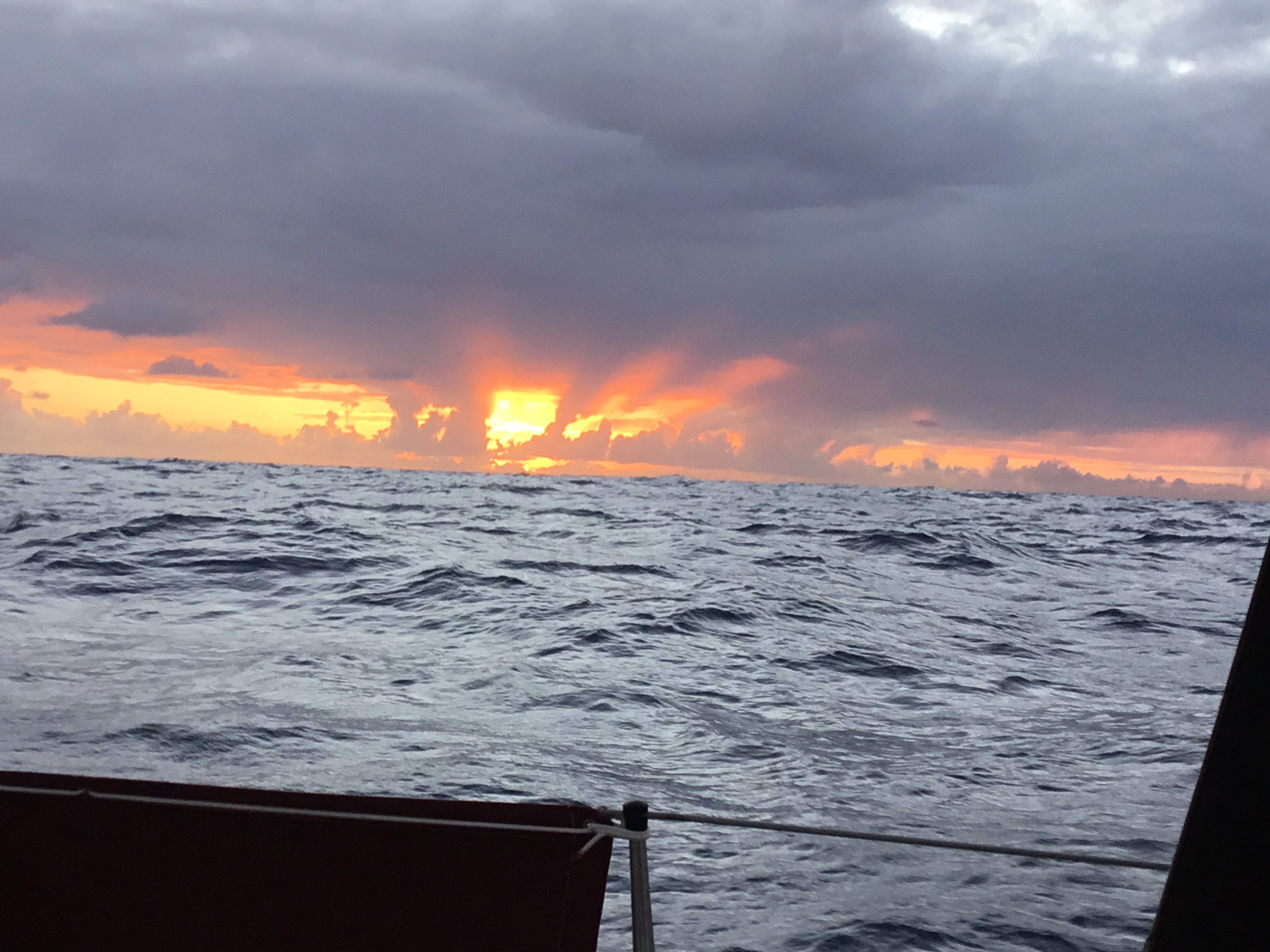
But I enjoyed most of the journey, my fifth time solo across the Atlantic. As you sail northwards from the Caribbean, hot tropical steaminess eases to fine sunny days and comfortable cool nights. Many dolphin, a distant whale, occasional seabirds, swooping shearwater, petrels and other gulls, and vast areas awash with patchy Sargasso weed, I love the feeling of senses awakened and of the reality – an insignificant human speck in the vast blue swelling ocean with sunlit days, and the endless timeless panorama of stars at night.
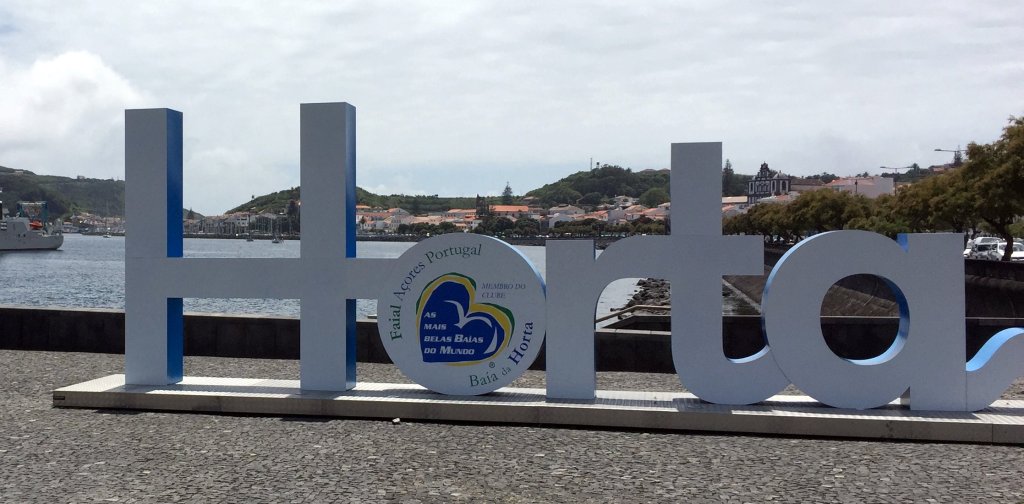
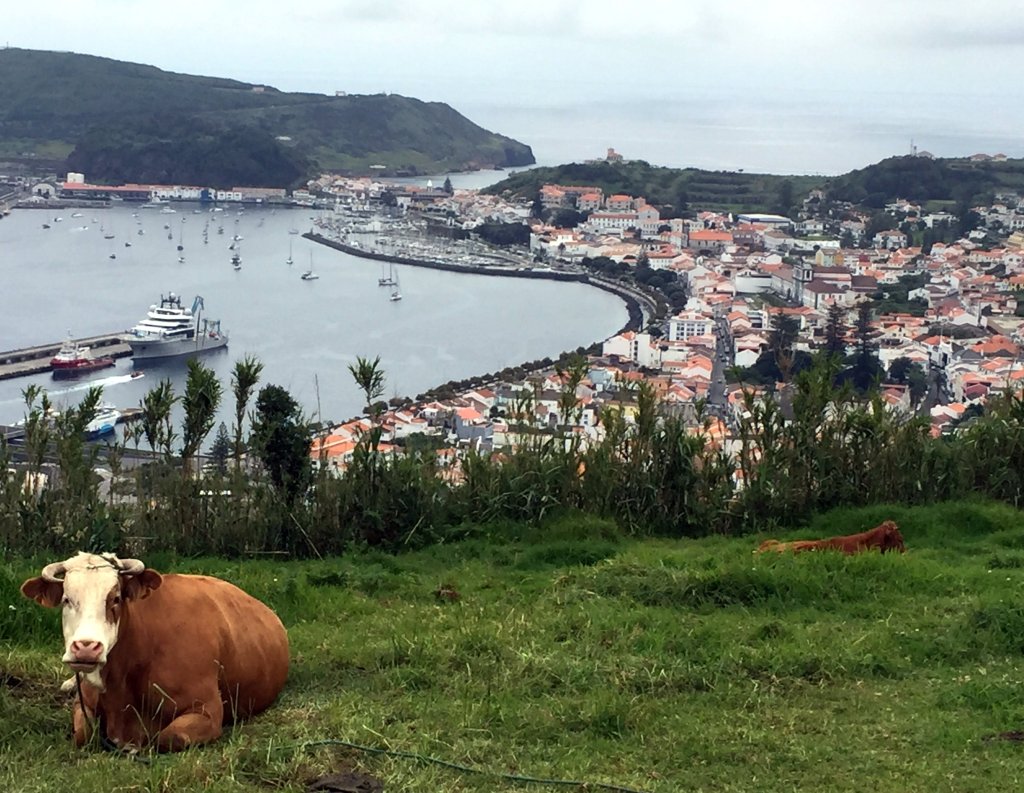
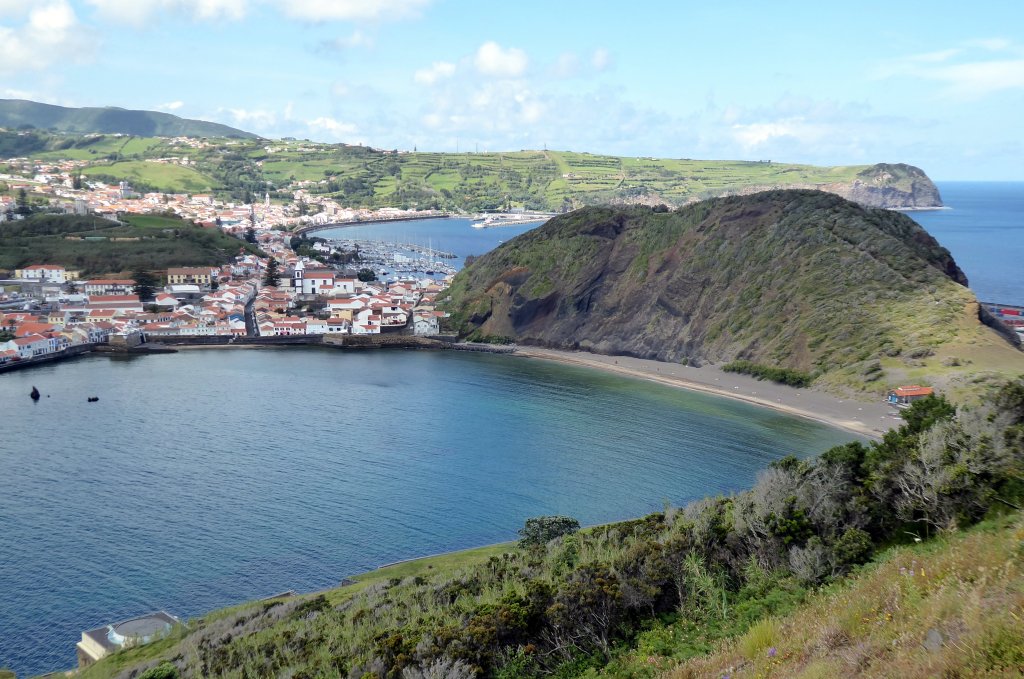
The harbour and marina of Horta are busy but efficiently managed. Several boats arrive every day and anchor at this maritime crossroads – boats from all around the Atlantic. A dayafter getting here we’re tested, confirmed healthy, form-filled and free to land. Being ahead of the main rush I was soon found a secure spot to raft alongside others inside the little marina. Henrietta’s now been here almost a month.
Horta harbour and marina
I like Portugal. It is surely the most civilised, interesting, friendly and underrated country of Europe. The Azores’s nine islands are especially lovely, uncrowded and unspoilt.
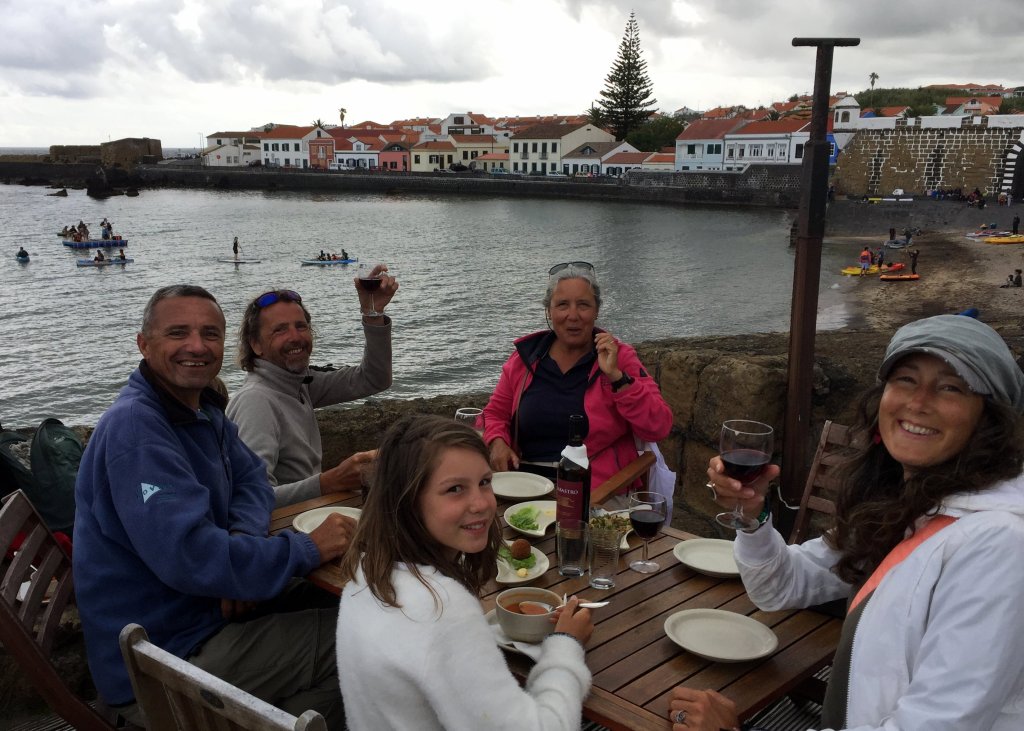
Days pass with walks along paths and up hills alight with hydrangea, wild rose and agapanthus ; sociable drinks and meals with the many Europeans here, including a happy chance meeting with friend of a relative, en route to the Mediterranean; and there’s always the inevitable list of boat maintenance work. I’ve perhaps grown lazier and slower, a day’s work taking a week, a long walk now a shorter one.
Dutch sailors, always friendly and fun
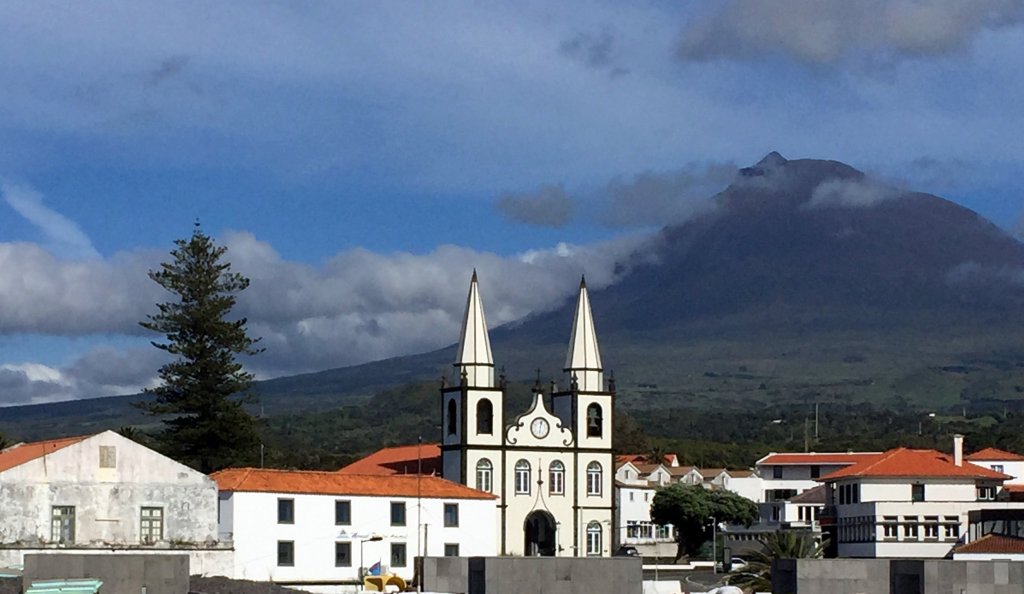
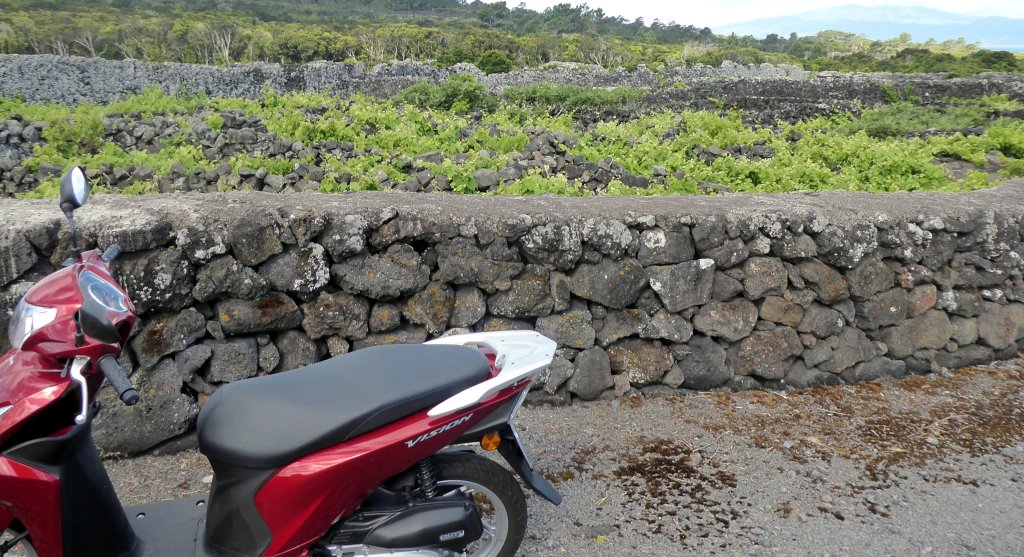
A day trip on local ferry to the neighbouring island of Pico took me to Portugal’s highest mountain. It too is named Pico, and at 2,351 metres, nowadays and until new body parts are fitted, too big a climb for me. It was instead a bright day of exploration on rented scooter through the lanes and villages of this hilly island, small colourful stone houses, tiny plots of vines in dark lava-stoned walls, and smiling greetings from gentle people.
Ferry trip to Pico islandMadalena the tiny capital of PicoTiny plots of vines enclosed by dark stone walls produce superb local wines
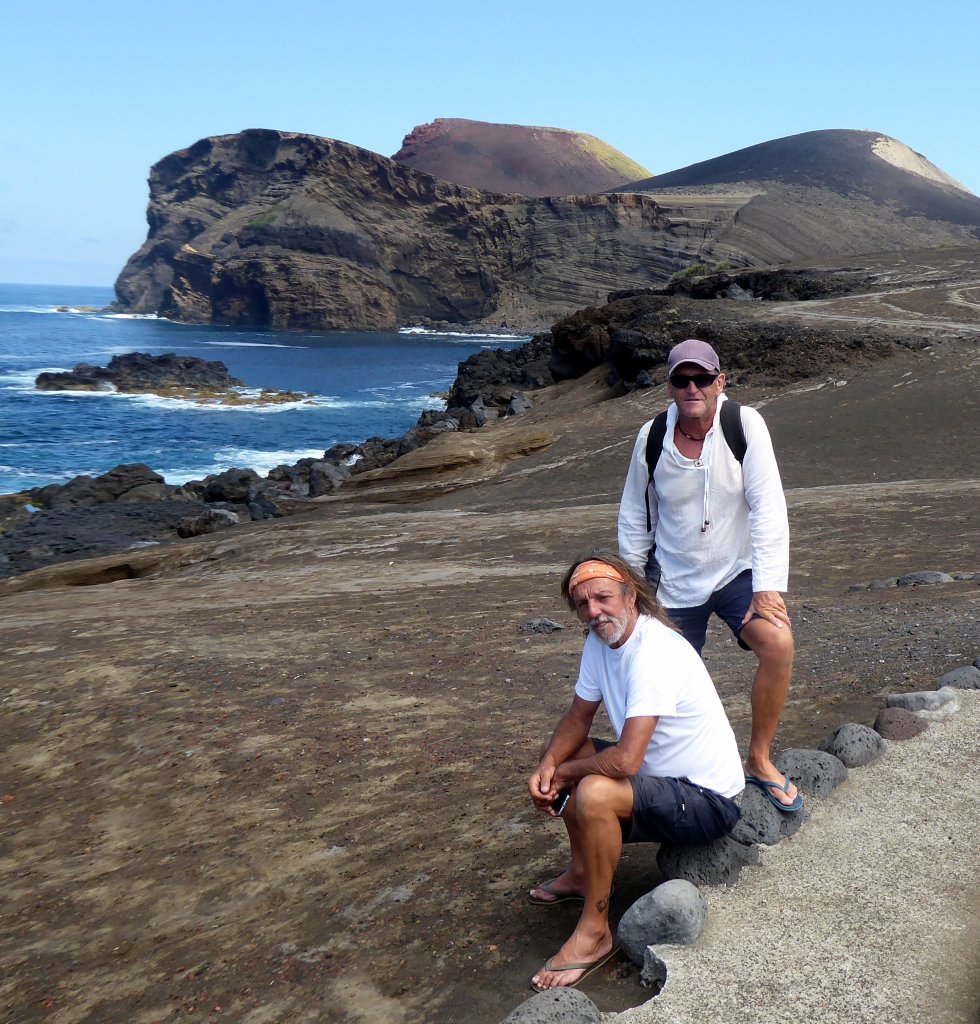
All I’ve seen of the Azores both now and five years ago, when I last sailed through, is enchanting. There are still two more islands to visit but they must wait till another time.
A day out with solo sailor friends, first met in Réunion
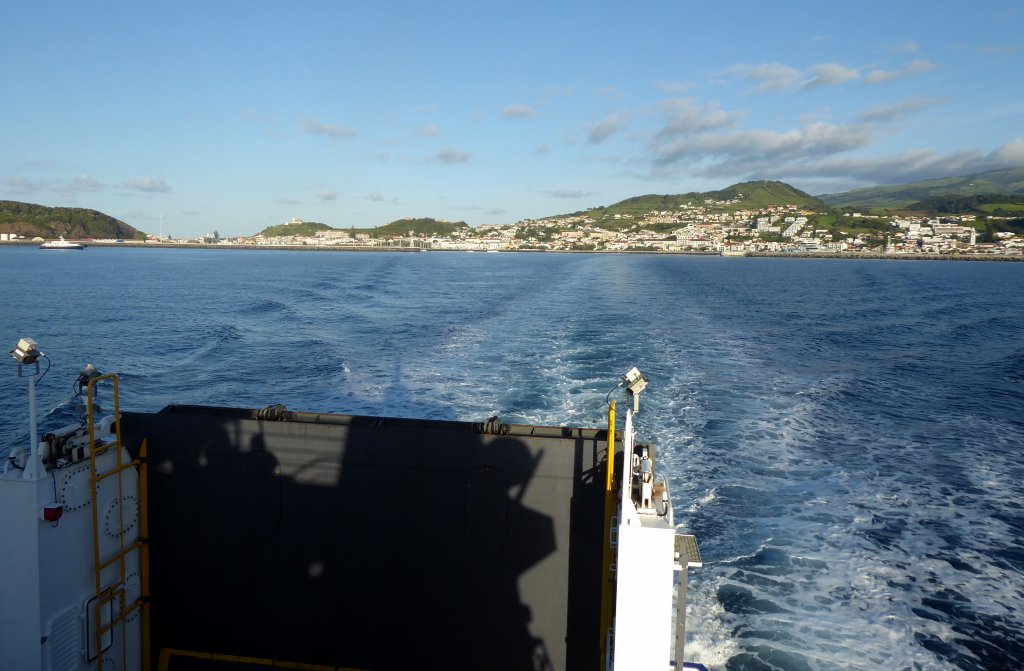
Now it’s time to sail on to England. I await more helpful wind.
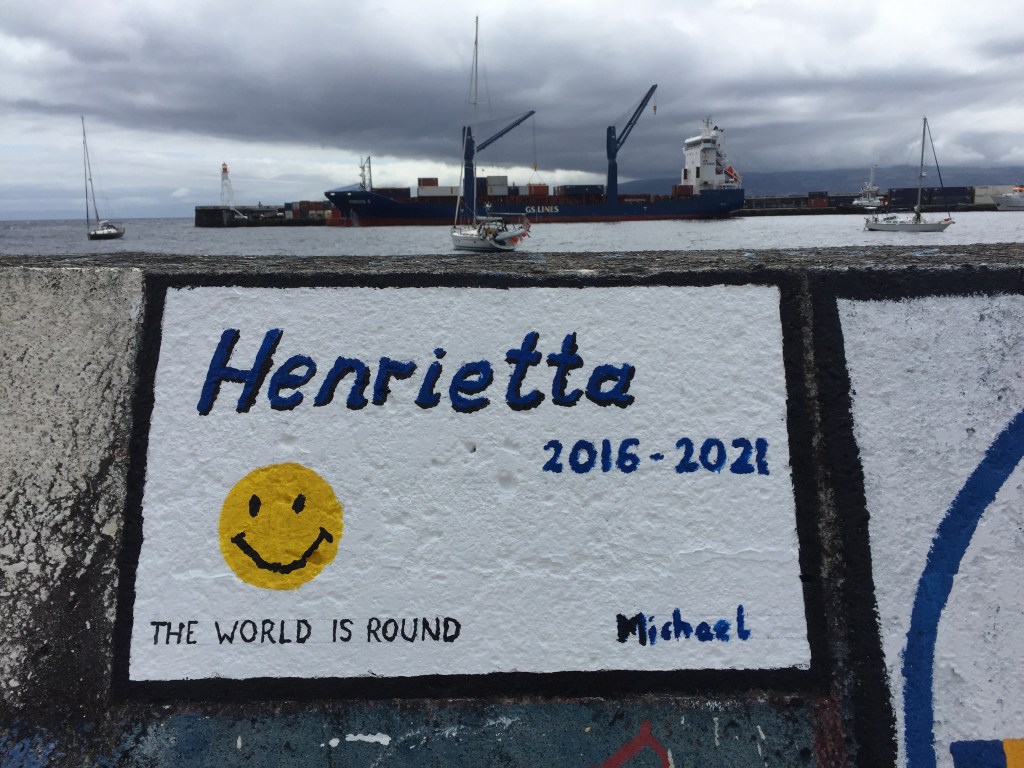
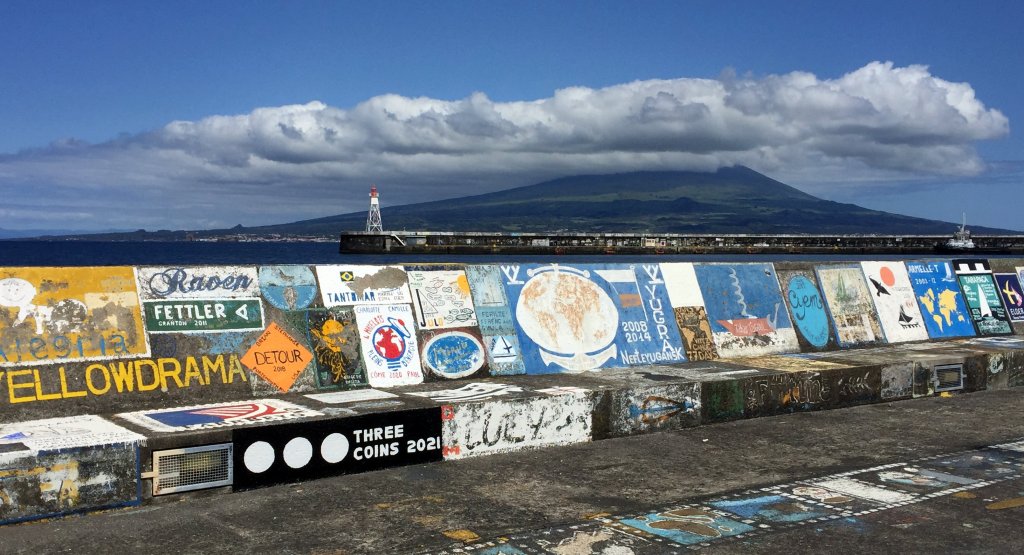
A long tradition of artwork from boats passing through Horta























 Sailing Henrietta